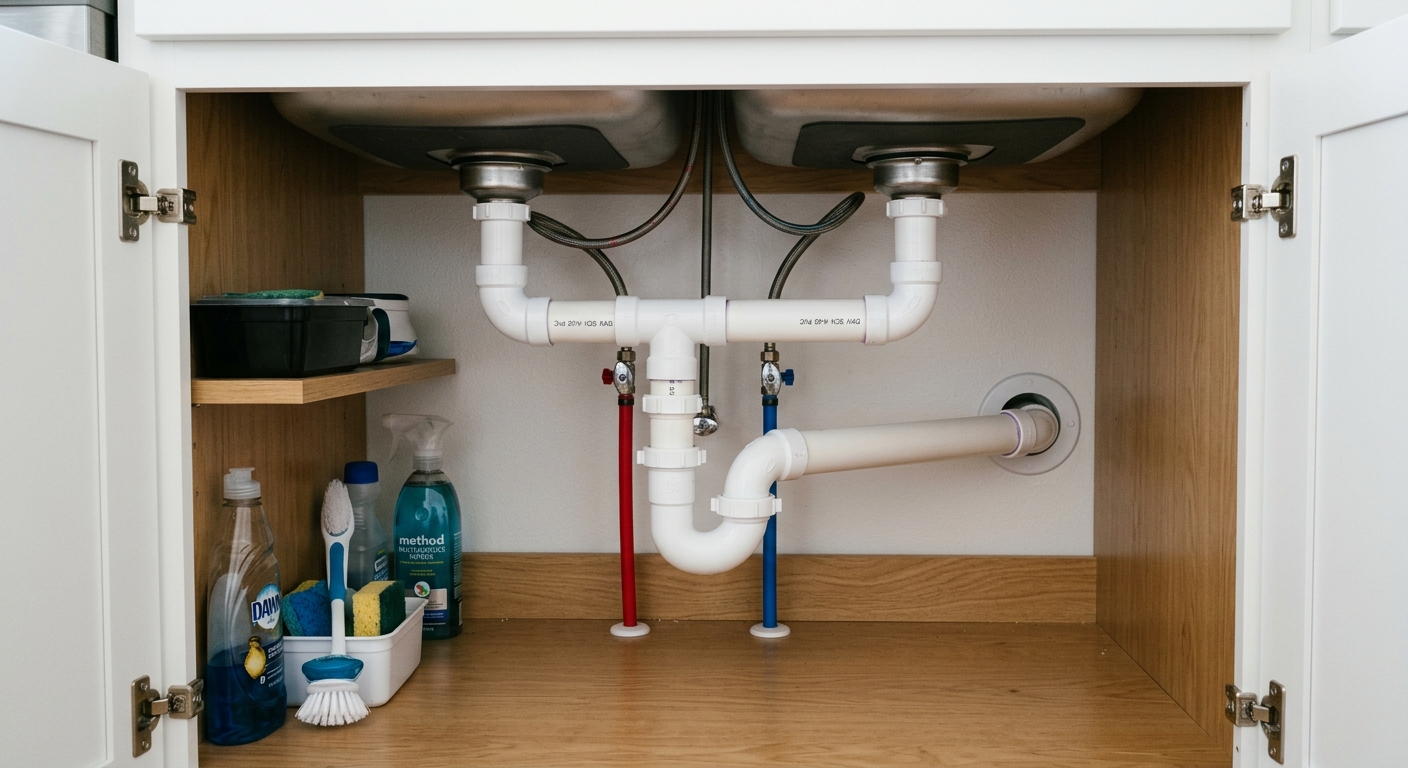
Plumbing services and costs in Beaverlodge
Plumbing in Beaverlodge comes with the kind of cold-weather risk that shows up in service calls—especially during deep freezes when water lines must perform well below the frost line. With 84.2% of local dwellings being single-detached homes and 48.9% built before 1981, it’s common to see older systems where plumbing materials and insulation haven’t kept up with today’s freeze-protection expectations. That matters for both repairs and replacements, because worn shutoffs, aging supply lines, and older drain assemblies can turn a minor issue into an emergency.
In the Athabasca–Grande Prairie–Peace River region, freeze risk is a major cost driver. Frost depth typically pushes supply and drain runs well below 6 ft, so any line that’s shallow, poorly insulated, or routed near exterior walls becomes vulnerable to frozen-line and burst-pipe calls. At the same time, hard water in much of the Peace and Athabasca basins can accelerate scale buildup in tanks and fixtures, shortening water-heater life and increasing descaling/flush needs. Older farmsteads and small-town mains with legacy pipe materials also contribute to higher rates of repiping when pressure, discolouration, or performance issues surface.
Contractor availability and access can also change the price: Beaverlodge-area properties around main travel corridors and older neighbourhood edges often see different excavation realities in winter. If you’re budgeting, comparing like-for-like scope is key—especially when labour rates in Alberta commonly land in the 20–43/hour band (and service billing is often higher once overhead and call-out time are included). Below is a practical comparison of typical projects and where costs usually land.
| Service |
What's Included |
Typical Duration |
Price Range |
| Emergency repair (burst pipe, active leak) |
Locate leak, shutoff/temporary repair, pressure test where applicable, restore damaged access; may include partial drain or supply section repair |
2–6 hours (plus drying/restoration time if needed) |
$150–$800 |
| Water heater replacement (tank, 40–60 gallon) |
Remove old tank, install new heater, new valves/relief testing where required, flush/commissioning, basic venting checks (gas) or connections (electric) |
4–8 hours |
$1,200–$2,800 |
| Tankless water heater installation |
Remove/abandon old unit if applicable, install tankless, new gas/electrical/venting connections as required, set-up and commissioning |
1–2 days |
$2,200–$4,200 |
| Full-home repipe (supply lines, PEX) |
Plan routing, isolate and replace galvanized/legacy runs, install new PEX supply trunk lines, replace accessible shutoffs, pressure test and flush |
2–5 days |
$800–$9,000 |
| Drain snaking / hydro-jetting (blocked drain) |
Camera inspection if needed, mechanical snake cleaning or hydro-jetting, confirm flow, remove roots/scale where accessible |
1–3 hours |
$150–$800 |
| Backwater valve installation |
Locate suitable install point, remove/modify section to fit valve, install valve and test operation, disposal of removed parts |
4–8 hours |
$800–$2,200 |
Prices are estimates only and vary by project scope, site access and material selection.
What affects the price of plumbing in Beaverlodge
In Beaverlodge and across the Athabasca–Grande Prairie–Peace River region, the same “simple” plumbing request can come back with a quote that’s 30–50% higher or lower depending on freeze protection needs, pipe condition, and how much repair versus replacement the plumber expects once they expose the lines. Labour rates in Alberta often sit in the 20–43/hour band, and once call-out time, overhead, and site conditions are factored in, service billing can land in the 100–175/hour range—so small differences in access and diagnosis can meaningfully move your final number.
Freeze risk is the biggest Beaverlodge-specific driver. If frost depth requires deep burial, contractors may need longer pipe runs, more excavation, and better insulation/heat trace considerations for outdoor or garage lines. Homes that have exterior wall routes or poorly insulated basement penetrations are more likely to need “preventative” modifications during repairs. Water hardness also changes the economics: hard well/municipal water conditions common in this basin can shorten water-heater life by roughly 20–30%, increasing the likelihood of replacement rather than repeated repairs, particularly on older tanks.
Older housing stock affects pipe material choices too. In homes from the 1980s to mid-1990s, poly-B (polybutylene) failures are a known pattern, and legacy galvanized supply lines can restrict flow as corrosion builds. In Beaverlodge, where many properties are older (48.9% built before 1981), plumbers often price jobs assuming additional shutoff replacement and sections of hidden piping may be brittle or scaled. For budgeting: a repair may fall in the $150–$800 range, but if the scope turns into replacement, water heater work often moves into the $1,200–$2,800 band or repiping can reach $800–$9,000 when multiple runs are involved.
Two practical examples: (1) a “slow hot water” complaint that tests as heavy scale in the tank can justify a heater swap rather than repeated flushing; (2) a “minor” leak in a garage line may require opening finishes to reach deep/insulated pipe runs, pushing labour hours and materials up quickly.
| Price Factor |
Why It Matters |
Cost Impact |
| Type of work — repair vs. replacement vs. new install |
Replacement includes removal, correct connections, testing, and sometimes new valves/venting |
Can add hundreds to thousands (repair often $150–$800; replacement can move into $1,200–$2,800 or higher) |
| Water heater size and fuel type (gas vs. electric vs. tankless) |
Venting/electrical load, recovery rate, and installation complexity change labour and parts |
Tank units commonly $1,200–$2,800; tankless installs often cost more due to venting/commissioning |
| Pipe material — PEX vs. copper vs. CPVC for repiping |
Material cost and installation method differ; freeze-appropriate routing matters more than the label |
PEX repiping often targets best value; alternative materials can raise the upper end of repipe quotes |
| Access — pipes in walls or slab require drywall or concrete cutting |
Hidden lines increase demo, patching, and time; slab work is more disruptive |
Access issues can be a major driver of the jump from repair ($150–$800) to repipe ($800–$9,000) |
| Permit requirement — adds cost and inspection scheduling time |
Inspections and scheduling can delay work and add administrative steps |
Often modest in dollars but can raise total time and coordination cost |
| Emergency vs. scheduled — after-hours calls carry a premium |
Winter emergencies mean call-out fees, priority dispatch, and more overtime risk |
Emergency service commonly pushes toward the upper end of repair ranges |
| Water hardness — affects water heater sizing and descaling needs |
Scale reduces efficiency and shortens service intervals |
May convert repeated “service” into earlier replacement; tanks often require more frequent attention in hard-water areas |
| Number of fixtures or drain lines involved |
More affected runs means more testing, more openings, and more restoration |
Single-fixture fixes are cheaper; whole-zone issues raise total scope substantially |
Permits & regulations in Alberta
In Alberta, most plumbing work beyond simple fixture swap and non-connection maintenance must be performed by a licensed plumber. You’ll typically need a permit for work that ties into municipal water or sewer systems, includes new drain connections, or changes key parts of the plumbing network—such as full repiping, replacing or relocating venting and drain components, and any job that materially modifies how a home drains or is supplied. Water-heater changeouts may require permits in some municipalities and are often subject to local requirements for venting, gas line checks, and inspection scheduling, so it’s worth asking your plumber upfront whether a permit will be pulled for your address.
Backwater valve installation is commonly recommended in the Athabasca–Grande Prairie–Peace River area due to seasonal conditions and basement drain risk. In practice, it usually requires a permit and inspection because it involves modifying the building drain connection path and ensuring correct flow direction and operation.
To verify a contractor in Beaverlodge step-by-step: first, ask for their Alberta journeyman or master plumber licence number and confirm it matches the person/company doing the work using the online Alberta licence registry. Next, request a current certificate of liability insurance (with the plumber listed as insured) and confirm the policy’s expiry date. Then check WSIB/WCB/WCB coverage documentation—plumbing contractors should carry workers’ compensation coverage for their staff. Finally, ask for a clearance letter if required and ensure your quote states what inspections and permit steps are included or who will schedule them.
Common plumbing problems in Beaverlodge homes and how to fix them
Beaverlodge homes—many with older builds (48.9% from before 1981) and a lot of single-detached housing—tend to experience the same “cold-weather first” plumbing patterns. Here are the five most common issues and what to do, grounded in Athabasca–Grande Prairie–Peace River winter realities.
(1) Burst or frozen pipes: Prevention is insulation plus correct routing, and for vulnerable lines (outdoor, garage, or near-exterior walls) plumbers often recommend heat trace and properly protected penetrations. If a line bursts, the priority is immediate shutoff, water removal, and emergency repair; don’t “patch and forget,” because hidden damage behind walls can keep leaking under freeze-thaw cycles. (2) Aging pipe materials: Galvanized steel can corrode and restrict flow, causing discolouration and pressure drop. Poly-B can fail at fittings or develop cracks, which often present as intermittent leaks. In many older Beaverlodge systems, proactive repiping is cheaper than repeated reactive repairs—especially when multiple fixtures start underperforming at once.
(3) Water heater end-of-life: Hard water common in the region increases scale buildup, so tanks can lose efficiency and develop sediment-heavy operation sooner. Tankless can be a better investment for some households, but the “right” choice depends on water hardness, inlet temperature, and fuel/venting suitability.
(4) Low water pressure: Plumbers typically check aerators, pressure regulators, and then move to supply-line testing. If pressure is low throughout, corroded galvanized lines or municipal pressure changes can be the culprit—particularly in older homes.
(5) Drain issues: Slow drains can be roots, grease/scale buildup, or failed older drain lines. A camera inspection helps determine whether snaking/hydro-jetting will restore flow or whether section replacement is required.
Where costs differ: a drain snaking or hydro-jetting visit often lands in the $150–$800 band, but if the camera reveals a damaged section that must be rebuilt, the scope can grow toward the $800–$9,000 repiping/drain range—making early diagnosis the cheaper path.
| Issue |
Common Cause in Beaverlodge |
Typical Fix |
Price Band |
| Burst or frozen pipe |
Shallow or poorly insulated exterior/garage lines; freeze-thaw expanding damage |
Shutoff, locate leak, repair/replace section, verify pressure, insulate and improve routing/heat trace where needed |
$150–$800 |
| Low water pressure throughout home |
Corroded galvanized supply runs; partially closed shutoffs; municipal pressure drop |
Test pressure, replace defective regulators/shutoffs, clean or replace affected pipe sections; flush system |
$200–$1,500 |
| Slow or blocked drain |
Hair/grease buildup, scale, or early root intrusion in older drain runs |
Camera check, snake or hydro-jetting, spot repairs if roots/damage found |
$150–$800 |
| Leaking or failed water heater |
End-of-life tank; sediment and scale buildup from hard water |
Replace heater (tank or tankless as appropriate), test connections, flush/commissioning, adjust temperature settings |
$1,200–$2,800 |
| Poly-B pipe failure (fitting or pipe crack) |
Failure at fittings or brittle sections after age-related movement and temperature cycling |
Repair if localized; otherwise repipe affected circuits with PEX and replace all suspect fittings |
$800–$9,000 |
| Galvanized pipe corrosion (restricted flow, discolouration) |
Internal corrosion, scale buildup, and narrowing over time in older homes |
Flush and test; if widespread, replace supply lines (repiping) and update shutoffs/fixtures |
$800–$9,000 |
How to choose a plumbing contractor in Beaverlodge
Choosing a plumber in Beaverlodge is mostly about reducing risk: licensing, coverage, and clarity of scope. In Alberta, verify the plumber’s Alberta journeyman or master plumber licence by asking for the licence number and confirming it matches the business/person tied to the work. Next, request a current certificate of liability insurance—make sure it’s not expired and the contractor’s name aligns with the quote. Finally, confirm workers’ compensation coverage (WSIB/WCB/WCB) and request the relevant documentation or clearance letter if they can’t immediately provide details.
Get 2–3 itemised written quotes, not lump sums. Itemisation should separate labour, parts/materials, and any diagnostics (like camera inspection). Ask if the plumber will pull permits and whether permit fees and inspection scheduling time are included or charged separately. Disposal/hauling of removed plumbing material, old tank/heater disposal, and patching expectations should be specified in writing so surprises don’t show up mid-job.
Warranty matters: confirm workmanship warranty length and what it covers (for example, valve leaks, pressure-test failures, rework timelines). Also check the manufacturer warranty for the product, and whether it’s transferable to your household if you sell the home.
For payment, avoid paying more than 10–15% upfront. Hold back remaining funds until the job is complete and tested. Ask for a start date and a completion estimate in writing—winter scheduling can shift, but you should still get a plan.
- Licence number provided before work starts and matches the contractor/company on the quote
- Certificate of insurance with expiry date and correct legal name
- Proof of workers’ compensation coverage (WSIB/WCB/WCB)
- Itemised quote: labour hours, parts list, and any diagnostics separately
- Written scope: what is repaired, what is replaced, and what’s excluded
- Permit responsibilities stated clearly (who pulls it, what’s included)
- Inspection/close-up steps described (when walls are opened and when they’re restored)
- Disposal/hauling included or clearly extra
- Warranty terms in writing for both workmanship and products
- Payment schedule capped at 10–15% upfront; holdback until testing and finish
- Start date and completion estimate in the contract/quote
- Emergency policy stated up front (call-out, after-hours premium, and expected arrival time)
Red flags to watch for in Beaverlodge: (1) refusal to provide licence/insurance/coverage info, (2) a quote that’s vague on whether it’s repair or full repipe, (3) asking for a large deposit up front without written scope, (4) no mention of permit/inspection steps when the work clearly connects to drains/municipal systems, and (5) no written warranty or test results (pressure test, venting checks, or flow confirmation).
Frequently asked questions — plumbing in Beaverlodge
What should I do about a burst pipe?
If a pipe bursts in your Beaverlodge home, treat it as an emergency. First, shut off the water supply immediately (main shutoff if you can reach it safely). Then open nearby taps to relieve pressure and reduce strain on the damaged line. If water is entering electrical areas, keep people away and call an emergency response first if needed. Once the leak is controlled, avoid freeze damage escalation: keep heat on the affected area and protect exposed lines.
Call a licensed plumber right away to locate the leak and complete a proper repair with pressure testing—especially important in Athabasca–Grande Prairie–Peace River winters, where freeze-thaw can worsen hidden damage. Minor leaks sometimes start in the repair band (often around $150–$800), but if water has soaked insulation or cabinets, total restoration can grow quickly.
Poly-B or galvanized pipes — should I replace them?
In Beaverlodge, the decision to replace poly-B or galvanized pipes depends on how widespread the issue is and whether you’re seeing performance symptoms. Poly-B often fails at fittings or cracks over time; when repairs keep returning—or when you’re already opening walls—replacement of the full affected circuits is usually more cost-effective than repeated patching. Galvanized steel commonly corrodes internally, causing restricted flow and discolouration, and it can become a recurring low-pressure problem.
Because 48.9% of local homes were built before 1981, many systems have hidden age-related wear. If tests show poor pressure across multiple fixtures or if colour/discolouration is persistent, repiping may be the better long-term play, with full-home projects often falling in the $800–$9,000 band depending on access and how much piping needs replacement.
How do I compare plumbing quotes?
When comparing plumbing quotes in Alberta, insist on itemisation and like-for-like scope. Ask each plumber to break down labour hours, parts/materials, diagnostics (like a camera inspection), and any permit-related steps. If one quote is a repair and another assumes a replacement, the prices won’t be comparable—so clarify whether it’s “repair first” or “replace if certain conditions are found.”
Also check what’s excluded: permit pulling, disposal/hauling of old equipment, drywall restoration, and restoration after excavation. In a freeze-risk region like Athabasca–Grande Prairie–Peace River, a plumber should explain how they’ll prevent repeat failures (insulation/heat trace/re-routing) rather than only addressing the visible leak. Use price bands as a sanity check: a straightforward drain clean might fit the $150–$800 range, while tank replacement commonly lands in the $1,200–$2,800 range.
How long does a water heater replacement take in Beaverlodge?
For most tank water heater replacements in Beaverlodge, plan on about half a day to a full day—often 4–8 hours—depending on access, whether gas venting checks are needed, and how easy it is to disconnect the old unit. If the old heater is in a tight spot, corroded connections are seized, or the install requires extra valve or vent adjustments, the timeline can stretch.
Because you’re in a colder northwest Alberta setting, plumbers will also take extra care with insulation and freeze protection around nearby lines and penetrations. For reference, tank replacements are commonly priced within the $1,200–$2,800 band for typical installations. A good contractor will provide a start/finish estimate in writing and confirm testing/commissioning steps before leaving.
What is a backwater valve and do I need one in Beaverlodge?
A backwater valve is a one-way device installed in the main drain line (or the appropriate drain path) that helps stop sewage from backing up into your home during heavy flow conditions. In Beaverlodge, especially where basement drains are present, it’s often considered a practical protection because drain backup can cause expensive damage.
Whether you “need” one depends on your drainage setup and local conditions, but it’s commonly recommended in the Athabasca–Grande Prairie–Peace River area. Installation typically involves permit/inspection steps because it affects how the building drain handles flow. Pricing varies by access and installation complexity; many installations land in the general $800–$2,200 range depending on what’s required to fit the valve correctly and complete testing.
How do I shut off the water supply in my Beaverlodge home?
Start by locating the main shutoff valve in your Beaverlodge home—often near the water meter or where the main line enters the house (commonly in a basement, mechanical room, crawlspace, or sometimes a utility closet). Make sure you know where it is before a crisis. If you have shutoffs for individual fixtures or branches, identify those too so you can isolate a leak without draining the entire house.
To shut off: turn the valve fully clockwise (righty-tighty) until it stops. Then open a faucet on the lowest practical level to relieve pressure. If the valve is stiff or stuck (common in older systems), don’t force it violently—stop and call a plumber to avoid breaking the shutoff. In winter, combine shutoff with heat retention and insulating exposed lines to reduce freeze risk while repairs are arranged.