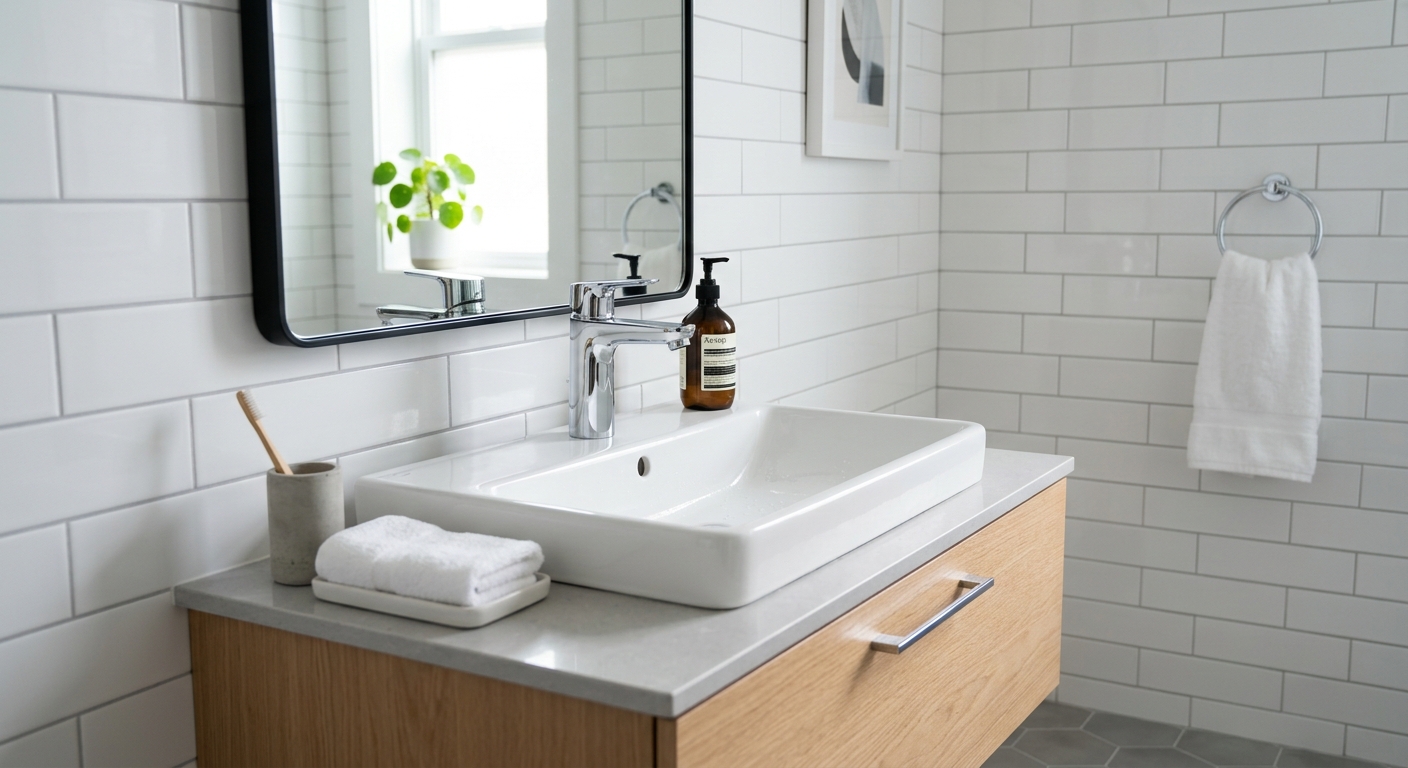
Plumbing services and costs in High Level
Plumbing in High Level, Alberta comes with some realities you won’t see in milder parts of the province. With a population of 3,922 (Statistics Canada, 2021 Census) and 64.3% of households owning their homes, many calls are for wear-and-tear upgrades and winter-protection work that keep older systems running. High Level’s housing mix also matters: 26.6% of homes were built before 1981, so it’s common to see older galvanized service lines, aging shutoffs, and water heaters that have reached the end of their working life.
In the Athabasca–Grande Prairie–Peace River economic region, freeze risk is a major cost driver. Frost depth typically requires supply and sewer lines to be buried well below roughly 6 ft, and any shallow run, under-insulated crawlspace/garage line, or missing heat-trace protection can lead to frozen-line callbacks and burst-pipe emergencies during cold snaps. Add in hard water conditions seen across much of the broader Peace and Athabasca basins—more scale buildup forms in tanks and fixtures—so water-heater service intervals tighten and descaling/anode work comes up more often. Availability can also influence price: during peak winter emergency periods, after-hours and remote access in the wider region can push labour toward the upper end of local ranges, especially when excavation or repiping is involved.
In High Level, trade demand is particularly noticeable around downtown and the older neighbourhoods near the core, where older plumbing and utility tie-ins are more likely to show age-related failures. With that context in mind, here are typical cost ranges for the most common plumbing services you’ll compare when getting quotes.
| Service |
What's Included |
Typical Duration |
Price Range |
| Emergency repair (burst pipe, active leak) |
Shutoff/isolation, leak location, line repair or section replacement, basic pressure test, cleanup |
2–8 hours (often longer if excavation is needed) |
$250–$1,200 |
| Water heater replacement (tank, 40–60 gallon) |
Remove/haul old unit, install new tank, reconnect water lines, venting checks (gas), commissioning, start-up testing |
4–10 hours |
$1,200–$2,900 |
| Tankless water heater installation |
Remove existing where applicable, gas line/electrical/verifications, venting & condensate considerations, flush/commissioning |
1–2 days |
$2,800–$4,800 |
| Full-home repipe (supply lines, PEX) |
Wall access planning, isolate/trace routing, replace supply to fixtures, install new shutoffs, flush & test |
1–5 days (varies by access and number of floors) |
$3,500–$8,500 |
| Drain snaking / hydro-jetting (blocked drain) |
Camera inspection (if needed), snake/jetting, partial cleaning, post-clean check for proper flow |
1–4 hours (more if access/camera is required) |
$180–$900 |
| Backwater valve installation |
Assess layout, install valve at appropriate connection, test operation, seal/restore minor finishes |
4–8 hours |
$1,200–$2,800 |
Prices are estimates only and vary by project scope, site access and material selection.
What affects the price of plumbing in High Level
In High Level and the Athabasca–Grande Prairie–Peace River region, two contractors can quote the “same” job and still land 30–50% apart. The biggest drivers are how quickly they can access the problem, what they discover once walls or insulation are opened, and whether the repair turns into replacement once they confirm pipe age, freeze-related damage, or the condition of connected lines. When labour is harder to schedule during winter peaks, overhead and after-hours premiums also show up more clearly.
Freeze risk directly changes how work is priced. Because frost depth typically forces deeper burial, any outdoor, garage, or under-insulated run may need extra insulation, heat trace cable, or rerouting to reduce future freeze calls. In practice, that’s why a “small” leak can escalate into a longer service if the plumber must open an accessible chase and replace a longer section to reach stable, unfrozen material. Hard well and municipal water across much of the broader basins also influences tank and fixture costs: scale buildup accelerates wear on water heaters and can increase flushing/descaling needs, effectively shortening service life by roughly 20–30% under heavy mineral load conditions.
Older housing stock matters financially too. In homes from the 1980s to mid-1990s across the region, it’s not unusual to find legacy galvanized or poly-B (polybutylene) piping—materials that may restrict flow over time (galvanized) or see failures at fittings (poly-B). That can push repairs toward replacement. As an example, correcting one leaking fitting on aged supply might start near a repair band, but if the plumber finds widespread corrosion, a full repipe priced closer to the repiping band (often $800–$9,000 depending on scope) is usually the more defensible long-term spend. On water heaters, an electric or standard tank change-out often lands within the $1,200–$2,800 band, while tankless installations commonly cost more due to venting/electrical and commissioning.
| Price Factor |
Why It Matters |
Cost Impact |
| Type of work — repair vs. replacement vs. new install |
Replacement removes more material and requires system re-commissioning |
Often shifts quotes by $300–$2,000+ |
| Water heater size and fuel type (gas vs. electric vs. tankless) |
Gas requires venting checks; tankless needs additional connections and setup |
Can add $800–$2,500+ versus standard tank work |
| Pipe material — PEX vs. copper vs. CPVC for repiping |
Material cost and labour time differ by routing compatibility and installation method |
Typically $500–$2,500+ variation on repipes |
| Access — pipes in walls or slab require drywall or concrete cutting |
More demolition/repair increases labour and restoration costs |
Frequently adds $1,000–$3,000+ to total |
| Permit requirement — adds cost and inspection scheduling time |
Permits can require inspection windows and added paperwork |
Often $150–$600+ plus scheduling delays |
| Emergency vs. scheduled — after-hours calls carry a premium |
After-hours travel, priority scheduling and safety staging increase costs |
Commonly 1.2–1.8x labour rate |
| Water hardness — affects water heater sizing and descaling needs |
Higher mineral load shortens tank life and can require more frequent maintenance |
Can influence upsizing and add $200–$400 for maintenance planning |
| Number of fixtures or drain lines involved |
More runs require more testing, isolation, and restoration |
Often changes scope by $300–$2,000+ |
Permits & regulations in Alberta
In Alberta, most plumbing work beyond simple fixture replacement must be performed by a licensed plumber. In High Level, you should expect permits for work that meaningfully changes how your plumbing connects to municipal systems or alters major piping components. Common examples that typically do require a permit include: new drain connections, any new or changed connection to the municipal water or sewer system, full repiping of supply lines, and water-heater changeouts where a municipal permit/inspection is required (requirements can vary by locality, so confirm with your plumber and the municipality). Backwater valve installation is also typically tied to permitting and inspection, because it’s a safety device that changes how wastewater can flow during surcharging or flood conditions.
What usually does not require the same permit level includes replacing certain fixtures like a toilet, shower trim, or a basic faucet—provided you’re not altering the underlying piping routes and connections. Even then, it’s wise to ask your contractor whether their scope triggers a permit.
To verify an Alberta contractor, do these steps before work starts: (1) check the plumber’s Alberta licence number using the provincial online licence verification tools your contractor provides; (2) request a current certificate of insurance and confirm it includes liability coverage that matches the job’s scope (and the dates of coverage); (3) ask for WSIB/WCB clearance/documentation (or the correct exemption documentation if applicable). A reputable High Level plumber will provide copies and will clearly list permit handling responsibilities in the quote.
Common plumbing problems in High Level homes and how to fix them
High Level homes deal with a familiar set of plumbing issues driven by winter freeze risk, older pipe materials, and mineral-heavy water. Here are five common problems—and what to do about them.
1) Burst or frozen pipes: Sudden pressure loss, wet drywall, or icy sections in garages/outbuildings are typical signs. Preventive steps include insulating exposed runs, using heat trace cable on vulnerable outdoor lines, and ensuring shutoffs are accessible. If a burst happens, shut off the water immediately, keep electrical hazards in mind, and call for emergency repair—winter excavation and section replacement can quickly become more expensive than proactive freeze-proofing.
2) Aging pipe materials: Galvanized steel can corrode internally and restrict flow, while poly-B fittings can become brittle and fail. If you already have discoloration, repeated leaks, or inconsistent pressure, it’s often smarter to plan repiping before a catastrophic failure forces larger emergency access.
3) Water heater end-of-life: Tanks commonly struggle under hard water scale buildup, which can shorten effective service life. A tank is usually the lowest upfront cost, while tankless can be a better long-term fit where you want efficiency and have stable venting/electrical/gas capacity.
4) Low water pressure throughout the home: Plumbers typically check aerators, shutoffs, pressure regulators, and then look upstream for corroded galvanized restrictions or municipal pressure changes. Diagnosis matters because it’s easy to misattribute a neighbourhood pressure issue to your house.
5) Drain issues: Slow drains can be blockage, mineral/grease build-up, or root intrusion—especially in older lines. Failed cast-iron sections need different fixes than a simple obstruction.
For cost perspective, a drain snaking might be a modest repair, while repiping can be much larger. If you’re choosing between patching a localized leak and replacing an entire supply run, compare the “repair now” price band (often $150–$800 for many leak fixes) against the likelihood of repeat failures on older material. In many pre-1981 and older systems, the justified path is often replacement once multiple components are showing age.
| Issue |
Common Cause in High Level |
Typical Fix |
Price Band |
| Burst or frozen pipe |
Uninsulated outdoor/garage runs, shallow burial, missing heat trace during cold snaps |
Shutoff, locate break, replace section, test pressure, add insulation/heat trace as needed |
$250–$1,200 |
| Low water pressure throughout home |
Corroded galvanized lines, clogged regulators/aerators, pressure drop upstream |
Isolate lines, clean/replace regulator or affected sections, pressure test and verify supply |
$180–$900 |
| Slow or blocked drain |
Grease/scale build-up, partial blockage, root intrusion in older drain runs |
Snake or hydro-jet, consider camera inspection, repair affected section if needed |
$150–$900 |
| Leaking or failed water heater |
Tank corrosion, anode exhaustion, hard-water scale, age-related leaks |
Replace unit, flush/commission new heater, check venting and temperature/relief piping |
$1,200–$2,900 |
| Poly-B pipe failure (fitting or pipe crack) |
Brittle fittings, pressure changes, hidden sections exposed to cold |
Replace affected run/sections with PEX, verify pressure and isolate recurring failure points |
$800–$4,500 |
| Galvanized pipe corrosion (restricted flow, discolouration) |
Internal rust scaling, sediment build-up, aged supply lines in older neighbourhoods |
Repair isolated segments or full repipe with PEX; flush lines and replace shutoffs |
$1,500–$8,500 |
How to choose a plumbing contractor in High Level
Choosing the right plumber in High Level is mainly about proof: licensing, insurance, and a quote that matches what’s actually happening in your home. First, verify Alberta licensing by asking for the plumber’s licence number and checking it through the provincial licence verification process. Next, request a current certificate of insurance showing liability coverage and confirm the coverage dates apply to your work period. Finally, ask for WSIB/WCB clearance (or the correct documentation if they’re not required) so you’re not left dealing with labour-related coverage issues. If they can’t produce these documents promptly, move on.
Get 2–3 itemised written quotes. Insist on a labour + materials breakdown rather than a lump sum so you can compare apples to apples—especially for repiping, water-heater work, and drain cleaning where access and disposal can change total cost. Read the scope carefully: is permit pulling included (if required), is old equipment disposal included, and are drywall/concrete restoration costs explicitly covered or excluded?
Warranty matters too. Ask for the workmanship warranty length (and whether it covers the full installed system) and separate it from manufacturer warranties for the heater/valves. Also confirm whether warranties are transferable if you sell the home.
For payment schedule, never pay more than about 10–15% upfront. Use a holdback tied to completion and final testing. Finally, request a start date and completion estimate in writing so winter scheduling and access delays don’t become a guessing game.
- Ask for Alberta licence number(s) for the specific tradesperson who will attend
- Request a certificate of insurance and confirm coverage dates
- Get WSIB/WCB clearance documentation before work begins
- Require itemised labour/materials and line-by-line exclusions
- Confirm whether permits are required and whether permit pulling is included
- Clarify disposal: old heater/equipment removal and dump fees
- Ask how freeze protection will be addressed (insulation/heat trace/reroute)
- Request a written scope for repiping: routing, shutoffs, test/flush steps
- Confirm warranty terms: workmanship coverage and manufacturer warranty details
- Agree on a realistic timeline and weather access constraints for High Level
- Set payment terms with a small deposit and a holdback after final testing
- Ensure they will perform pressure tests / post-work verification before closing up
Red flags I see too often in High Level: quotes that don’t specify materials (just “plumbing work”), vague scopes like “we’ll fix it” without testing steps, refusal to provide licence/insurance/WSIB documentation, unusually low bids that omit permit/disposal restoration, and payment requests that ask for a large upfront amount with no written schedule or warranty details.
Frequently asked questions — plumbing in High Level
How long does a water heater last in High Level?
In High Level, water heater lifespan is strongly influenced by hard-water scale and winter usage patterns. With mineral-heavy water conditions common across parts of the Peace and Athabasca basins, tanks can experience faster anode depletion and scale buildup, which can shorten effective life compared with softer-water regions. If your tank is failing (frequent temperature-relief valve discharge, rumbling, leaks around the base, or water that gets hot then cools quickly), it may be at end-of-life even if the tank isn’t extremely old. A standard tank replacement commonly falls in the $1,200–$2,900 range, and that cost is usually best considered “when replacing makes sense,” not just when it completely stops working. If you’re unsure, ask for an inspection of the anode/condition and whether flushing or parts replacement is realistic versus a full change-out.
What should I do about a burst pipe?
If you have a burst or active leak in High Level, act in this order: (1) shut off the water supply immediately, (2) turn off power to any affected electrical areas, and (3) contain water to reduce damage. Then call an emergency plumber to locate the break and repair the section. Winter burst calls often cost more because excavation may be needed to reach stable pipe and prevent repeat freeze damage. When you speak with the plumber, ask whether they’ll pressure test the repaired area and whether they’ll recommend freeze-proofing improvements for the vulnerable run (insulation, heat trace, or rerouting deeper). Many emergency repairs land around the $250–$1,200 band, but if the leak happened in a wall or requires major access, the total can be higher. Avoid patching repeatedly—hidden freeze damage can return if the underlying vulnerability isn’t corrected.
Poly-B or galvanized pipes — should I replace them?
In Alberta homes—including many in High Level—poly-B and galvanized piping are common enough that the real question is “how widespread is the problem?” Galvanized steel often restricts flow due to internal corrosion, causing discolouration and low pressure over time; poly-B commonly fails at fittings and can crack in hidden runs, sometimes after temperature swings. Replacement is usually recommended when you’re seeing recurring leaks, persistent discolouration, or pressure issues that can’t be solved with simple cleaning. Even if you’re not having a major failure right now, proactive repiping can be justified because one burst in winter can trigger an expensive emergency opening and replacement anyway. If only a small section is affected, a targeted section replacement may be possible, but ask for a full assessment of connected lines. Repiping is a bigger budget item and often sits closer to the repiping band (commonly $800–$9,000 depending on access and scope), so the best next step is a camera/inspection and material assessment.
How do I compare plumbing quotes?
To compare plumbing quotes in High Level fairly, make sure each quote covers the same scope. Start by requesting itemised pricing—labour hours and materials—rather than lump sums. Verify whether permit pulling (when required), disposal/haul-away, and any required demolition/restoration are included. For example, a drain clearing quote might differ substantially if one plumber includes camera inspection, post-clean testing, and proper disposal, while another just snakes the line and leaves troubleshooting for later. For water heater jobs, confirm whether the price includes venting checks/commissioning and reconnection work, not just the tank. You should also compare timelines and warranty details. As a practical anchor, many standard tank replacements fall in the $1,200–$2,900 range, while emergency burst repairs often begin near the $250–$1,200 band depending on access and after-hours needs. If one quote is dramatically lower, ask what’s excluded.
How long does a water heater replacement take in High Level?
Typical water heater replacements in High Level take most crews about a half-day to a full day, but it depends on setup and access. For a standard 40–60 gallon tank, many jobs run roughly 4–10 hours, including removal, reconnection, venting/pipe checks (for gas units), and start-up testing. If the installation requires changes to venting, new shutoffs, or adjustments due to pipe condition or prior improper fittings, the time extends—especially in older homes built before 1981 where existing plumbing may be tired or awkward to work around. In hard-water areas, plumbers may also flush/adjust as part of commissioning to help reduce early scale problems. Most reputable contractors will give you a written arrival time window and an estimated completion time based on your type of heater and fuel. If you’re comparing quotes, expect comparable timelines for jobs in the $1,200–$2,900 band and ask how delays (frozen lines, access issues) are handled.
What is a backwater valve and do I need one in High Level?
A backwater valve is a safety device installed in the sewer line area to help prevent sewage from backing up into your home during surcharging, heavy rainfall events, or municipal flow disruptions. In parts of Alberta—including areas in and around High Level where outdoor conditions and seasonal changes can increase the risk—backwater protection is often recommended, especially for basements with floor drains, laundry hookups, or any fixtures connected close to the sewer line. Whether you “need” one depends on your home’s layout and existing drainage configuration, so a plumber should assess the connection points. Installation typically requires a permit and inspection in many scenarios because it changes how wastewater is controlled. Pricing commonly falls around the $1,200–$2,800 range depending on where the valve is installed and how much access/work is required. If you’ve had any prior gurgling, sewer odours, or basement drain concerns, ask for a specific evaluation.