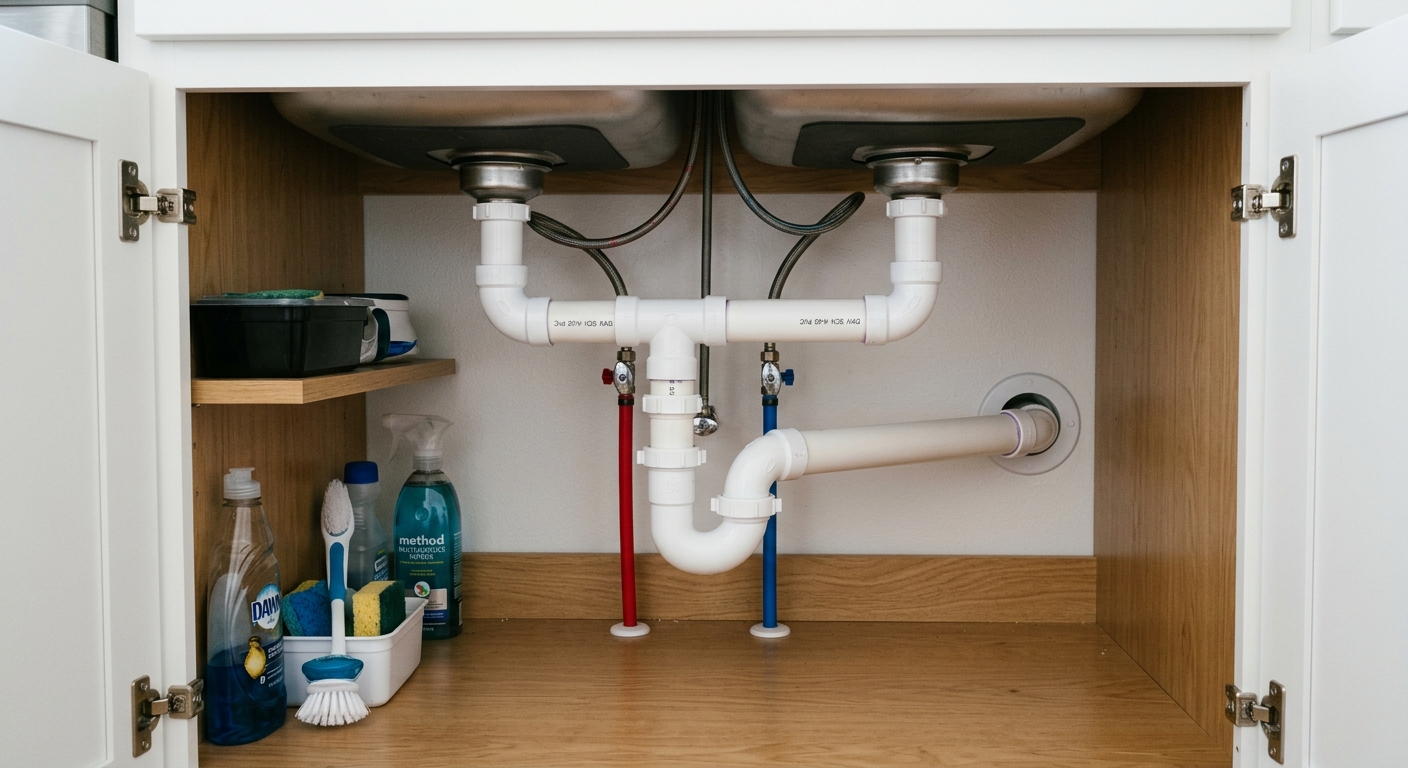
Plumbing services and costs in High River
High River plumbing costs are shaped by both the age of local homes and how quickly winter cold can turn a small issue into an emergency. In High River, about 23.8% of homes were built before 1981, which means many properties have older pipe materials and service entries that can be more prone to corrosion or restrictive flow over time. With homeowner households forming 75.4% of households, you’ll also see a steady demand for replacement work—especially water heaters and repiping in older single-detached houses (50.4% of dwellings). (Statistics Canada, 2021 Census) In Calgary-area conditions, freeze risk is the big pricing driver: long cold snaps and wind exposure around exterior walls, garages, and poorly insulated service runs push up burst-pipe callouts and restoration effort. The market is also busy when contractors are screening higher-risk homes for frozen-pipe prevention, so scheduling can tighten during deep freezes.
You’ll notice stronger demand in areas with more older housing stock and utility access complexity—Westmount and the River Park area are commonly where we see burst/repair calls tied to exposed plumbing runs, as well as follow-up work once leaks are found. Expect that the biggest portion of your quote is often access and restoration: cutting drywall, dealing with frozen sections, and matching finishes after repairs. With that in mind, the table below gives a realistic “starting point” for common High River jobs, so you can compare quotes apples-to-apples.
| Service |
What's Included |
Typical Duration |
Price Range |
| Emergency repair (burst pipe, active leak) |
Shutoff/isolations, locate leak, repair/replace damaged section, pressure test, basic cleanup |
2–6 hours (plus drying/restoration time) |
$180–$900 |
| Water heater replacement (tank, 40–60 gallon) |
Remove/haul-away old tank, install new unit, new fittings/venting as required, pressure/temperature check |
4–8 hours |
$1,800–$5,200 |
| Tankless water heater installation |
Mount unit, gas/electrical connections as needed, venting/condensate line, initial system commissioning |
1 day (often 6–10 hours) |
$3,000–$8,200 |
| Full-home repipe (supply lines, PEX) |
Remove/replace water distribution piping, new shutoffs, pressure test, wall/floor restoration allowance |
2–7 days (site dependent) |
$3,500–$18,000 |
| Drain snaking / hydro-jetting (blocked drain) |
Camera inspection (if needed), snake/jet to clear, verify flow, minor cleanup |
1–4 hours |
$180–$1,200 |
| Backwater valve installation |
Assess foundation drain route, install backwater valve assembly, verify operation, basic testing |
4–10 hours |
$1,000–$4,000 |
Prices are estimates only and vary by project scope, site access and material selection.
What affects the price of plumbing in High River
Two homeowners in the Calgary region can receive quotes for the “same” plumbing problem that differ by 30–50% because the hidden variables—where the pipe runs, how much restoration is required, and how hard it is to access the failing section—change the real labour and materials burden. Freeze risk is the first variable in our area. Frost depth and how the home is insulated determine whether outdoor runs, garage piping, or service entries need insulation upgrades or heat-tracing, and whether a repair turns into a larger replacement once a frozen section is opened. Then water hardness comes into play: harder water increases mineral scale in water heaters and on fixtures, shortening efficiency and sometimes shortening replacement intervals, especially when units run hot to maintain output.
Older housing stock across the Calgary area—including High River—also increases the likelihood of galvanized lines and legacy materials. Over time, galvanized corrosion restricts flow, and poly-B (polybutylene) piping—common in some builds from the 1980s to mid-1990s—can fail at fittings, which often leads to targeted repairs early, then full repipe later. The cost gap shows up quickly: a simple emergency repair might land in the $180–$900 range, but when freeze damage requires opening walls and replacing beyond the initial leak, costs can climb into repipe territory ($3,500–$18,000). In practical terms, if the leak is behind a finished wall or slab access is needed, you’re not just paying for pipe labour—you’re paying to reach and restore.
Concrete local examples: an exterior-wall supply line that froze will often require insulation plus a longer replacement segment than expected; a corroded galvanized branch line that’s discoloured or shows reduced flow can require repipe instead of repeated “band-aid” fixes; and a tankless install can jump in price when venting/condensate routing is complicated by existing framing.
| Price Factor |
Why It Matters |
Cost Impact |
| Type of work — repair vs. replacement vs. new install |
Repairs are smaller scoped; replacements/new installs require more labour, testing, and sometimes permits. |
Repairs often stay near $180–$900, while replacements/repiping can move into $1,800–$18,000 depending on scope. |
| Water heater size and fuel type (gas vs. electric vs. tankless) |
Tank size affects venting/clearances; fuel type changes components and connection requirements. |
Tank changeouts can sit in the $1,800–$5,200 band; tankless adds complexity beyond that. |
| Pipe material — PEX vs. copper vs. CPVC for repiping |
Material choice affects cost, installation method, and suitability for your existing system. |
Typical repipe ranges commonly fall within $3,500–$18,000, shifting based on chosen material and route length. |
| Access — pipes in walls or slab require drywall or concrete cutting |
Access drives labour time and restoration materials. |
Same-room repair can be a fraction of a whole-home open-up job; restorations can be the majority cost. |
| Permit requirement — adds cost and inspection scheduling time |
Inspections can add delays and documentation workload. |
Delays can increase labour window costs; total job cost can move upward by hundreds to more. |
| Emergency vs. scheduled — after-hours calls carry a premium |
Freeze/active-leak calls require immediate dispatch and priority availability. |
Emergency repair pricing often rises within the $180–$900 range versus scheduled repairs. |
| Water hardness — affects water heater sizing and descaling needs |
Mineral scale reduces efficiency and can shorten service life. |
Hard-water households may need earlier maintenance/descaling and more frequent replacement planning. |
| Number of fixtures or drain lines involved |
Multiple affected lines increase diagnostic time and clearing/repair scope. |
A single clogged line might stay near drain clearing bands; whole-line fixes can trend toward higher work. |
Permits & regulations in Alberta
In Alberta, most plumbing work beyond simple fixture replacement must be done by a licensed plumber. As a homeowner in High River, you should assume that permits are required for higher-impact jobs—new drain connections, water-heater changeouts in some municipalities, full repiping, and any work that ties into the municipal water or sewer system. Backwater valve installation (a common protective upgrade in Calgary-area flood/backflow risk situations) typically requires a permit and inspection as well. Simple swaps like replacing a faucet or shower trim can sometimes be treated differently depending on the exact scope, but once you’re altering supply piping, changing venting/connection details, or touching sewer/drain piping, you should expect permit involvement.
To verify a contractor before work starts, follow a practical step-by-step check. First, confirm the plumber’s Alberta licence: look up the licence status through the appropriate Alberta online licence registry. Second, request a certificate of insurance showing general liability coverage and ensure it’s current for the date of service. Third, verify WSIB/WCB coverage (the contractor should provide proof or documentation you can review). Finally, ask for a clearance letter where applicable and confirm they will coordinate any inspection scheduling tied to the permit. If they can’t provide documentation promptly, that’s a red flag.
Common plumbing problems in High River homes and how to fix them
High River’s housing stock and winter conditions combine to create a familiar set of plumbing problems—especially in homes with older pipe materials and less protected exterior-wall or garage runs. First, burst or frozen pipes: prevention is about insulating exposed lines and sealing drafts, and when needed, adding heat trace. If a freeze actually happens, the key is fast shutoff and correct repair—often beyond the visibly damaged section—so the rest of the run isn’t left vulnerable to refreeze. Second, aging pipe materials: galvanized steel can corrode, restricting flow and discolouring water; poly-B can develop fitting failures and cracks. Proactive repiping is often cheaper than repeated stop-gap repairs that keep failing in other branches.
Third, water-heater end-of-life. In Calgary-area homes, hard water can accelerate scale buildup, reducing heating efficiency and pushing earlier replacement planning. If you’re on hard water and you want faster recovery, a tank can still be solid, but tankless may become attractive when properly sized and maintained. Fourth, low water pressure throughout the home. Plumbers typically check aerators first, then trace pressure at different fixtures, and if needed, inspect for corroded galvanized lines or pressure issues that may be influenced by system conditions. Fifth, drain issues: slow drains can be root intrusion, buildup, or— in older homes—failures in cast-iron drain sections. Hydro-jetting plus targeted repair is often different (and more effective) than repeated snaking.
Cost reality check: an emergency burst-pipe repair may fall around the $180–$900 band if it’s accessible and limited. But if frozen damage forces wall openings and a longer section replacement, you can quickly move into repipe-style costs ($3,500–$18,000), which is why early detection matters.
| Issue |
Common Cause in High River |
Typical Fix |
Price Band |
| Burst or frozen pipe |
Exterior-wall/garage runs freezing; exposed service entries and insufficient insulation |
Shutoff, isolate and repair/replace damaged section, insulate/heat trace where needed |
$180–$900 |
| Low water pressure throughout home |
Corroded galvanized lines; buildup or partial blockage; reduced flow through older branches |
Diagnostic pressure testing, aerator checks, flush/clear lines; repipe if restrictions are widespread |
$180–$1,200 |
| Slow or blocked drain |
Hair/grease buildup; scale; occasional root intrusion in older drain routes |
Camera inspection, snake or hydro-jetting, targeted section replacement if damaged |
$180–$1,200 |
| Leaking or failed water heater |
Tank corrosion; hard-water scale; aging anode/valves and venting condition |
Replace tank heater (or evaluate for tankless); new fittings/venting checks |
$1,800–$5,200 |
| Poly-B pipe failure (fitting or pipe crack) |
Older poly-B systems developing fitting leaks or brittleness-related cracks |
Pressure test, locate failures, partial replacement or full repipe to PEX depending on extent |
$3,500–$18,000 |
| Galvanized pipe corrosion (restricted flow, discolouration) |
Internal corrosion and mineral buildup narrowing supply pathways |
Flush/assess, then plan repipe to PEX if multiple branches show restriction or discoloration |
$3,500–$18,000 |
How to choose a plumbing contractor in High River
Start with verification. In Alberta, confirm the contractor’s plumbing licence status and make sure they carry liability insurance and WSIB/WCB coverage—ask for documentation before anyone drills into walls or opens a line. You should also ensure the quote is itemised with labour and material components, not just a lump sum, so you can see what you’re paying for. For High River homes with older plumbing, the scope can widen quickly once walls are opened, so a good contractor will explain what’s included (and what isn’t) such as permit pull responsibility, disposal, and restoration allowances.
Next, request 2–3 written quotes. Make sure they specify pipe materials, heater model/size, expected pipe routing, and diagnostic steps (for example, camera use before drain work). Warranty matters too: ask for the workmanship warranty length and whether it applies if the issue is due to a pre-existing condition. Product/manufacturer warranty should be provided in writing, and it should clarify whether you can transfer coverage if you sell the home.
For payment schedule, never accept more than 10–15% upfront. Use a holdback until the job is complete and tested. Finally, lock in a timeline: you want a start date and a completion estimate in writing, especially during cold snaps when freeze-related follow-ups can disrupt restoration schedules.
- Ask for licence number and verify it through Alberta’s online licence registry.
- Request a current certificate of insurance (liability) before work begins.
- Confirm WSIB/WCB coverage with proof, not just a verbal claim.
- Get 2–3 itemised quotes separating labour vs. parts/materials.
- Ensure the quote states whether a permit is required and who submits for it.
- Confirm disposal is included (old heater haul-away, debris removal, clean-up).
- Require clarity on access and restoration (drywall cut/patch allowances).
- Ask how they diagnose first (pressure test, camera, flow measurement) before replacing.
- Check warranty terms: workmanship length and product/manufacturer warranty details.
- Keep deposits to 10–15% maximum; hold back funds until testing is complete.
- Get start date, estimated duration, and contingency plan for frozen/hidden conditions.
- Ask for how they protect your home during after-hours/emergency work (drying, containment).
Red flags in High River: “no licence/no proof” when asked for Alberta credentials, a quote that’s only a lump sum with no breakdown, refusals to provide insurance/WSIB documentation, vague warranty language (“we stand behind it” without dates), and promises like “we’ll repair without testing” for pressure/leak complaints.
Frequently asked questions — plumbing in High River
What is the difference between ABS and PVC pipe?
ABS and PVC are both used for drain/vent piping, but they differ in material behaviour. ABS (often black) is typically tougher and can handle impact differently; PVC (often white/grey/cream) is known for corrosion resistance and consistent installation characteristics. In Alberta homes, what matters most for homeowners is matching the existing system and using the correct fittings and joining method, because improper transitions can lead to leaks or code issues. If you’re repairing a drain line in High River, a licensed plumber should confirm what’s currently installed, then specify the right pipe and solvent/coupling method for a proper seal. For budgeting, many drain repairs start around the $180–$900 range when it’s limited to clearing or a short replacement section.
How do I know if I have a slab leak in High River?
In High River, a slab leak is usually suspected when you see persistent dampness, unexplained moisture, or a recurring drop in water pressure and unusually high water bills—even if there’s no visible leak upstairs. You may also notice warm spots near plumbing runs in colder weather, or the sound of water moving when you’re not using fixtures. The right approach is diagnostic: shutoff testing, checking meter movement, then locating the likely section using listening tools or other methods. Avoid opening the slab immediately; that can become very expensive. If you confirm a leak and repairs involve more than a small cut-out, you may need broader rework of supply lines. Depending on scope, costs can move from a repair band to repipe-level spending; plan for the possibility that a larger area replacement could trend toward $3,500–$18,000.
What is a sump pump and do I need one in High River?
A sump pump collects water from a sump pit (often in a basement/crawl space area) and pumps it away from the foundation. In High River, whether you “need” one depends on your drainage history: recurring seepage, a wet basement, or known low-point issues after heavy rain/spring melt. Many homes instead benefit from better grading, foundation drains, and—where applicable—backwater protection. For flood/backflow risk, a backwater valve is often recommended in Calgary-area conditions and typically requires a permit and inspection. If your issue is intermittent and you only see it during storms, a plumber may start with inspection of drainage pathways before recommending a sump. Budget-wise, protected backflow upgrades can land in the roughly $1,000–$4,000 range depending on the foundation and drain route.
How much does a plumber cost in High River?
In High River, plumber costs depend on whether you’re dealing with an emergency, how accessible the plumbing is, and how much restoration is required after the repair. For simple repairs and active leaks, many jobs fall into the $180–$900 range, especially when shutoff and access are straightforward. Emergency after-hours calls during deep cold snaps can cost more because of dispatch and urgency, and hidden freeze damage can increase scope quickly once walls or floors are opened. For bigger projects like repiping, the range is commonly $3,500–$18,000 because labour and access/restoration dominate. Always ask for itemised quotes (labour + parts) and confirm what’s included—permit pull, disposal, testing—so the final number matches what you were expecting.
How much does water heater installation cost in High River?
For a standard tank water heater installation (commonly a 40–60 gallon unit), High River pricing is typically in the $1,800–$5,200 range. That’s for removal/haul-away of the old tank, supply/venting hookups as required, and commissioning/testing to confirm correct operation. Final cost varies based on the heater’s fuel type (gas vs. electric), existing plumbing configuration, venting condition, and how easy it is to access the unit. Hard water can also matter because scale buildup shortens the service life and may influence maintenance timing and sizing decisions. If you’re considering a tankless upgrade, installation can cost more due to routing, vent/condensate details, and the added system components—so ask your plumber for a detailed breakdown rather than comparing sticker prices.
Tank vs tankless water heater — which is better?
Choosing between tank and tankless depends on your household hot-water demand, water hardness, and how much you want to plan for maintenance. A tank heater is often the simplest and most predictable option; in High River, replacement typically falls around $1,800–$5,200. Tankless units can be efficient and provide continuous hot water, but they require correct sizing and good venting/condensate setup. In hard-water areas common to the Prairies and southern regions, scale can build up in any heater, so tankless units may still need maintenance/descaling on a schedule that matches your water conditions. For some households, the tank is the better value if demand is stable and access is easy; for others—especially larger families or high simultaneous usage—tankless can justify the higher install cost. A plumber should size the system based on your fixtures and flow, not just install preference.