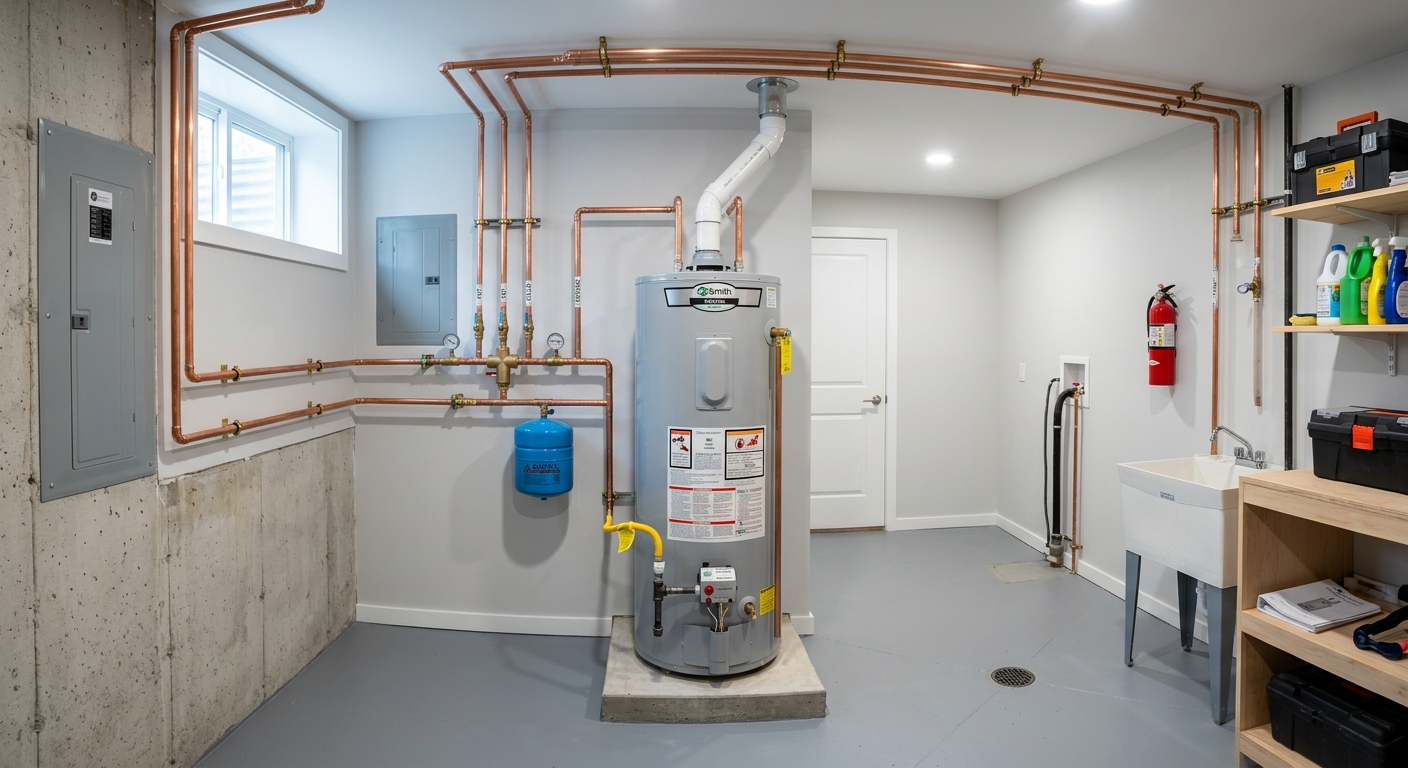
Plumbing services and costs in Highland Park
In Highland Park, Alberta, homeowners typically feel plumbing costs most during the coldest stretches and in older pockets of the neighbourhood where service access is trickier. With a population of 4,105 (Statistics Canada, 2021 Census), demand is steady, but winter call-outs spike quickly—especially on homes that have older service entries and less protected exterior-wall or unheated spaces. In this Calgary region, long cold snaps are a major driver of pricing because freeze risk influences how deep supply lines must be buried, whether garage or outdoor leads need insulation upgrades, and when heat-tracing is recommended. Local guidance also stresses that pipes in exterior-wall areas and unheated runs freeze more easily, so contractors often spend extra time assessing “where heat is missing” before repairs. Housing age matters too: across the Calgary area, older builds more often include galvanized or legacy service materials, and that raises the odds of partial or full repiping being proposed rather than band-aid fixes. In practical terms, you may see a wider range of outcomes in Highland Park around older streets near established commercial corridors, where reach, patching, and restoration can add labour days even for the same basic plumbing scope.
When you’re comparing contractors, it helps to start with typical price bands for the most common requests—then adjust for access, number of fixtures, and whether the work is emergency or scheduled. Use the table below as a realistic baseline for Highland Park quotes.
| Service |
What's Included |
Typical Duration |
Price Range |
| Emergency repair (burst pipe, active leak) |
Locate leak, isolate/repair or replace damaged section, pressure test, basic wall/floor patching as feasible, cleanup |
2–8 hours (often same day) + restoration scheduling |
$180–$900 |
| Water heater replacement (tank, 40–60 gallon) |
Remove/haul away old unit, install new tank, connect gas/electric, venting check (as applicable), pressure/temperature set, test for leaks |
4–8 hours |
$1,800–$5,200 |
| Tankless water heater installation |
Supply/venting layout, unit install, gas or electric requirements check, condensate handling (where needed), commissioning and test |
1–2 working days |
$3,000–$7,500 |
| Full-home repipe (supply lines, PEX) |
Replace galvanized/legacy supply lines with new PEX, shutoffs, fixture reconnections, pressure test, drywall/coring/restoration coordination |
3–7 working days |
$3,500–$18,000 |
| Drain snaking / hydro-jetting (blocked drain) |
Camera or visual inspection (as needed), snake/jet to clear obstruction, test for proper flow, basic clean-up |
1–5 hours |
$220–$1,450 |
| Backwater valve installation |
Locate sewer line entry, install backwater prevention valve, connection to existing piping, check operation and test discharge |
1–2 working days |
$1,200–$3,900 |
Prices are estimates only and vary by project scope, site access and material selection.
What affects the price of plumbing in Highland Park
In Highland Park, Alberta, two quotes for the same “headline” job can differ by 30–50% across the Calgary region because the cost isn’t just the labour—it’s what the plumber must open, relocate, protect, and restore to get the system back to code. Freeze risk is the first big driver. Calgary-area conditions push contractors to consider frost protection seriously: supply lines and service entries need insulation and sealing, and in higher-risk homes, insulation upgrades or heat-trace cable may be recommended before the repair even starts. Water hardness is the second driver; harder water can accelerate mineral scale, shortening heater service life and increasing descaling and maintenance needs for both tanks and tankless units.
Older regional housing stock also changes the quote math. In homes built from the 1980s through the mid-1990s, poly-B pipe was used in some builds, and galvanized lines are still commonly found in older neighbourhoods—so plumbers may need more extensive replacement than a simple connector swap. Access and restoration are where costs jump: if pipes run in walls or under a slab, opening drywall or cutting concrete adds time and materials.
Here are practical examples you’ll notice in Highland Park: if you’re replacing a failing tankless unit, venting clearances and gas line sizing can move the job from the lower band (for straightforward swaps) to the upper end when upgrades are required. If you’re dealing with a repeating freeze-leak at an exterior-wall riser, insulation and re-routing steps can justify a broader scope than a single repair—especially when leak damage can climb into the tens of thousands if missed. For budgeting, a straightforward emergency leak repair often falls in the $180–$900 neighbourhood, while a heater replacement is commonly in the $1,800–$5,200 band depending on venting, fuel type, and access.
| Price Factor |
Why It Matters |
Cost Impact |
| Type of work — repair vs. replacement vs. new install |
New installs and replacements require longer disconnect/reconnect, testing, and sometimes upgrades |
Repairs can be far less than full replacements; replacement often adds 2–4× labour time |
| Water heater size and fuel type (gas vs. electric vs. tankless) |
Fuel type changes venting/electrical work; tankless adds commissioning and vent/condensate requirements |
Tank changeouts typically $1,800–$5,200; tankless can move well above that band |
| Pipe material — PEX vs. copper vs. CPVC for repiping |
Different materials have different cost and fitting approaches; some systems may require specific transition hardware |
Material selection can shift total repipe cost materially even with similar labour |
| Access — pipes in walls or slab require drywall or concrete cutting |
Hidden lines increase opening/restoration work and can require specialty tools |
Access-related restoration can add several thousand dollars to repipe/drain work |
| Permit requirement — adds cost and inspection scheduling time |
Permits can add administrative fees and require inspection windows that extend project duration |
Scheduling changes can increase labour days and overhead |
| Emergency vs. scheduled — after-hours calls carry a premium |
Freeze and burst calls often happen at night or weekends |
Emergency premiums can add a noticeable uplift on top of parts/labour |
| Water hardness — affects water heater sizing and descaling needs |
Hard water accelerates scaling on heat exchangers and tanks |
May favour higher-quality heaters or shorter maintenance intervals |
| Number of fixtures or drain lines involved |
More connections and more trouble spots increase diagnostic and restore time |
Per-fixture/line complexity can raise total scope quickly |
Permits & regulations in Alberta
In Alberta, most plumbing work beyond simple fixture replacement must be completed by a licensed plumber. Permits are commonly required for jobs that connect to the municipal water or sewer system, for new drain connections, for full repiping, and for many water-heater changeouts depending on local requirements and how the connection is being modified. Backwater valve installation is also commonly subject to permitting and inspection because it changes how wastewater is managed and ties into the sewer system. The best approach in Highland Park is to confirm the exact scope in writing: ask whether a permit will be pulled, which inspection is required, and who is responsible for scheduling.
When verifying a contractor, start with their Alberta licence: request their licence number and confirm it using the appropriate online registry for Alberta trades. Next, ask for a certificate of insurance showing liability coverage for plumbing work. Finally, verify workers’ coverage (WSIB/WCB) if they employ tradespeople or subcontract labour—don’t rely on “we’re insured” without documents. For homeowners, the simplest method is to collect three documents before work begins: (1) licence proof/number, (2) current certificate of liability insurance, and (3) a WSIB/WCB clearance letter or account confirmation. A reputable plumber will hand these over quickly because it protects you during inspections and if any damage occurs. If permits are needed, the plumber should also explain the inspection steps—typically rough-in and final—so your project timeline matches the inspection window.
Common plumbing problems in Highland Park homes and how to fix them
Highland Park homes in Calgary’s climate commonly run into five plumbing issues tied to cold exposure, aging pipe materials, and winter water usage patterns. (1) Burst or frozen pipes: prevention starts with insulating exposed lines in unheated or exterior-wall areas, sealing drafts, and maintaining indoor heat. If pipes are at risk near exterior entries or in garages, heat-trace cable may be recommended. If a freeze does happen, treat it as urgent—shut off water, contain damage quickly, and have a plumber locate the freeze point rather than only replacing the last broken section.
(2) Aging pipe materials: galvanized steel can corrode and restrict flow over time, and poly-B can fail at fittings due to brittle behaviour and cracking risk. In both cases, a proactive repipe often beats repeated “repairs that keep returning.” (3) Water heater end-of-life: tank replacements are usually easier, while tankless units can be more efficient long-term—especially if hard water scaling is managed with proper maintenance. (4) Low water pressure: plumbers typically check aerators first, then work outward to diagnose whether pressure is reduced by municipal supply changes, corroded galvanized lines, or hidden obstructions. (5) Drain issues: slow drains can be hair/grease blockages, root intrusion, or older cast-iron drain line failure—camera inspection is key before committing to hydro-jetting.
Where price differences actually make sense: if you’re replacing a failing tank, a typical replacement is in the $1,800–$5,200 range; paying for a thorough venting and connection check can prevent repeat failures. But if your home has recurring pressure drops tied to corroded galvanized supply lines, repiping can be a smarter investment than repeated service calls, since missed leaks from compromised pipes in a freeze-prone climate can escalate quickly.
| Issue |
Common Cause in Highland Park |
Typical Fix |
Price Band |
| Burst or frozen pipe |
Exterior-wall or unheated garage runs freezing during cold snaps; insufficient insulation; delayed shutdown |
Locate freeze/leak, repair or replace damaged section, pressure test, add insulation/heat-trace where needed |
$180–$900 |
| Low water pressure throughout home |
Clogged aerators/fixtures; mineral scale; corroded galvanized supply; municipal pressure fluctuation |
Diagnose with pressure tests, service aerators, assess supply line condition, recommend repipe if severe |
$250–$1,500 |
| Slow or blocked drain |
Hair/grease buildup; partial obstruction; root intrusion in older service lines |
Snake and/or hydro-jet, camera inspection, repair or section replacement if damage is found |
$220–$1,450 |
| Leaking or failed water heater |
Tank corrosion; hard-water scaling; failing safety valve or fittings; age-related wear |
Replace tank, check venting/combustion (as applicable), install shutoffs/flush and test |
$1,800–$5,200 |
| Poly-B pipe failure (fitting or pipe crack) |
Fittings/joints that degrade over time; freeze/expansion cycles increasing stress |
Replace affected sections or repipe supply lines with PEX; pressure test and restore |
$3,500–$18,000 |
| Galvanized pipe corrosion (restricted flow, discolouration) |
Interior corrosion reducing flow; sediment build-up; discoloured water at taps |
Assess pressure and flow, flush where appropriate, and repipe if restriction is system-wide |
$3,500–$18,000 |
How to choose a plumbing contractor in Highland Park
Choosing the right plumber in Highland Park comes down to verification, clarity, and how they handle risk—especially with Calgary’s freeze-prone winters. First, confirm Alberta licensing by asking for the plumber’s licence number and checking it against the Alberta trade registry online. Next, request proof of liability insurance (so you’re covered if there’s property damage) and confirm workers’ coverage (WSIB/WCB) if they have employees or subcontractors. Don’t accept expired documents or photos of paperwork that can’t be validated.
Then get 2–3 itemised written quotes. You want a labour + materials breakdown, not a lump sum with vague language. Ask whether a permit will be pulled (and whether the plumber includes the permit cost and inspection scheduling time). Confirm disposal/recycling fees for old equipment and whether restoration (drywall cut-outs, patching coordination, or flooring reinstatement) is included or excluded. A clear scope is especially important for repipes and drains, where hidden access points affect cost.
For warranty, look for a workmanship warranty (typical industry practice is at least a year, and longer is a good sign) and separate product/manufacturer warranties. Ask if warranties are transferable if you sell your home. For payment schedule, keep it conservative: never pay more than 10–15% upfront, and hold back a portion until the job is complete and tested. Finally, insist on a written start date and completion estimate—winter emergencies can change timelines, but a professional should still give a realistic plan.
- Ask for Alberta licence number(s) and confirm online before work starts.
- Request a current certificate of liability insurance and check the coverage details.
- Verify WSIB/WCB clearance or coverage for any workers assigned to your job.
- Get 2–3 itemised quotes with labour, parts, and accessories listed separately.
- Ensure the scope states what’s included: permits, disposal, pressure testing, and cleanup.
- Confirm restoration responsibilities for drywall, flooring, and painting coordination (if applicable).
- Ask for how they’ll handle freeze-risk mitigation (insulation/heat-trace recommendations in the quote).
- Verify warranty terms: workmanship duration and whether manufacturer warranties apply.
- Confirm payment schedule—maximum 10–15% upfront, with a holdback until testing and sign-off.
- Require a written timeline with start date and completion estimate, including inspection windows when needed.
- Look for camera inspection for drain issues rather than “guessing” where blockage is.
- Ask who will pull the permit (and whether delays are included in the schedule).
Red flags to watch for in Highland Park: vague quotes with no permit or restoration details, refusing to provide licence/insurance/WSIB documents, asking for large upfront payments (beyond 10–15%), promising “quick fixes” that ignore freeze protection for exterior runs, and giving only a phone estimate without visiting to assess access and scope.
Frequently asked questions — plumbing in Highland Park
How much does water heater installation cost in Highland Park?
In Highland Park and across the Calgary region, a typical tank water heater replacement (commonly 40–60 gallons) is usually in the $1,800–$5,200 range. Your final price depends on fuel type (gas vs. electric), whether venting or electrical upgrades are needed, and how hard the install access is (closet location, clearances, and how the old unit disconnects). Calgary’s winter conditions also matter indirectly: if your heater is in an exterior-wall area or near drafty runs, plumbers often recommend sealing and insulating nearby piping to reduce freeze risk on supply lines. If you have hard water, descaling and proper maintenance setup can also affect what’s recommended at installation.
Tank vs tankless water heater — which is better?
For many Highland Park homeowners, “better” comes down to hot-water demand, installation complexity, and maintenance comfort. Tank heaters are often simpler to replace and can fall in the $1,800–$5,200 band for standard replacements. Tankless units can be a strong choice if you want continuous hot water and you’re comfortable with proper venting/condensate planning and occasional maintenance to manage scale. In a climate where cold snaps drive heavier winter usage, tankless can still work well, but sizing and gas/electrical capacity must be done correctly. Hard water can accelerate scaling on heat exchangers, so a plumber may recommend filtration or a descaling schedule. If your home’s venting or gas line setup is limited, the overall tankless install price can rise substantially compared to a tank replacement.
How do I prevent frozen pipes in Highland Park?
Start with insulation and sealing: in Highland Park, prioritize any plumbing runs in unheated spaces, exterior-wall areas, crawlspaces, and near garage or service-entry locations. Make sure gaps around pipe penetrations are sealed so cold air doesn’t reach the pipe. During cold snaps, keep thermostat settings consistent and allow warm air to reach interior cabinets where pipes run. If you have a history of freeze-related repairs, ask a plumber about heat-trace cable for at-risk exterior or shallow lines—local guidance emphasizes that pipes in areas with less heat freeze more easily. After any repair, it’s also smart to pressure-test and verify that restored sections are fully protected, because missed leaks can escalate quickly in Alberta winter conditions.
Why is my water pressure low?
Low pressure in Highland Park can come from several directions. Common causes are clogged aerators or showerheads, mineral scale buildup, or a partial blockage in supply lines. In homes with older galvanized piping, corrosion can restrict flow over time and show up as reduced pressure at multiple fixtures. If pressure is low throughout the home, plumbers typically start with a pressure test at the supply and then move outward—checking shutoffs, fixtures, and the condition of the supply piping. If the issue is only at one tap, it’s usually fixture-related. Calgary-area winter demand and seasonal factors can also contribute to temporary fluctuations, but persistent low pressure often means a plumbing or piping condition needs attention rather than waiting it out.
Do I need a permit for plumbing work in Alberta?
In Alberta, many plumbing jobs require a permit, especially when the work connects to the municipal water or sewer system, involves new drain connections, includes full repiping, or changes the plumbing infrastructure. Water-heater changeouts can also require permits depending on the municipality and whether connections/venting are modified. Backwater valve installation is commonly treated as a permit-and-inspection item because it changes sewer system protection. Simple fixture replacements are often treated differently than system changes, but the safest approach is to ask your licensed plumber to confirm permit requirements in your exact scope. Before work begins, verify the plumber’s Alberta licence and that they can provide documentation for the permit process when it applies.
How do I know if I need to repipe my home?
Repiping is usually recommended when problems are systemic rather than isolated. In Highland Park, the strongest triggers are repeating leaks, widespread low pressure, discoloured or sediment-filled water at multiple fixtures, and evidence of pipe corrosion or material failure—commonly galvanized lines or poly-B systems from certain build periods. A plumber should assess pressure/flow, inspect accessible sections, and often recommend targeted probing or camera/pressure tests to determine whether the issue is localized or whole-system. Repiping can fall in the $3,500–$18,000 range depending on access and restoration. If you’ve had multiple “repairs that keep coming back,” or if freeze-risk areas are repeatedly damaged, repiping may prevent costly failures later in winter.