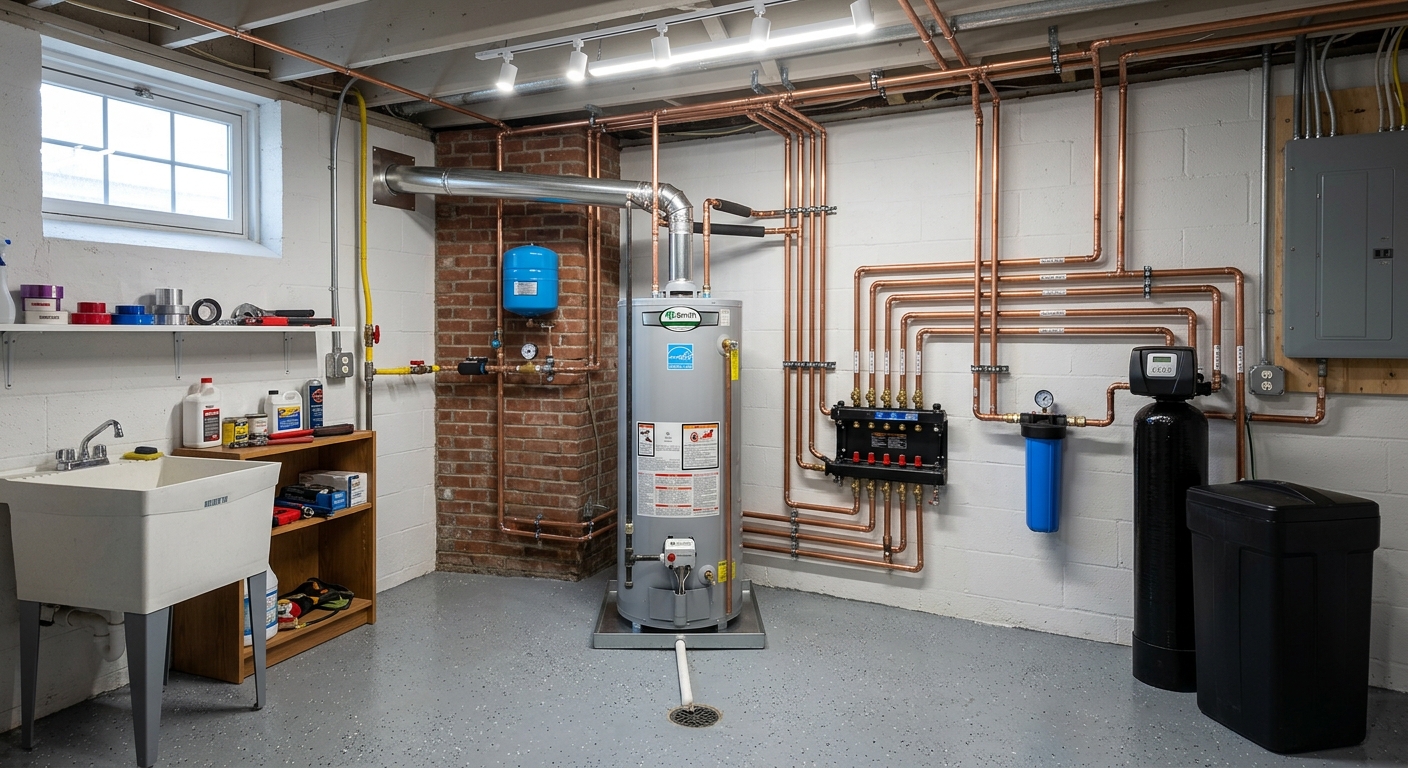
Plumbing services and costs in Red Deer
Red Deer homeowners typically feel plumbing costs most when cold snaps hit—because winter freeze risk drives both emergency calls and the amount of labour needed to protect pipes properly. In Red Deer, about 34.1% of homes were built before 1981, and older plumbing systems are more likely to include galvanized steel supply lines, aging valves, and wear-prone hose bibbs that struggle during temperature swings. At the same time, the region has a steady base of homeowner households (26,255 owner households, or 64.8% of households), which supports consistent demand for planned replacements—especially for water heaters and repiping.
Local climate matters: best practice is to bury exterior supply lines at or below the frost line and improve insulation on any shallow runs, because a poorly protected line is a common cause of winter burst-pipe service calls. The Red Deer market also reflects solid contractor availability in areas like Innisfail Road and along parts of 670 (depending on service radius), but crews prioritize emergencies first—so timing can change your quote if you can’t access shutoff valves or if the leak is inside drywall.
Water in central Alberta trends moderately to very hard, which increases scale buildup in tanks and shortens water-heater life—so de-scaling and anode replacement aren’t “nice to haves” in many homes. That’s why a replacement may feel urgent even when the heater is “still working,” and why drain and valve work often bundle with heater or repipe projects. Use the table below as a realistic budgeting starting point for common jobs.
| Service |
What's Included |
Typical Duration |
Price Range |
| Emergency repair (burst pipe, active leak) |
Shutoff, leak locate, pipe repair, pressure test, clean-up; drywall access if needed |
2–8 hours |
$175–$750 |
| Water heater replacement (tank, 40–60 gallon) |
Remove/haul old unit, install new tank, connections, venting checks (if applicable), start-up and safety checks |
4–8 hours |
$1,500–$3,500 |
| Tankless water heater installation |
New tankless unit set and mounted, gas/water connections, venting/air supply configuration, commissioning, flush setup |
1–2 days |
$2,800–$5,200 |
| Full-home repipe (supply lines, PEX) |
Remove legacy piping, install PEX manifold-style routing, pressure test, tie-ins to fixtures and shutoffs |
2–5 days |
$2,500–$15,000 |
| Drain snaking / hydro-jetting (blocked drain) |
Camera check (often), snake or jetting, minor clearing, advice on whether root intrusion is present |
1–4 hours |
$250–$1,200 |
| Backwater valve installation |
Assess sewer line backflow risk, install backwater valve and service access, test operation |
4–8 hours |
$1,100–$2,900 |
Prices are estimates only and vary by project scope, site access and material selection.
What affects the price of plumbing in Red Deer
In Red Deer, you can easily see the same plumbing job come in 30–50% apart between quotes, even when homeowners describe the issue similarly. The spread usually comes down to how freeze risk is managed (depth, insulation, heat tracing), what’s known about pipe material behind walls, and whether the contractor is pricing a repair versus a planned replacement. With many older homes (and a significant share built before 1981), plumbers often uncover galvanized steel that restricts flow over time or older plumbing details that require extra access work—so “straightforward” leaks can become drywall, valve, or pipe-swap projects. Labour rates for licensed plumbers in central Alberta are typically in the mid-$100s per hour billed to the customer, and the clock speed of an emergency call amplifies that.
Freeze risk sets how deep exterior supply lines must be buried. Even within the same Red Deer neighbourhood, garage or shallow runs can need added insulation and sometimes heat trace cable—especially for exterior hose bibbs that freeze after temperature swings. On top of that, Alberta water tends to be hard, so scale buildup can reduce water-heater efficiency and shorten service life; in practical terms, homeowners often end up replacing sooner rather than waiting, even when a unit still produces hot water.
Concrete examples from Red Deer: (1) a “simple” emergency burst on an exterior run can jump into the repair band after access is gained and pipe sections are replaced; (2) a tank replacement in a hard-water home may be treated as a full replacement with descaling considerations and anode changes, aligning more closely with the upper end of typical heater pricing. If your system includes legacy galvanized or poly-B-style failures, the discussion can shift toward repiping budgets rather than one-off fixes—often moving the conversation from a $175–$750 repair-style call into the $2,500–$15,000 repipe range.
| Price Factor |
Why It Matters |
Cost Impact |
| Type of work — repair vs. replacement vs. new install |
Repairs are limited scope; replacements include remove/haul, re-connection and testing; new installs add design checks |
Can change total by 2–6× |
| Water heater size and fuel type (gas vs. electric vs. tankless) |
Gas units and tankless require venting/air checks; electric may require upgrades |
Typical range shift of roughly $500–$3,000+ |
| Pipe material — PEX vs. copper vs. CPVC for repiping |
Material cost and fitting method affect time and labour |
Often $1,000–$4,000 difference on full projects |
| Access — pipes in walls or slab require drywall or concrete cutting |
More access work increases labour and restoration |
Can add $500–$5,000+ |
| Permit requirement — adds cost and inspection scheduling time |
Permits/inspections can add administrative time and contractor scheduling |
Commonly adds $100–$500+ |
| Emergency vs. scheduled — after-hours calls carry a premium |
After-hours dispatch, priority service, and trip charges |
Often $150–$600+ higher |
| Water hardness — affects water heater sizing and descaling needs |
Hard water increases scale and wear on elements and fixtures |
Can shorten life, raising replacement frequency by years |
| Number of fixtures or drain lines involved |
More tie-ins equals more shutoffs, testing, and labour |
Incremental increases of $200–$1,000+ per added area |
Permits & regulations in Alberta
In Alberta, most plumbing work beyond simple fixture replacement must be completed by a licensed plumber. Permits are typically required when the work involves connecting new plumbing to the municipal water or sewer system, when you’re adding or changing drains, and for full repiping projects—because those changes affect how the system carries water and waste. Many jurisdictions also treat water-heater changeouts and venting/connection alterations as permit/inspection items depending on what’s being replaced and how the venting setup is configured. Backwater valve installations are also commonly permit-required in practical terms because they’re tied to how sewer flow behaves during heavy infiltration or backup events.
For any job in Red Deer, verify the plumber’s Alberta journeyman or master licence, and make sure they carry liability insurance and WSIB/WCB coverage. Here’s a homeowner-friendly step-by-step approach:
- Ask for their Alberta licence number and confirm it through the provincial online licence registry.
- Request a Certificate of Insurance and verify coverage limits before work starts.
- Ask for proof of WSIB/WCB account coverage (or equivalent compliance documentation).
- Confirm whether the contractor will pull the permit and schedule inspections, if required.
- Get the permit number/inspection plan included in the written estimate or job order where applicable.
If the quote is vague about permits, ask directly: “Will you handle the permit, and what work specifically requires it?” That clarity helps avoid delays during cold-weather scheduling.
Common plumbing problems in Red Deer homes and how to fix them
Red Deer homes often show the same plumbing patterns because of cold-climate freeze risk, mid-century housing layouts, and hard-water scale. Here are five issues I see frequently, plus the most effective ways to address them.
1) Burst or frozen pipes. Frozen supply lines usually happen where insulation is missing or where lines run shallow (like certain exterior or garage routes). Prevention is insulation upgrades and, when needed, heat trace cable plus ensuring the shutoff and drip points are accessible. When a freeze-burst happens, don’t just patch—have the plumber locate the failed section and pressure test before closing walls.
2) Aging pipe materials. Galvanized steel can corrode and restrict flow, and poly-B piping (where present) can fail at fittings due to brittleness. In a cold climate, repeated expansion/contraction can turn a problem into a catastrophic leak. If you’re already opening walls for another renovation, proactive repiping can be less disruptive than waiting for a failure.
3) Water heater end-of-life. Hard water accelerates scaling on tanks and can shorten element and anode lifespan. A tank replacement might land in the $1,500–$3,500 band, while tankless systems can cost more upfront, but they’re sometimes a better long-term fit when hot-water demand is steady and venting design is correct for Alberta conditions.
4) Low water pressure throughout the home. Causes include clogged aerators, corroded supply lines (often galvanized), and pressure drops tied to service or municipal conditions. A plumber should check the pressure at the entry, inspect shutoffs, and verify whether the restriction is upstream or fixture-specific.
5) Drain issues. Slow drains can be blockage, roots, or failed cast-iron sections in older areas. If snaking doesn’t resolve it quickly, camera diagnostics are usually the deciding step.
As a simple budgeting example: a drain snaking/jetting visit can fall within the $250–$1,200 range, but if the camera shows root intrusion and failed pipe sections, the fix may move into replacement-style work rather than a one-time clear.
| Issue |
Common Cause in Red Deer |
Typical Fix |
Price Band |
| Burst or frozen pipe |
Shallow exterior/garage runs, inadequate insulation on hose bibbs, temperature swings |
Repair/replace pipe section, restore insulation, pressure test; emergency shutoff locate |
$175–$750 |
| Low water pressure throughout home |
Corroded galvanized lines, partially closed shutoff, clogged aerators, pressure drop at entry |
Clean/replace aerators, confirm valve position, diagnose line restriction; possible re-pipe section |
$250–$2,500 |
| Slow or blocked drain |
Hair/grease buildup, root intrusion, and older drain materials |
Snake or hydro-jet with camera inspection; repair section if pipe integrity is compromised |
$250–$1,200 |
| Leaking or failed water heater |
Scale buildup from hard water, worn elements/anode, aging tank |
Replace tank; install appropriate water-quality maintenance guidance and confirm connections/venting |
$1,500–$3,500 |
| Poly-B pipe failure (fitting or pipe crack) |
Legacy poly-B installed in some mid/late 20th-century homes; brittle fittings under stress |
Repairs are often temporary; plan PEX/copper repipe for long-term reliability |
$2,500–$15,000 |
| Galvanized pipe corrosion (restricted flow, discolouration) |
Internal scale/rust restriction common in older supply lines |
Flush and test; if persistent, re-pipe affected runs or full supply system |
$2,500–$10,000 |
How to choose a plumbing contractor in Red Deer
Choosing a contractor is as important as price. In Red Deer, I recommend you verify three things before the first tool comes out: Alberta licensing, liability insurance, and WSIB/WCB/WCB-equivalent coverage where applicable. Start by asking for the plumber’s Alberta licence number and confirming it through the provincial licence registry. Next, request a Certificate of Insurance (liability coverage) so you know there’s protection if something damages your home. Finally, ask for proof of WSIB/WCB coverage—so you’re not left holding the risk if an injury happens on your property.
Then, get 2–3 itemised written quotes. “Itemised” means you should see labour and materials broken out (not a single lump sum), and you should see line items for diagnostics, shutoffs, testing, disposal/haul-away, and any permit handling. Read the scope carefully: are exclusions listed (like drywall patching, concrete cutting, or access restoration)? Is permit pull included, and does the quote include camera inspection for drains? If it’s a water heater or repipe, ask whether venting checks, pressure testing, and commissioning are included.
Warranty matters too. Ask for workmanship warranty length (often tied to how repairs are completed), product/manufacturer warranty terms, and whether the warranty is transferable to a new owner. For payment, don’t pay more than about 10–15% upfront; hold back a portion until the job is complete and tested. Also insist on a start date and completion estimate in writing—cold weather can extend timelines if parts aren’t stocked.
- Confirm Alberta journeyman/master licence number before booking.
- Verify liability insurance certificate and expiry date.
- Check WSIB/WCB coverage documentation.
- Use itemised quotes: labour, parts, diagnostics, disposal.
- Confirm permit responsibilities and whether the plumber pulls permits.
- Ask what’s excluded: drywall patching, restoration, landscaping, travel/after-hours.
- Require written scope with pipe materials and fixture model numbers.
- Ask about freeze protection upgrades if exterior lines are involved.
- Insist on pressure testing and/or commissioning documentation.
- Clarify warranty: workmanship duration and product warranty transferability.
- Keep upfront payment to 10–15% and holdback until testing passes.
- Request a schedule with start and completion dates in writing.
In Red Deer, red flags include: contractors who won’t provide licence/insurance/WSIB proof; quotes that omit testing (pressure test, venting checks, commissioning); “repairs-only” promises with no discussion of freeze protection for exterior lines; vague scopes that don’t list permit responsibility; and demands for large upfront payments before any diagnostic work.
Frequently asked questions — plumbing in Red Deer
How do I prevent frozen pipes in Red Deer?
In Red Deer, prevention is mostly about protecting any line that runs shallow, along exterior walls, or through unheated garage spaces. Prioritize insulation on exterior supply lines and ensure any hose bibbs have proper insulation covers or are drained correctly. If you’ve had repeated freeze problems, ask a licensed plumber to inspect pipe routing and check whether lines are buried at/near frost depth; if not, heat trace cable on at-risk runs may be recommended. During cold snaps, open cabinet doors to warm the space, and keep interior temperatures steady. If a freeze event is likely, confirm you can locate and operate the shutoff valves quickly—emergencies often cost more when access is delayed. Red Deer’s older housing stock (including homes built before 1981) makes proactive inspection especially worthwhile.
Why is my water pressure low?
Low water pressure can be caused by several things, and the right fix depends on where the restriction is. If pressure is low everywhere, common causes include a partially closed main shutoff, scale or corrosion restricting galvanized supply lines, or a pressure issue at the entry. If pressure is low only at one fixture, it’s often a clogged aerator or cartridge issue. A plumber in Red Deer should diagnose by measuring pressure at the home’s main entry, checking shutoffs, then isolating fixtures to find the restriction point. Hard water can accelerate scaling on aerators and inside equipment, so routine maintenance matters. If your system is older (and if you have visible discolouration or recurring sediment), a partial re-pipe decision may be more cost-effective than repeated cleaning—especially compared with continuing service calls in the repair bands (like $175–$750 for localized fixes).
Do I need a permit for plumbing work in Alberta?
In Alberta, permit requirements depend on the type of plumbing work. As a rule of thumb, most plumbing beyond simple fixture swap work should be performed by a licensed plumber, and permits are commonly required when work changes drain connections, connects new plumbing to the municipal water or sewer systems, or involves full repiping. Water-heater changeouts may require permitting/inspection in some cases depending on venting and how the connection is handled, and backwater valve installation typically requires a permit and inspection due to how it affects sewer flow/backflow protection. For Red Deer homeowners, the best process is to ask the contractor what permits are required for your specific job and confirm they will handle the permit pull and inspection scheduling. Always verify the plumber’s Alberta licence and confirm liability insurance and WSIB/WCB coverage before work begins.
How do I know if I need to repipe my home?
Repiping is usually the right call when multiple symptoms point to pipe material decline, not just an isolated leak. Watch for discoloured water, recurring pinhole leaks, frequent valve issues, noticeable pressure loss over time, and problems that keep returning after repairs. In many Red Deer homes—especially those built during earlier eras—galvanized steel supply lines can corrode internally and restrict flow. Some homes also have legacy poly-B piping where fittings or sections can fail. A plumber can confirm with pressure testing, inspection of accessible sections, and sometimes camera or diagnostic measurements for drains. If you’re already opening walls and you’re seeing material failure, repiping can be more economical than repeated emergency repairs. For budgeting, repiping often falls in the $2,500–$15,000 range depending on access and scope, while one-off repairs commonly sit in much lower bands (like $175–$750) but won’t fix the root cause if pipes are actively aging.
What causes hard water and how do I treat it?
Hard water is caused by high mineral content—commonly calcium and magnesium—picked up as water passes through local geology. In the Red Deer region, the water is commonly moderately to very hard, which means scale buildup on tanks, elements, and fixtures is a frequent issue. Treatment options depend on your goals: many homeowners start with periodic maintenance (descaling and anode replacement guidance for tanks), while others choose water softening systems to reduce scale. In a hard-water home, a tank may need earlier replacement planning, and fixtures can clog faster. If you’re considering a water softener, confirm the plumber can match system capacity to your household demand and hardness level, and clarify maintenance intervals. For tank planning, scale impacts life, so discussing water heater maintenance before failure can help avoid a rushed replacement during Alberta cold snaps.
How long does a water heater last in Red Deer?
Typical tank water heaters can last many years, but in Red Deer the exact timeline is influenced by water hardness, temperature settings, and how much sediment and scale build up inside the tank. Hard water tends to increase scaling on elements and shorten service life, and it can make corrosion and performance decline happen sooner than in softer-water regions. Homes built before 1981 are also more likely to have older piping and valves, which can contribute to operational strain. A plumber may recommend inspections or maintenance like anode checks and descaling to extend life. If you’re budgeting for replacement, a tank replacement commonly lands in the $1,500–$3,500 range depending on size and type. If you’re seeing leaks, inconsistent hot water, or significant sediment, don’t wait for full failure—especially with winter freeze risk affecting access and emergency response.