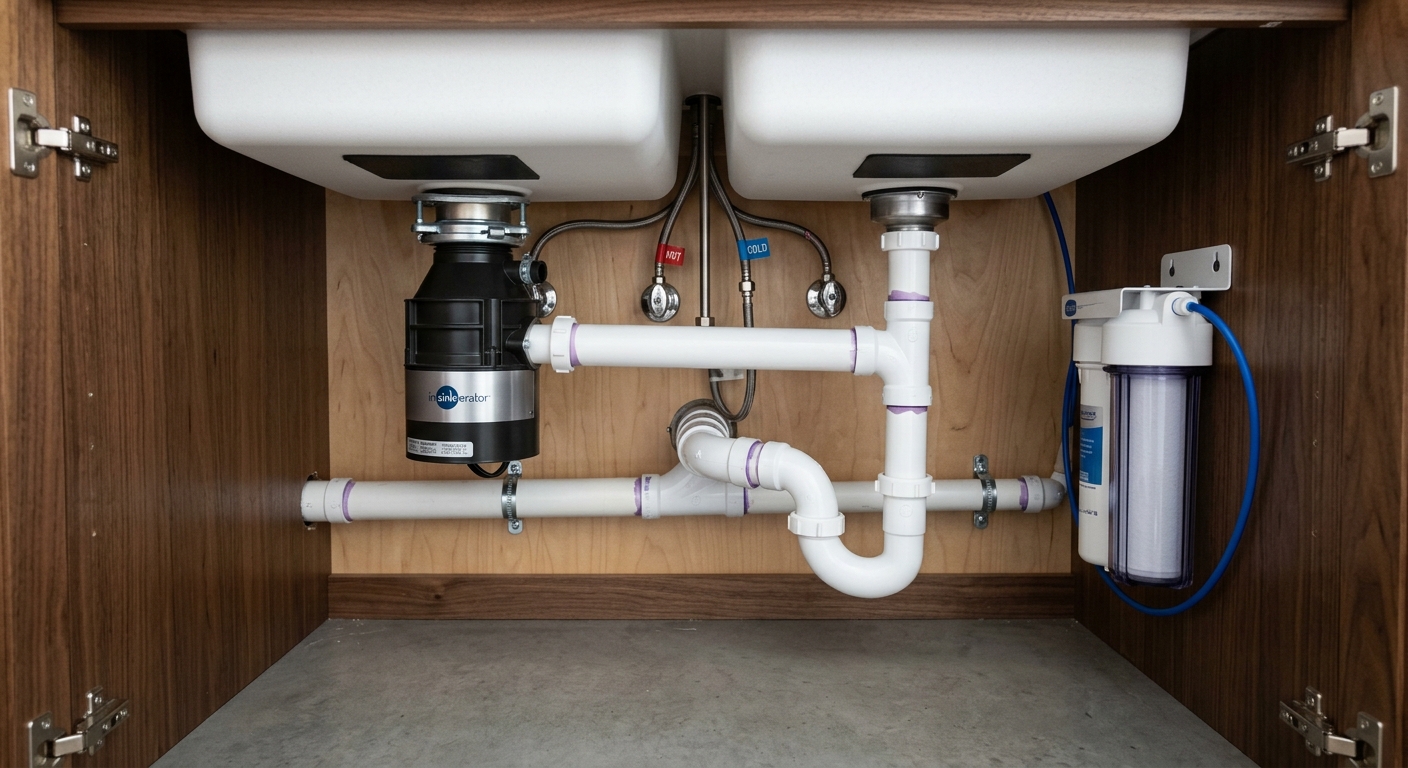
Plumbing services and costs in Somerset
Somerset, Alberta is a small community where plumbing calls often rise and fall with winter freeze risk and the age of local housing stock. With a population of 8,320 (Statistics Canada, 2021 Census), demand tends to concentrate around repeat service areas—especially in older neighbourhood pockets that need seasonal attention. In the broader Calgary region, homeowners commonly run into wear on older supply lines and water-heater systems, and that’s why repairs, changeouts, and occasional repiping keep showing up in contractor schedules.
Calgary-region plumbing costs are shaped first by freeze risk: long cold snaps can drive winter burst-pipe calls, and local guidance emphasizes insulating exposed lines, sealing drafts, and maintaining heat because pipes in unheated or exterior-wall areas freeze more easily. In practice, that means service entries and supply lines that aren’t well-protected may require extra labour for heat tracing, insulation, and careful thawing—work that can quickly move a “small leak” into a larger restoration project. Second, water hardness can accelerate mineral scale in fixtures and water heaters, which can shorten efficiency and push replacement sooner in some areas. Finally, older housing stock increases the odds of galvanized or legacy pipe sections, so costs often track access (walls, basements, crawlspaces) and restoration, not just labour.
If you’re in or near the Somerset neighbourhoods close to major in-town connections, you’ll typically see more demand for emergency leak repairs and water-heater servicing during deep-freeze periods. From there, the table below gives you realistic Somerset price bands to help you compare quotes before you book a site visit.
| Service |
What's Included |
Typical Duration |
Price Range |
| Emergency repair (burst pipe, active leak) |
Locate leak, shutoff, repair/re-thread/replace damaged section, pressure check, basic cleanup |
2–6 hours (sometimes longer with thaw/restoration) |
$180–$900 |
| Water heater replacement (tank, 40–60 gallon) |
Remove old unit, install new tank, connect hot/cold, safety controls, commissioning, haul-away |
4–8 hours |
$1,800–$5,200 |
| Tankless water heater installation |
Remove/disable old tank (if applicable), install tankless unit, gas/electrical connections, venting as required, commissioning |
1–2 days |
$3,200–$8,500 |
| Full-home repipe (supply lines, PEX) |
Assess existing piping, remove/replace supply runs, pressure test, flush/commission, wall/floor restoration allowance |
2–5 days |
$3,500–$18,000 |
| Drain snaking / hydro-jetting (blocked drain) |
Camera inspection (often optional), snake/jet lines, remove buildup, confirm flow, clean work area |
1–4 hours |
$240–$1,250 |
| Backwater valve installation |
Locate connection, install backwater valve and testing, seal penetrations, confirm proper operation |
4–7 hours |
$1,200–$3,900 |
Prices are estimates only and vary by project scope, site access and material selection.
What affects the price of plumbing in Somerset
In Somerset, you can see the same plumbing problem priced 30%–50% differently across the Calgary region and Alberta. The reason is usually not the “hourly rate” alone—it’s what the plumber discovers once they open walls or expose buried lines. Freeze-related work can add time fast: if a supply line is partially frozen, thawing and diagnostic testing may extend the job even when the final repair is small. Market availability also plays a role during deep-freeze weeks when emergency calls surge and crews get scheduled tighter.
Freeze risk sets how deep supply lines must be buried and how well outdoor/garage lines need to be insulated and protected. In cold snaps, plumbers may need to add heat tracing or re-insulate exposed runs, and shallow or poorly protected sections can be a recurring issue. Water hardness varies sharply across Alberta, and harder water accelerates scale—meaning water heaters can lose efficiency sooner and may require more frequent descaling or earlier replacement. That matters when you compare options: if a 40–60 gallon tank is scaled up, it can stop performing well and replacement can quickly move you from a repair-style budget into the water heater installation band of about $1,800–$5,200.
Older regional housing stock also affects plumbing costs. Many homes from the 1980s to mid-1990s can contain galvanized supply sections and legacy poly-B piping. Over time, galvanized lines can restrict flow and discolor, while poly-B systems can fail at fittings or cracks—leading to partial or full repiping. A common Somerset example: if you’re getting “hot only” issues and sediment is clogging the system, replacing the heater alone might not solve the root cause; repiping may be justified when symptoms recur within a short cycle. Conversely, a localized drain stoppage is often straightforward and can stay within a repair-oriented budget near the repairs & leak fixing band of $180–$900 when there’s no deeper pipe damage.
| Price Factor |
Why It Matters |
Cost Impact |
| Type of work — repair vs. replacement vs. new install |
Replacement/new installs include removal, code-compliant connections, testing, and often more materials |
Repairs can be under $900, while replacements and repipes jump into thousands |
| Water heater size and fuel type (gas vs. electric vs. tankless) |
Tank size and venting/electrical requirements change labour and equipment cost |
Tank units commonly land around $1,800–$5,200; tankless typically higher |
| Pipe material — PEX vs. copper vs. CPVC for repiping |
Material pricing, joining method, and longevity expectations affect total project cost |
PEX is often the value option for full repipes; copper can raise the high end |
| Access — pipes in walls or slab require drywall or concrete cutting |
More opening/restoration means more time, dust control, and rework |
Access can swing a mid-range job toward the top end of repipe pricing |
| Permit requirement — adds cost and inspection scheduling time |
Permits/inspections add admin time and can require staged work |
Often a modest increase, but timing and scheduling can add labour |
| Emergency vs. scheduled — after-hours calls carry a premium |
Priority service and after-hours labour increase operating costs |
Emergency response can push repair pricing toward the upper end |
| Water hardness — affects water heater sizing and descaling needs |
Scale reduces heat transfer and shortens service life |
May increase likelihood of earlier replacement within the heater cost band |
| Number of fixtures or drain lines involved |
Multiple stops/valves/drains expand labour and testing scope |
Single-line fixes stay cheaper; whole-home tracing raises totals |
Permits & regulations in Alberta
In Alberta, plumbing work beyond simple fixture replacement is typically performed by a licensed plumber, and permits are often required for work that changes the plumbing network or connects to municipal services. In practice around Somerset, this usually includes new drain connections, any work that involves tying into the municipal water or sewer system, full repiping, and water-heater changeouts where your municipality requires permits. Backwater valve installation—commonly recommended for basements that can be affected by sewer backup during heavy melt events—usually requires a permit and inspection.
What often does NOT require a permit is basic replacement of like-for-like fixtures when no new connections to the water or sewer system are being created (for example, swapping a bathroom tap or replacing a toilet supply line when it’s a like-for-like change and does not involve relocating plumbing). Even so, your plumber should confirm what applies to your exact address.
To verify a contractor in Somerset step-by-step, start by checking the Alberta licensing details online for the journeyman/master plumber name (and the business if applicable). Then request a certificate of insurance showing liability coverage and confirm they have workers’ compensation coverage (WSIB/WCB) for their crew. Finally, ask for a clearance letter or proof document (depending on what they commonly provide) and keep it with your quote package.
Common plumbing problems in Somerset homes and how to fix them
Somerset plumbing issues tend to cluster around five themes: freeze events, aging pipe materials, water-heater wear, pressure problems, and drain line deterioration. In Calgary-region winters, burst or frozen pipes are a recurring headache when supply lines run through exterior-wall cavities, garages, or unheated areas. Prevention is practical: insulate exposed runs, seal drafts at penetrations, and use heat trace where lines are vulnerable. If a pipe bursts, response matters—shut off the water immediately, protect insulation and drywall from ongoing moisture, and call for thaw and repair before scale and mould set in.
Next, aging pipe materials drive longer-term costs. Galvanized steel can corrode and restrict flow, often showing up as reduced hot water or discoloured water. Legacy poly-B can become brittle and fail at fittings or cracks. When symptoms are recurring, proactive repiping can be more economical than repeated localized repairs; incomplete fixes can lead to “whack-a-mole” failures. For water heaters, end-of-life is common as scaling from hard water builds up. Tank options are typically replaced within the $1,800–$5,200 band, while tankless can be a worthwhile upgrade when you want better efficiency and have the space and venting configuration for the unit.
Low water pressure throughout the home is another frequent complaint. Plumbers usually diagnose clogged aerators first, then move to line corrosion (including galvanized restrictions) or pressure drops from the supply system. Finally, drains can slow down due to blockage, root intrusion, or failed older cast-iron sections—hydro-jetting and camera inspection help determine whether you need cleaning versus repairs.
Dollar example: if a drain is blocked and a camera shows a simple hair/grease plug, snaking and clearing may resolve it without full replacement. But if the scope reveals a cracked line with repeated backups, paying for diagnostic inspection can save money by avoiding repeated cleanouts.
| Issue |
Common Cause in Somerset |
Typical Fix |
Price Band |
| Burst or frozen pipe |
Uninsulated exterior runs, garage and exterior-wall cavities during cold snaps |
Shutoff, thaw, repair/re-pipe damaged section, restore insulation and check pressure |
$180–$900 |
| Low water pressure throughout home |
Corroded galvanized supply sections, partial blockage in lines, or pressure drop |
Inspection and flushing, replace restricted sections, verify shutoffs and regulators |
$220–$1,400 |
| Slow or blocked drain |
Hair/grease buildup, early-stage root intrusion, or scale in older lines |
Snaking/hydro-jetting and optional camera inspection to confirm line condition |
$240–$1,250 |
| Leaking or failed water heater |
End-of-life tank, failing valves, or hard-water scaling reducing performance |
Replace tank unit and connect safely; flush/commission; confirm venting and controls |
$1,800–$5,200 |
| Poly-B pipe failure (fitting or pipe crack) |
Legacy installations from 1980s–mid-1990s with fitting-related failures or brittleness |
Locate failure areas, replace affected sections or plan partial/full repipe with testing |
$3,500–$18,000 |
| Galvanized pipe corrosion (restricted flow, discolouration) |
Corrosion inside lines narrowing flow and causing discolouration at taps |
Replace restricted sections or full repipe; flush system and retest pressure |
$3,500–$18,000 |
How to choose a plumbing contractor in Somerset
Choosing a plumber in Somerset starts with proof. In Alberta, confirm the contractor is licensed for the work you need, then verify liability insurance (so you’re covered if there’s accidental damage) and confirm workers’ compensation coverage (WSIB/WCB) for their crews. Ask them for documentation before work begins—don’t rely on a verbal claim. If you’re booking through a local business, make sure the licensed individual name on the job matches the licence details.
Next, get 2–3 itemised written quotes. You want a breakdown that separates labour from materials (and any restoration allowances), rather than a lump sum. Ensure the scope is clear: what’s excluded (like drywall repair, disposal, or additional excavation), whether they will pull required permits, and what happens if they uncover additional damage once walls or floors are opened.
Warranty is just as important. Look for a workmanship warranty length and clarify whether the product warranty is manufacturer-based and how it’s applied. Ask if the warranty transfers to you if you sell the home.
On payment schedule, avoid paying large upfront amounts. A safe approach is no more than 10%–15% upfront, with a holdback until the job is complete and tested.
Finally, request timeline details in writing: proposed start date, estimated duration, and when inspections (if required) are expected so you can plan around freeze conditions and restoration.
- Confirm Alberta licence information for the tradesperson assigned to your job.
- Verify liability insurance certificate is current and covers the scope of work.
- Verify WSIB/WCB coverage (ask for proof and keep it with your paperwork).
- Get an itemised estimate (labour, materials, equipment fees, disposal).
- Ask whether a permit is required and whether the plumber pulls it.
- Confirm restoration handling: drywall patching, flooring repair, cleanup/dust control.
- Clarify diagnostics: will they do a camera/pressure test before major work?
- Ask about warranty terms for workmanship and for the installed products.
- Request a detailed scope that lists what’s included and excluded.
- Review payment schedule: limit upfront and hold back after testing is complete.
- Ensure the quote includes haul-away and disposal (or states otherwise).
- Get start date and completion estimate in writing, including inspection lead time.
Common red flags in Somerset include contractors who won’t provide licence/insurance documentation, quotes that aren’t itemised (especially for repipes and tank replacements), missing details about permits or restoration, promises of “fixed-price no matter what” without a discovery/contingency note, and pressure tactics to collect large upfront payments before shutoff/testing is completed.
Frequently asked questions — plumbing in Somerset
What causes hard water and how do I treat it?
Hard water is driven by minerals in the water supply, primarily calcium and magnesium, which dissolve as water moves through natural deposits. In Alberta, hardness can vary by area, and that variation can affect how quickly scale forms in fixtures and water heaters. In Somerset homes, the most noticeable impact is often reduced efficiency: you may hear the tank working harder or notice slower hot-water recovery as mineral buildup grows. Treatment options include descaling and regular maintenance for the water heater, and installing a whole-home water softener or targeted filtration depending on your plumbing layout. Before spending, ask a plumber to check your water chemistry and discuss whether your heater model is compatible with your desired maintenance plan.
How long does a water heater last in Somerset?
In Somerset and the Calgary region, typical water heater life depends heavily on water hardness, usage patterns, and maintenance. With harder water, mineral scale can build on the tank’s heating surfaces, reducing efficiency and accelerating wear—often shortening the effective lifespan compared with softer-water areas. As a practical benchmark, many homeowners plan for replacement when performance declines (slower hot water, more temperature swings, or visible corrosion around the tank). If you’re already seeing persistent scale or recurring temperature issues, replacement can be the smarter path rather than repeat repairs. Budget-wise, a tank replacement commonly falls in the $1,800–$5,200 range, depending on size and fuel type, while tankless installations typically cost more due to venting and equipment changes.
What should I do about a burst pipe?
If a pipe bursts in your Somerset home, act quickly to reduce damage. First, shut off the main water supply if you can do so safely. Second, open cabinet access around the leak and protect nearby insulation and drywall from water spread. If the burst involves an exterior or exterior-wall area, freezing can return even after the repair, so a plumber may need to thaw and inspect adjacent sections for hidden damage. Call a licensed plumber for emergency repair because they’ll locate the failure, repair the damaged section, and do a pressure check to confirm the system is stable. Winter burst incidents can expand in cost if restoration is needed, so prompt action can help keep the job closer to typical emergency repair pricing (often in the $180–$900 range for straightforward repairs).
Poly-B or galvanized pipes — should I replace them?
Often, yes—at least in part—depending on where the pipe is, what condition it’s in, and whether symptoms keep coming back. In older Calgary-area homes, galvanized steel can corrode internally and restrict flow, sometimes causing discolouration or inconsistent water temperatures. Legacy poly-B systems can fail at fittings or develop cracks over time. If your home has recurring leaks, persistent low pressure, or repeated “hot water works one day, not the next” issues, a plumber may recommend proactive replacement rather than patching. A partial replacement might be possible when the problem is isolated, but full repiping can be more cost-effective when multiple sections are aging. Repiping budgets commonly run in the $3,500–$18,000 range because access and restoration often determine the final cost.
How do I compare plumbing quotes?
Start by comparing like-for-like scopes. A good Somerset quote should be itemised into labour and materials, and it should explain what diagnostics are included (for example, camera inspection before drain work) and what’s excluded (drywall repair, disposal, or additional excavation if hidden damage is found). Check whether permits are included—Alberta requirements vary by job type—and whether the plumber schedules any inspection steps. For water heaters and repipes, ask what brand/model is being installed, warranty terms for both workmanship and product, and whether there’s a holdback after testing. Finally, compare timelines and response plans for emergency service—after-hours work often carries a premium. If one quote is much lower than the others, ask what’s missing, especially around restoration and testing.
How long does a water heater replacement take in Somerset?
For a typical tank water heater replacement in Somerset, the job commonly takes about 4–8 hours, assuming safe access and straightforward connections. If the old unit is difficult to remove, venting details need adjustment, or the install location requires extra work, the timeline can extend to a full day. After installation, the plumber should commission the unit, check controls and connections, and confirm proper operation before cleanup. During Calgary-region freeze periods, contractors may also plan around thawing and ensuring the area stays warm and dry, especially if water was leaking or lines are exposed to exterior walls. If you’re budgeting, a tank changeout typically falls within the $1,800–$5,200 band, and timing should be confirmed in writing with the start/finish estimate.