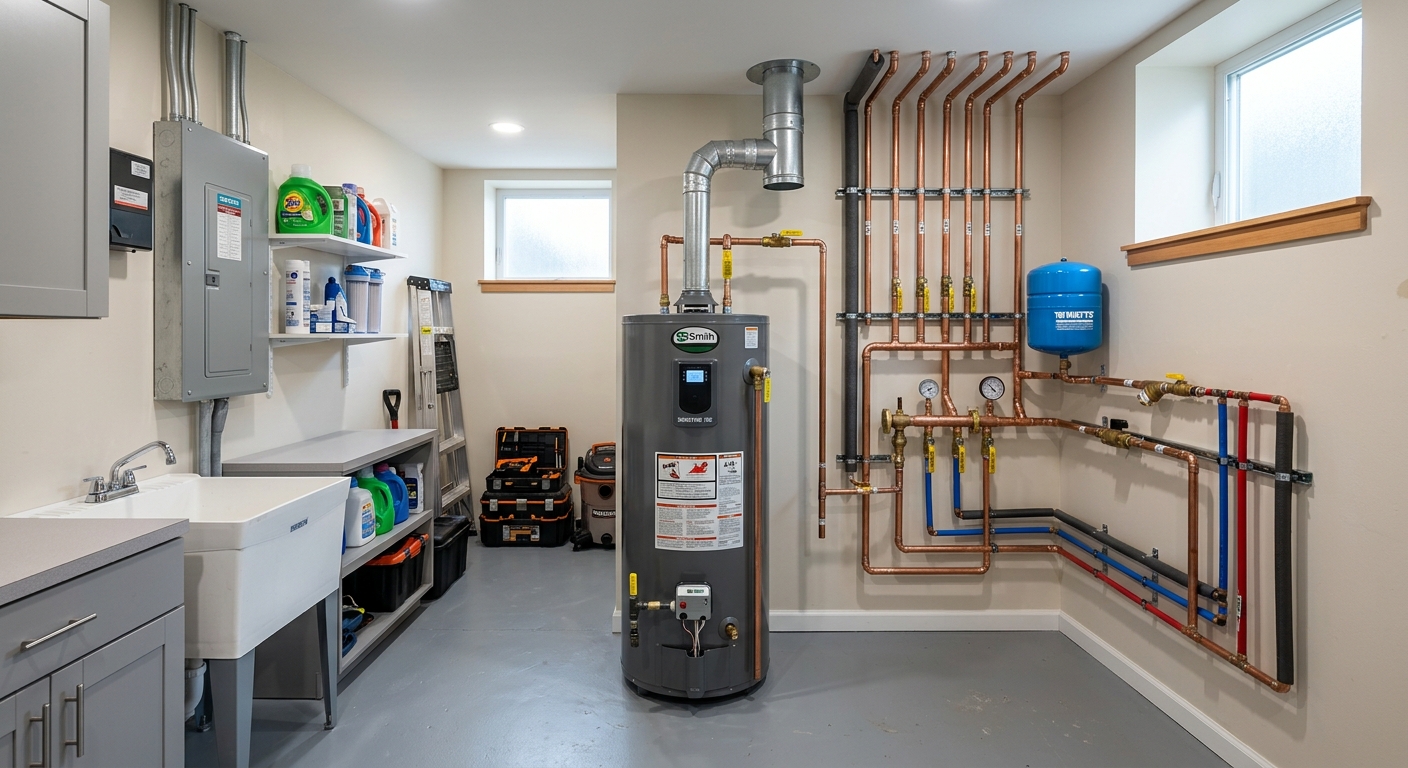
Plumbing services and costs in Burnaby
Plumbing services in Burnaby typically range from a quick emergency fix to full re-piping, and the cost swings mainly because Lower Mainland–Southwest homes are a mix of older construction and weather-exposed plumbing runs. In Burnaby, 35.5% of homes were built before 1981, so it’s common to see aged galvanized steel supply lines and older water-heater setups that eventually need replacement. It also matters that Burnaby’s winter is mild but freeze-prone: even short cold snaps can freeze shallow or exterior lines, especially in unheated crawlspaces, garages, and exterior walls. When a freeze causes a burst, the repair labour can be modest compared to the water-damage restoration that follows.
In practice, many homeowners first call after issues show up in neighbourhoods where older homes are concentrated and where supply runs are more likely to be dated—Burnaby North, East Burnaby, and parts of UniverCity/Metrotown-area older pockets are common areas where contractors stay busy. Labour demand and technician availability are strongest during the colder months when frozen-line callouts spike, and again when roof snowmelt and spring thaw drive higher drain-flow.
To help you compare quotes, here are realistic cost bands for common tasks in Burnaby, based on typical Lower Mainland–Southwest scopes and materials. Use the table to identify what’s included, how long the job usually takes, and where your quote should land before you sign.
| Service |
What's Included |
Typical Duration |
Price Range |
| Emergency repair (burst pipe, active leak) |
Locate leak, shut off/repair the damaged section, pressure test, basic cleanup; parts and any necessary minor access |
2–6 hours |
$150–$700 |
| Water heater replacement (tank, 40–60 gallon) |
Remove and replace existing tank, new temperature/pressure relief components as required, verify venting/combustion where applicable, startup and testing |
4–8 hours (plus pickup time) |
$1,400–$3,500 |
| Tankless water heater installation |
Install wall-mounted unit, confirm gas/water connections, flush and commission, confirm proper venting/clearances, safety checks |
6–12 hours (often 1 day) |
$2,500–$4,800 |
| Full-home repipe (supply lines, PEX) |
Plan and trace runs, replace galvanized/poly-B sections with PEX, connect fixtures/water heater, pressure test, flush and restore access surfaces where included |
2–6 days |
$3,500–$18,000 |
| Drain snaking / hydro-jetting (blocked drain) |
Camera check when needed, clear blockage, jet lines for scale/debris, verify drainage speed; minor disposal of removed debris |
1–4 hours |
$180–$900 |
| Backwater valve installation |
Assess sewer/backflow risk, install backwater valve at appropriate location, seal and test, coordinate permit/inspection if required |
3–8 hours |
$650–$2,800 |
Prices are estimates only and vary by project scope, site access and material selection.
What affects the price of plumbing in Burnaby
In Burnaby and across British Columbia, quotes for the same plumbing problem can differ by 30–50% because the “real” scope is often unknown until the plumber opens the wall, confirms pipe material, or runs a camera through the drain. In Lower Mainland–Southwest communities, pricing also reflects contractor availability, fuel/dispatch time, and how much access is required in older housing stock. With 61,185 homeowner households in the area profile (Statistics Canada, 2021 Census), there’s steady demand for both small repairs and larger replacements—so scheduling and callout premiums matter.
Climate drives a big portion of the cost. Freeze-prone snaps mean supply lines that run outdoors, through unheated spaces, or within exterior walls may need deeper burial below frost depth practices or heat-trace/insulation. If lines are frozen, labour increases because plumbers must thaw safely and then test before restoring walls/finishes. Water hardness varies widely across the province, and hard water accelerates scale buildup that shortens tank-type heater life and clogs fixtures; that can raise replacement frequency by roughly 20–30% in heavily scaled homes. Older regional housing also commonly includes galvanized steel and some legacy poly-B setups (often seen in homes from the 1980s to mid-1990s), which can mean restricted flow, discoloured water, or failed fittings—pushing jobs from “repair” into repipe territory.
Concrete examples: a leak repair for a small fitting may fit the repair band of $150–$700, but once the plumber discovers corrosion along a run, the “same leak” can become a partial or full $3,500–$18,000 repipe. Similarly, a clogged bathroom drain might clear within $180–$900, while recurring clogs in older cast/transition drain lines often justify camera inspection and more extensive drain work.
| Price Factor |
Why It Matters |
Cost Impact |
| Type of work — repair vs. replacement vs. new install |
Replacement and new installs include removal, rework, and commissioning; repairs may be localized |
Repairs typically lower; replacements commonly add significant labour and parts |
| Water heater size and fuel type (gas vs. electric vs. tankless) |
Fuel type changes venting, electrical, and safety checks; tankless units require additional configuration |
Tankless installs often cost more than tank replacements |
| Pipe material — PEX vs. copper vs. CPVC for repiping |
Material affects material cost, method of joining, and long-term performance |
PEX generally lower per-foot installation complexity than some alternatives |
| Access — pipes in walls or slab require drywall or concrete cutting |
Access drives time and restoration scope (patch/paint, cutting and re-sealing) |
Hard-to-access runs can noticeably increase total price |
| Permit requirement — adds cost and inspection scheduling time |
Permits can involve administrative time and inspection delays that affect labour scheduling |
Can add both direct fees and lost scheduling time |
| Emergency vs. scheduled — after-hours calls carry a premium |
After-hours service and urgent travel increase overhead and labour rates |
Often increases cost even when parts are minimal |
| Water hardness — affects water heater sizing and descaling needs |
Hard water can increase scaling, reduce efficiency, and shorten heater service life |
May lead to earlier replacement or descaling/maintenance add-ons |
| Number of fixtures or drain lines involved |
More outlets or branch lines increases diagnostic time and repair/replace scope |
Single-fixture repairs are usually cheaper than multi-line work |
Permits & regulations in British Columbia
In British Columbia, most plumbing work beyond simple fixture replacement must be performed by a licensed plumber, and many jobs require permits and inspection. As a homeowner in Burnaby, you’ll generally need permits for work that connects to the municipal water and sewer systems, includes new drain connections or alterations, involves full repiping, and often includes water-heater changeouts depending on the installation type and how it ties into venting or connections. Backwater valve installation is also commonly subject to permit/inspection because it affects how your home handles sewer backflow and ties into the drainage system.
What typically does not require a permit (but still should be done by a qualified person) includes basic like-for-like fixture swaps such as replacing a kitchen faucet, shower trim, or toilet when no plumbing lines are altered. However, if the job includes moving supply lines, adding new shutoffs, or modifying the drain connection, a permit is more likely.
Step-by-step licence verification (Burnaby): (1) Ask for the plumber’s British Columbia licence number (journeyman or master) and confirm it using the appropriate online contractor/licence registry; (2) request a current certificate of insurance showing liability coverage and the appropriate workers’ coverage for trades work (WSIB/WCB); (3) ask for the certificate of insurance wording, expiry date, and whether subcontractors are covered; (4) if they’re doing permitted plumbing, request the permit/inspection details or the contractor’s clearance/permit-related documents before work starts. Never proceed if they can’t show valid licensing and insurance documentation.
Common plumbing problems in Burnaby homes and how to fix them
Burnaby homes often run into issues shaped by older construction, freeze-prone cold snaps, and a long service life of existing pipes and drains. Here are five of the most common problems and the best way to address each, with options grounded in what plumbers actually see in the Lower Mainland–Southwest.
(1) Burst or frozen pipes: Cold snaps can freeze shallow exterior or garage lines. Prevention is insulation on accessible runs and, where practical, heat trace on high-risk sections. If a freeze happens, shut off power if applicable, locate the section, thaw safely, then repair and pressure test before restoring finishes. Emergency response is where costs can jump quickly—repairs can be in the $150–$700 band when the damage is limited.
(2) Aging pipe materials: Galvanized steel corrodes and can restrict flow, while poly-B pipe and fittings can fail due to brittleness and connection issues. If you’re seeing recurring leaks, discoloured water, or pressure that keeps changing, proactive repiping can prevent catastrophic failures. A full repipe is a larger investment, typically within $3,500–$18,000, and is often justified when you’re already paying for repeated access in walls.
(3) Water heater end-of-life: Tank heaters can be less expensive upfront, while tankless systems cost more to install but can reduce standby loss. In hard-water areas (varies across BC), scale buildup shortens tank heater service life, and it can also affect tankless performance and flow over time.
(4) Low water pressure throughout the home: Plumbers usually start with aerators, shutoff valves, and then pressure/flow testing. If you suspect galvanized corrosion, the diagnosis often changes the recommended work—from clearing fixtures to replacing supply runs.
(5) Drain issues: Slow drains can be simple blockage, but in older Burnaby neighbourhoods, root intrusion and failing cast/transition drain lines are common. Snaking may fix an acute blockage, yet repeated slowdowns often justify camera inspection and targeted replacement.
Example: If a bathroom sink backs up once, snaking/jetting might land in the $180–$900 range. But if a camera shows recurring root intrusion at a specific section, spending on repeat “quick clears” usually costs more than planning a repair with restoration.
| Issue |
Common Cause in Burnaby |
Typical Fix |
Price Band |
| Burst or frozen pipe |
Freeze-prone exterior/garage lines, insufficient insulation in unheated spaces |
Locate and repair/replace damaged section, thaw safely, pressure test |
$150–$700 |
| Low water pressure throughout home |
Corroded galvanized supply, partially closed shutoff, mineral buildup |
Test pressure/flow, clean/replace aerators and valves, repair supply restrictions |
$180–$900 |
| Slow or blocked drain |
Debris buildup, grease/hair, or root intrusion on older drain lines |
Camera inspection, snake or hydro-jet, recommend localized drain repair if needed |
$180–$900 |
| Leaking or failed water heater |
Tank aging, failing T&P components, excessive scaling from hard water |
Replace tank unit, confirm connections and safety controls, flush and commission |
$1,400–$3,500 |
| Poly-B pipe failure (fitting or pipe crack) |
Legacy installation issues and brittle fitting failures over time |
Replace affected sections; often progresses to partial/whole repipe for reliability |
$3,500–$18,000 |
| Galvanized pipe corrosion (restricted flow, discolouration) |
Corrosion narrowing pipe interior, mineral scale, sediment in older systems |
Remove/replace corroded runs with PEX/copper, flush lines, pressure test |
$3,500–$18,000 |
How to choose a plumbing contractor in Burnaby
Choosing the right plumbing contractor in Burnaby starts with verification. In British Columbia, confirm the plumber is licensed (journeyman or master) and ask for their licence number. Next, request a current certificate of insurance showing liability coverage and coverage for workers under the applicable workers’ compensation system (WSIB/WCB). If they’re using subcontractors, the certificate should name the correct insured party and include subcontractor coverage or provide proof separately.
Then get 2–3 itemised written quotes—not lump sums. A good quote breaks down labour hours, parts/materials, travel/disassembly, disposal, and any diagnostic tools like camera inspection. Ask whether permits are included, how inspection timing may affect your start date, and whether they include cleanup and patch/restore scope if access is in walls or ceilings. For warranties, look for a workmanship warranty length in writing and understand what’s covered (labour vs. parts). Product/manufacturer warranties can differ from workmanship warranties—also ask if the warranty is transferable if you sell the home.
Payment scheduling matters: never pay more than 10–15% upfront. Hold back the majority until the job is complete, fixtures are tested, and any punch list items are finished. Finally, insist on a written timeline with a start date and realistic completion estimate, especially for repiping or drain work where access and inspection can affect the schedule.
- Verify British Columbia licence number (journeyman/master) before work begins.
- Confirm liability insurance is active and matches the business name on the quote.
- Check WSIB/WCB coverage for workers, and ensure subcontractors are covered too.
- Require itemised quotes: labour, parts, permits (if applicable), and disposal.
- Ask if a camera inspection is included for drain issues or billed separately.
- Confirm what’s excluded (patching/painting, drywall cutting, restoration, excavation, reassembly).
- Get warranty terms in writing for workmanship and confirm product warranty details.
- Agree on payment schedule: max 10–15% upfront, with holdback until final testing.
- Ask for start date and completion estimate in the contract, not just by text.
- Confirm they will pressure-test and document results for supply work.
- For freeze-prone lines, ask how they prevent repeat freezing during repair.
- Keep all invoices/permit numbers and test results for your records and future resale.
Red flags in Burnaby plumbing quotes: vague scopes (“repair as needed” with no breakdown), refusal to provide licence and insurance documentation, no written warranty or only verbal warranty, asking for large upfront payments, and skipping permits or inspection when the quote doesn’t mention permit steps for water/sewer-related changes.
Frequently asked questions — plumbing in Burnaby
What is a backwater valve and do I need one in Burnaby?
A backwater valve is a one-way device installed in your home’s sewer drain line to prevent sewage from backing up into your fixtures during heavy rain, blocked municipal lines, or drainage surges. In Burnaby and the Lower Mainland–Southwest, the risk is higher in homes with lower basement floor drains or where your sewer lines are prone to surcharge during storm events. Whether you “need” one depends on your basement layout, existing floor drain setup, and how your home’s drainage ties in. Many homeowners install a backwater valve when doing basement drainage updates or when older drain setups show signs of backup. In terms of cost, installation commonly falls in a mid range similar to $650–$2,800, depending on access and permit/inspection requirements.
How do I shut off the water supply in my Burnaby home?
Most Burnaby homes have a main shutoff valve near the water meter or where the service enters the house (often in a utility area, garage, or basement). To shut it off safely, locate the valve and rotate the handle clockwise until fully closed. If you have separate shutoffs for individual fixtures, you can also isolate just the affected area—helpful when you’re dealing with a leak behind a vanity or a single toilet. If the valve is stiff from age, don’t force it rapidly; gentle, gradual turning is safer to avoid breaking corroded stems. After shutting off, open a nearby faucet to relieve pressure and then stop using the affected plumbing. If your issue is an active burst, focus on shutting off first and call a plumber for emergency repair, which can sometimes land in the $150–$700 repair band for limited damage.
Can I claim a plumbing repair on home insurance in British Columbia?
Home insurance claims in British Columbia may cover certain plumbing-related events, but it depends heavily on cause and documentation. Insurers are more likely to cover sudden and accidental damage—like a burst supply line or an overflow caused by a failing component—especially if you can show the leak was discovered promptly and mitigated quickly. They’re less likely to cover gradual wear and tear, corrosion, or long-term problems you didn’t address. For Burnaby homeowners, this often becomes a key issue with aging galvanized systems in older neighbourhood pockets (35.5% of homes built before 1981 in the local profile, Statistics Canada, 2021 Census), where slow leaks can be mistaken for maintenance issues. Keep receipts, take photos, and document when you noticed the problem. For water-damage restoration, coverage is frequently separate from the plumbing repair—so ask your insurer what portion is eligible before repairs begin.
How do I prevent drain clogs in my Burnaby home?
Drain clogs in Burnaby are usually prevented by reducing the materials that cause buildup and by addressing early signs. Use hair catchers in showers and avoid flushing wipes, grease, or cooking solids into drains. In older homes, roots and mineral deposits can narrow lines over time—so slow drains should be treated as an early-warning sign rather than “wait and see.” A practical routine is to run hot water after greasy cooking, periodically clean drain strainers, and use a plumber-recommended approach if you notice repeating slowdowns. When clogs do occur, get it diagnosed: a single snaking can help, but recurring problems may indicate root intrusion or failing drain sections. In the Lower Mainland–Southwest, plumbers often use camera inspection for this reason because older housing stock and cast/legacy drains can change the fix. Minor clearing work is often priced in the $180–$900 range, but ongoing clogs may justify a targeted drain repair.
What is the difference between ABS and PVC pipe?
ABS (acrylonitrile butadiene styrene) and PVC (polyvinyl chloride) are both plastic pipes, but they behave differently and are typically used in different applications depending on local practices and system design. PVC is commonly used for drain, waste, and vent (DWV) and water applications, while ABS is also used for DWV in some regions and builds. The main homeowner-facing differences are the type of solvent cement/adhesive used, pipe handling characteristics, and how transitions are made when connecting to existing systems. If you have an older Burnaby home with legacy drain materials, your plumbing quote should address how the new sections will connect without creating weak points or improper transitions. A good plumber will match the repair to the existing system and ensure correct jointing and slope for drains. If a repair turns into a larger drain or repipe scope, material selection can affect both durability and installation effort.
How do I know if I have a slab leak in Burnaby?
A slab leak is a leak under a concrete slab, often in slab-on-grade homes or where plumbing runs are embedded. Signs include unexplained increases in water bills, damp or warm spots that don’t line up with visible plumbing, ongoing low-level water running (toilet tank fill cycling can mimic leaks), and sometimes hot/cold fluctuations at fixtures. Another strong clue is persistent moisture in areas even after surface leaks are ruled out, along with changes in pressure or audible hissing. In Burnaby, don’t overlook freeze-prone damage either—cold snaps can stress pipes, and older plumbing can fail unpredictably. Because slab leaks can be costly, the next step is diagnosis: a plumber will typically start with isolation tests, pressure testing, and sometimes leak detection methods before opening the slab. If you’re facing a major supply-line issue, this can escalate into repiping discussions, commonly in the $3,500–$18,000 range depending on how much piping is affected.