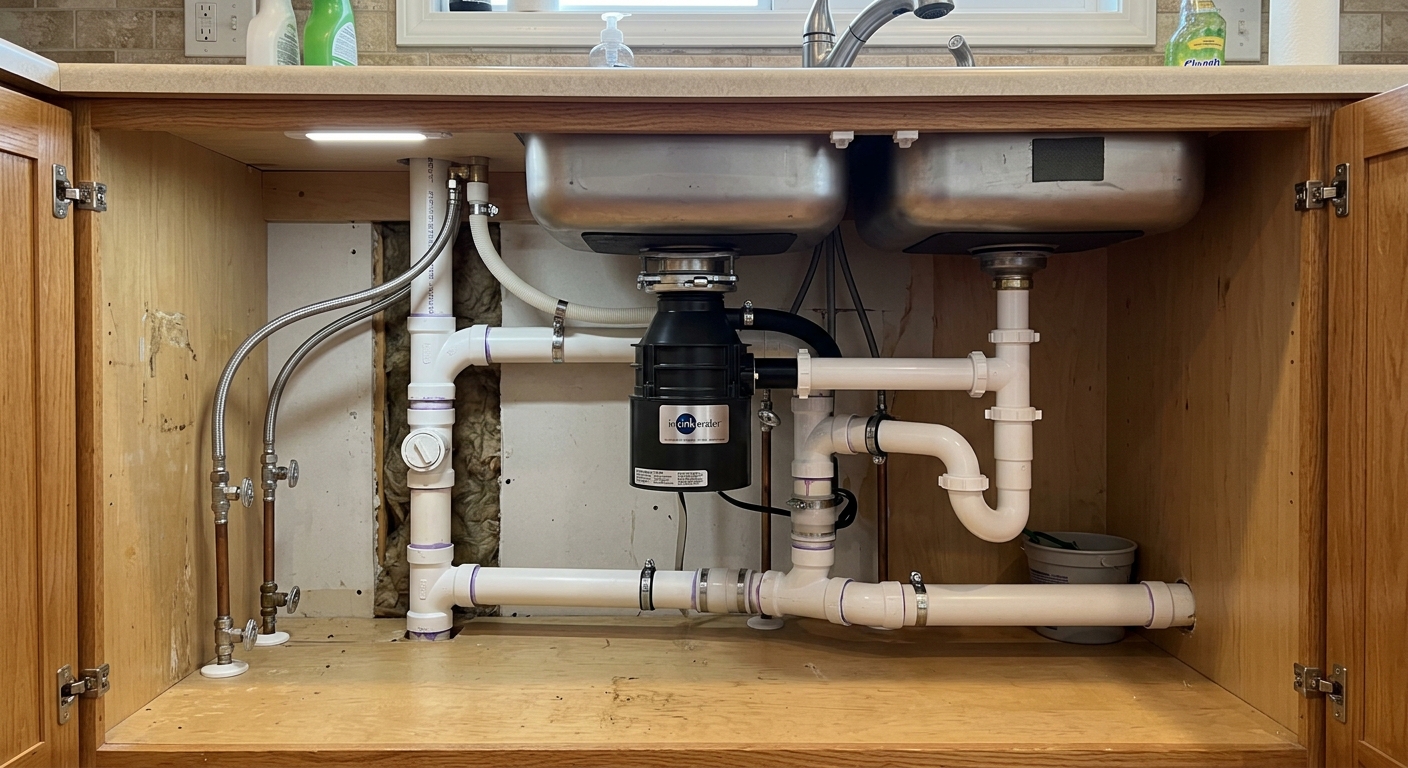
Plumbing services and costs in Salmo
In Salmo, British Columbia, plumbing pricing is heavily shaped by freeze risk, the condition of older distribution piping, and the reality that many homes were built before modern frost protection. With 65.5% of local homes built before 1981, it’s common to see galvanized steel supply lines, older shutoffs, and drainage layouts that are overdue for correction. That housing mix matters for budgets because replacement work (like a tank or repipe) often becomes the most economical “fix once” option once corrosion or restricted flow is already present.
Kootenay winter conditions are the other driver of cost. During December through February, sustained cold can push frost deeper than typical shallow trenching, so exposed exterior hose bibs and garage runs often require proper depth, insulation, and sometimes heat tracing to prevent frozen and burst lines. We also see seasonal labour demand spike when multiple properties in town—especially around older neighbourhoods with similar pipe depths—face the same freeze events. Areas of higher service demand often include the older residential streets near the downtown core, where crawlspaces and older tie-ins are more common and access can be tight.
Water quality is another factor. Where mineral hardness is moderate, tank-style water heaters can scale faster and require periodic flushing/descaling, shortening service life and affecting valves and cartridges. In turn, that drives demand for water heater replacements in the same seasons when freeze claims are also running. For a clearer baseline, here’s how common jobs typically price in Salmo compared to the wider Kootenays.
| Service |
What's Included |
Typical Duration |
Price Range |
| Emergency repair (burst pipe, active leak) |
Locate leak, shutoff if needed, temporary protection, repair/replace damaged section, pressure test, cleanup of affected area |
2–6 hours (often includes same-day parts run) |
$200–$900 |
| Water heater replacement (tank, 40–60 gallon) |
Drain down, disconnect/reconnect plumbing, new venting checks (as required), fit new tank, pressure relief discharge check, start-up and leak test |
4–8 hours |
$1,300–$2,900 |
| Tankless water heater installation |
Sizing review, manifold/valves, venting and commissioning (as required), new gas/water connections, flow checks, start-up and safety testing |
1–2 working days |
$2,100–$3,500 |
| Full-home repipe (supply lines, PEX) |
Replace galvanized/polybutylene (if applicable), new shutoffs, water distribution rework, tie-ins, pressure testing, wall/fixture access restoration |
3–7 working days (varies by access and number of bathrooms) |
$6,500–$15,000 |
| Drain snaking / hydro-jetting (blocked drain) |
Inspection/diagnosis, camera check if needed, clear blockage via auger/jetting, verify flow, camera report (when included) |
1–4 hours (plus extra time for camera) |
$200–$900 |
| Backwater valve installation |
Confirm outlet location, install backwater valve and testing, confirm discharge path, seal and pressure test, disposal of old components (if applicable) |
4–8 hours |
$850–$2,200 |
Prices are estimates only and vary by project scope, site access and material selection.
What affects the price of plumbing in Salmo
In Salmo and across British Columbia, homeowners can see the same basic plumbing repair quoted 30–50% differently depending on how much labour risk a contractor has to manage. In practical terms, a “simple” leak can become a cut-out-and-repair job when lines are buried for freeze protection, routed through older walls, or connected to corroded galvanized sections that don’t cut cleanly. Material prices also move: copper, PEX fittings, and imported fixtures tend to climb, and that flows directly into replacement costs.
Freeze risk is the first cost lever. In the Kootenays, frost depth is often deeper than typical shallow trenching, so outdoor supply runs, crawlspace lines, and garage plumbing may need insulation upgrades or heat trace. If the pipe is already compromised, the repair can expand from a localized fix to reworking sections to restore reliable service in winter. The second lever is water hardness. Mineral content can vary by source, and where water is moderately hard, tank-style water heaters commonly scale faster, which shortens service life and increases descaling labour. That scaling can also affect cartridges and shower valves, and it’s one reason tank work frequently clusters with fixture service.
Third, Salmo’s older housing stock changes what “normal wear” looks like. Homes from the 1980s to mid-1990s can include poly-B (polybutylene) that’s been prone to fitting failures, and older systems often have galvanized steel that restricts flow as corrosion builds. When a plumber is already opening walls for access, it can be more cost-effective to plan a partial or full repipe than to keep patching.
To illustrate, if you’re seeing a repair quote in the $200–$900 band for a leak, but the leak is tied to restricted galvanized lines, the scope can drift toward repiping pricing in the $2,500–$15,000 range. That difference is usually justified when corrosion is widespread or when repeated freeze damage would continue to find the weak points.
| Price Factor |
Why It Matters |
Cost Impact |
| Type of work — repair vs. replacement vs. new install |
Replacement and new installs require more labour, testing, and sometimes new venting/valves |
Repairs may sit near $200–$900; replacements often move into higher bands |
| Water heater size and fuel type (gas vs. electric vs. tankless) |
Tank size affects plumbing/venting work; tankless can require venting and flow/commissioning |
Tankless often costs materially more than a 40–60 gallon tank replacement |
| Pipe material — PEX vs. copper vs. CPVC for repiping |
Material choice affects labour time, fittings, and long-run reliability |
PEX repipes are commonly priced lower than premium copper-only rebuilds |
| Access — pipes in walls or slab require drywall or concrete cutting |
Hidden plumbing increases demolition/restoration and risk of delays |
Costs can rise quickly when cutting and patching are required |
| Permit requirement — adds cost and inspection scheduling time |
Permitted work needs documentation and inspection coordination |
Often adds both fees and a short schedule buffer |
| Emergency vs. scheduled — after-hours calls carry a premium |
Emergency service affects staffing, travel, and priority parts sourcing |
After-hours can add a noticeable premium even for the same fixture or pipe size |
| Water hardness — affects water heater sizing and descaling needs |
Hard water accelerates scaling and can reduce component life |
May add maintenance steps and push you toward earlier replacement |
| Number of fixtures or drain lines involved |
More tie-ins mean more access, testing, and restoration |
Whole-house issues can shift from a one-line repair to multi-line rework |
Permits & regulations in British Columbia
In British Columbia, most plumbing work beyond simple fixture replacement must be performed by a licensed plumber. As a homeowner in Salmo, you can think of permits as the process that ensures the new or altered plumbing system is installed to code and inspected where required—especially where it connects to the municipal water supply, drainage, or venting systems.
Work that typically DOES require a permit/inspection in BC includes: new drain connections, alterations that change the path or size of drain/waste piping, full water service or sewer tie-ins, and full repiping projects. Water-heater changeouts can require permits depending on the type of heater, venting/installation details, and local requirements. Backwater valve installation—commonly recommended in flood-prone Kootenay areas—typically requires a permit and inspection because it alters the drainage protection system and must be verified for proper function.
Work that often DOES NOT require a permit in the same way includes: replacing minor fixtures like a kitchen faucet or toilet shutoff valve (when no piping is reworked), and swap-in fixture work that doesn’t involve new connections to the water or sewer system. Exact rules can vary by scope, so the safest approach is to ask the contractor to confirm permit requirements in writing before work begins.
To verify a contractor in Salmo step-by-step: (1) confirm their BC licence is valid by checking the public licensing/registry information online; (2) request a certificate of insurance showing liability coverage—your contractor should also be able to provide proof of WSIB/WCB coverage; (3) ask whether they will pull the permit (if required) and provide an inspection/permit clearance letter after completion.
Common plumbing problems in Salmo homes and how to fix them
Salmo homes tend to experience the same recurring plumbing failures, mainly because many properties are older (65.5% built before 1981) and because Kootenay winters push freeze risk high. Here are five of the most common issues I see, what causes them, and how to address them.
(1) Burst or frozen pipes: Cold gets into uninsulated exterior runs, poorly protected garage lines, or supply sections with shallow coverage. Preventive steps include insulating exposed piping, using heat trace where warranted, and improving frost protection depth. If a pipe bursts, shut off the main if it’s safe, protect flooring/walls from water damage, and call for emergency repair—waiting can turn a localized leak into major remediation.
(2) Aging pipe materials: Galvanized steel can corrode internally, restricting flow and eventually failing. Poly-B (where present in homes from the 1980s to mid-1990s) can experience fitting-related failures. In both cases, proactive planning is smart: if tests show widespread restriction, a repipe can prevent repeated failures.
(3) Water heater end-of-life: Tank-style heaters are susceptible to scaling when hardness is moderate; flushing and descaling helps, but replacement is often more economical near end-of-life. Tankless units can make sense when you want longer-term efficiency and you maintain proper water flow—hard water can still require periodic maintenance, but sizing and water treatment are key.
(4) Low water pressure throughout the home: Common causes include clogged aerators, corrosion in galvanized lines, or upstream pressure changes. Plumbers diagnose with pressure testing and isolation of fixtures versus main supply restrictions.
(5) Drain issues: Slow drains in older homes can be root intrusion, partial blockage, or failed cast-iron sections. A proper camera inspection often saves money by showing whether you need snaking/hydro-jetting versus repairs.
For budgeting, a drain cleanout may start in the $200–$900 band, but if a camera reveals damaged piping or repeated blockages due to root intrusion, repair or replacement can move toward higher repiping/drain work ranges. That jump is justified when the underlying failure is structural, not just a temporary clog.
| Issue |
Common Cause in Salmo |
Typical Fix |
Price Band |
| Burst or frozen pipe |
Exterior/garage supply lines exposed to deep winter frost; inadequate insulation or shallow burial |
Locate and repair/replace damaged section, restore insulation/heat tracing, pressure test |
$200–$900 |
| Low water pressure throughout home |
Corroded galvanized main lines restricting flow; sometimes aerator buildup or valve issues |
Pressure testing, clear restrictions, replace shutoffs/valves, plan repipe if corrosion is widespread |
$250–$1,500 |
| Slow or blocked drain |
Grease/soap buildup, partial blockage, and root intrusion in older drainage runs |
Snake or hydro-jetting, camera inspection, repair sections if roots or damage are found |
$200–$900 |
| Leaking or failed water heater |
End-of-life tank corrosion, thermostat/valve failure, or accelerated scaling from mineral hardness |
Replace tank, check connections and venting, flush system and confirm temperature/pressure relief operation |
$1,300–$3,500 |
| Poly-B pipe failure (fitting or pipe crack) |
Older polybutylene installations where fittings have become brittle or failed over time |
Replace failed sections and fittings; consider partial-to-full repipe based on test results |
$2,500–$15,000 |
| Galvanized pipe corrosion (restricted flow, discolouration) |
Internal corrosion reducing flow; rusty water/discolouration from degraded mains |
Replace corroded sections or repipe whole supply system; pressure test and flush |
$2,500–$15,000 |
How to choose a plumbing contractor in Salmo
Choosing the right plumber matters in Salmo because frozen-line repairs and older pipe systems can turn a small job into a larger scope if the contractor can’t access the right parts or doesn’t plan for frost protection and permit steps. Start by verifying British Columbia licensing: ask for their BC licence number and confirm it matches the work being quoted. Next, request proof of liability insurance—your contractor should provide a current certificate of insurance. Finally, confirm WSIB/WCB coverage so you’re not left holding the risk if a worker is injured on site.
Then get 2–3 itemised written quotes rather than a single lump sum. A good quote separates labour and materials, lists parts brand/model (especially for water heaters and valves), and states whether disposal, cleanup, and any minor wall/floor restoration are included. Scope clarity is everything: confirm whether the plumber will pull the permit (if required), whether inspection scheduling is handled, and whether they will include pressure testing, start-up commissioning, or post-work video/camera reporting for drains.
For warranties, ask for both workmanship and product coverage. Workmanship warranties should be in writing and long enough to reflect the system’s complexity—repipes and backwater valves in particular should have clear terms. Also ask if product warranties are transferable to you. Payment should be controlled: never pay more than 10–15% upfront; use a holdback until the job is complete, tested, and cleaned up. Finally, request a written start date and a completion estimate, not just “as soon as possible.”
- Verify BC licence number and that it’s valid for the scope being quoted.
- Request a certificate of liability insurance and confirm it covers plumbing activities.
- Confirm WSIB/WCB coverage and keep documentation for your records.
- Get at least two itemised quotes with labour and materials listed separately.
- Ask what’s excluded (demo/patching, disposal, camera reports, minor drywall restoration).
- Confirm whether permits are required and who is responsible for pulling/closing them.
- Ensure the quote includes pressure testing and leak testing where applicable.
- For water heaters, confirm venting checks and relief valve discharge verification.
- Ask for model numbers/brand names for tanks, valves, and drain parts.
- Review warranty length for workmanship and manufacturers’ warranty terms.
- Use a payment schedule: small deposit (10–15% max), then staged payments.
- Get the timeline and expected start/completion dates in writing.
Red flags I see in Salmo: (1) quotes that don’t specify what’s included (especially permits, testing, disposal, or patching); (2) refusal to provide licence/insurance proof; (3) asking for large upfront payments beyond 10–15%; (4) vague warranties or “no paperwork” promises; and (5) no plan for freeze protection (insulation/heat trace) when repairing exterior or shallow runs.
Frequently asked questions — plumbing in Salmo
Do I need a permit for plumbing work in British Columbia?
In British Columbia, many plumbing jobs require a permit—especially anything that changes connections to drainage or municipal water/sewer, or that alters how the plumbing system functions. In Salmo, permits are commonly required for work like new drain connections, full repiping, and many water-heater changeouts where venting/installation details need verification. Backwater valve installs also typically require a permit and inspection because they protect against drainage backup and must be installed correctly. Simpler work like replacing certain fixtures or shutoffs may not require the same level of permitting, but it depends on whether piping is being altered. The safest route is to ask the contractor to confirm permit requirements in writing before work starts, and to provide permit/inspection documentation after completion.
How do I know if I need to repipe my home?
Repiping is usually considered when corrosion or failing materials affect more than one fixture, or when the pattern suggests the system will keep failing. In older Salmo homes—especially those with galvanized steel—restricted flow, discoloured water, frequent valve/fixture cartridge issues, and recurring leaks are common signals. Homes built in the 1980s to mid-1990s may also have poly-B, where fitting failures can appear suddenly and then recur. A plumber should pressure-test the system, inspect representative sections, and evaluate whether the problem is localized or whole-system. If you’re seeing repeated repair quotes in the lower ranges (for example, repairs may start around $200–$900), it may still be worth repiping when corrosion is widespread, because the longer-term cost can fall within repiping/drain work bands like $2,500–$15,000 depending on scope.
What causes hard water and how do I treat it?
Hard water is mainly caused by dissolved minerals (often calcium and magnesium) that come from the local water source. In the Kootenays, hardness can vary depending on supply and well conditions, and it can be noticeable through scaling on fixtures and quicker wear on water-heater components. For treatment, options include periodic flushing/descaling for tank heaters, installing a water treatment system (like a filter/softener setup) sized to your household water use, or both. In Salmo, the goal is to reduce scale buildup that shortens tank-style water-heater life and affects shower valves and cartridges. A good plumber can recommend next steps after checking your water characteristics and your heater’s condition. Even with treatment, routine maintenance is important—especially in colder months when systems are cycling more often.
How long does a water heater last in Salmo?
Typical tank-style water heaters often last about a decade, but in Salmo the timeline can be shorter when mineral hardness causes scaling. Scaling reduces heat transfer efficiency and increases stress on internal components, which is why many homeowners with moderately hard water end up doing maintenance sooner or replacing earlier than expected. If you see rumbling noises, slow hot-water recovery, leaks at fittings or the tank bottom, or significant scaling on shower cartridges, it’s usually time to plan replacement. Replacement pricing commonly falls within the $1,300–$3,500 band depending on tank size, fuel type, access, and venting requirements. Tankless models can last longer when correctly installed and maintained, but they still require attention to water quality and flow.
What should I do about a burst pipe?
If a pipe bursts in Salmo, especially during winter freezes, the first steps are safety and water control. If it’s safe, shut off the main water supply. Then reduce damage by limiting water spread—move valuables, protect floors, and stop using affected fixtures. Don’t attempt to “patch and hope” if the leak is in a frozen section; thawing can reopen damage if the pipe has already split. Call an emergency plumber to locate the failure, repair/replace the compromised section, and pressure test. Emergency repairs in this region can start around $200–$900, but the total can rise if the repair area expands or if the system needs frost protection upgrades. After the repair, ask for insulation/heat tracing recommendations so it doesn’t freeze again next season.
Poly-B or galvanized pipes — should I replace them?
In many Salmo homes, both poly-B and galvanized piping warrant careful evaluation rather than simple “wait and see.” Galvanized steel can corrode internally over time, restricting flow, causing discolouration, and eventually leading to leaks. Poly-B (polybutylene), found in some homes from the 1980s to mid-1990s, can fail at fittings and may crack with age or stress. If you’re experiencing recurring leaks, low pressure, or rusty/discoloured water, replacement is often the long-term fix. A plumber should test pressures, assess representative lengths, and recommend partial versus full repiping based on system condition and access. When the scope is broader, costs often land in the repipe/drain work range such as $2,500–$15,000 depending on the number of bathrooms, access, and how many runs need replacement.