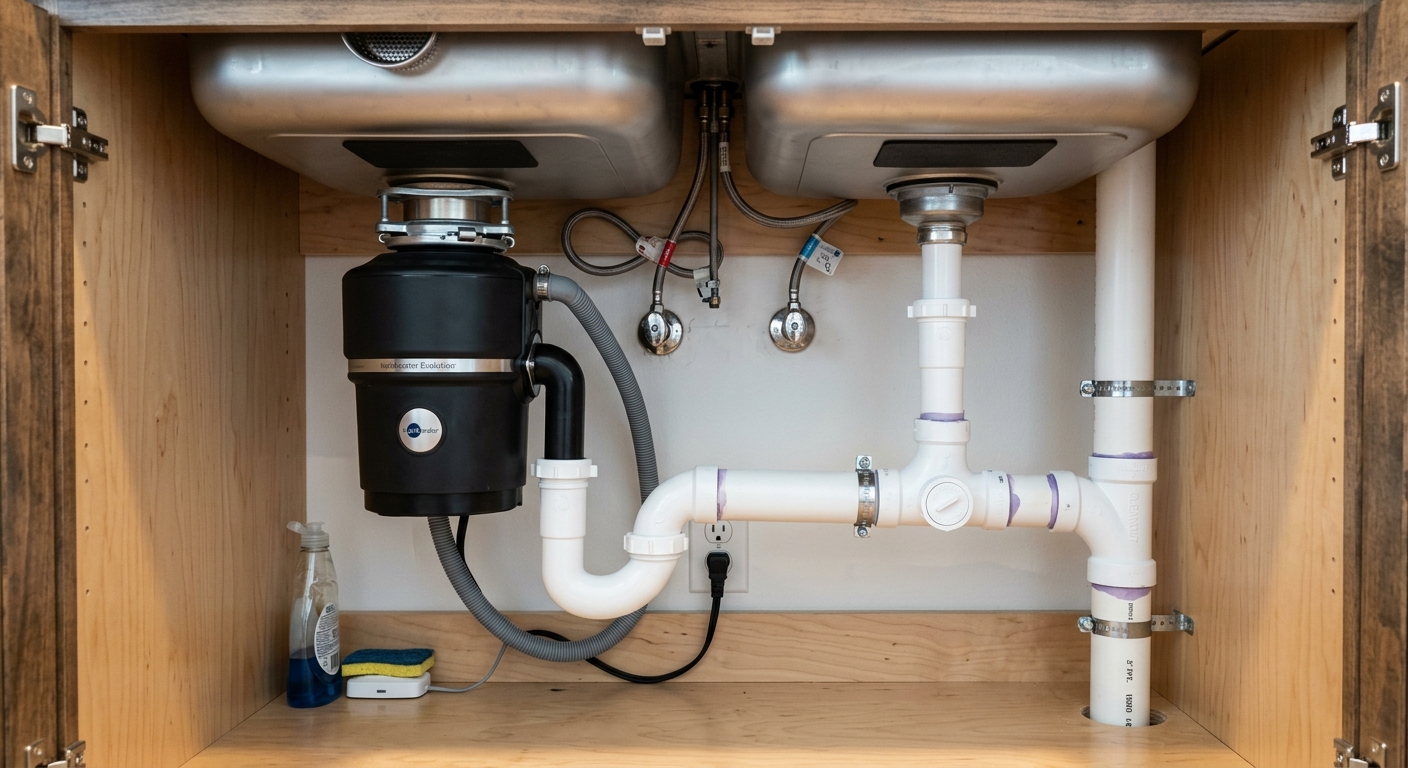
Plumbing services and costs in Squamish
Squamish homeowners rely on solid plumbing even when the weather is mild—because our winters are mild but freeze-prone, and a short cold snap can still turn a marginal line into a burst pipe. With 33.8% of local homes built before 1981, a meaningful share of the housing stock is approaching or past the point where older supply and drainage materials become “maintenance-heavy,” especially in crawlspaces, garages, and exterior walls where insulation may be patchy. That matters because Lower Mainland–Southwest service calls often include both the plumbing repair and the “make-good” after water damage, and that’s where costs can jump quickly.
In Squamish, contractor availability can also affect price: during peak cold snaps and during busy seasons for restoration work, electricians and plumbers are booked out and scheduling premiums are more common. Add to that the regional reality of variable water hardness and older pipe materials (including galvanized and legacy services in some neighbourhoods), and you’ll see a wider spread between “repair” and “replace” quotes. For example, in areas like Garibaldi Highlands and neighbourhoods with older in-ground drainage, blocked lines and maintenance work can show up more often than you’d expect. When that happens, plumbers may recommend targeted fixes first (snaking or a partial water heater swap), but in older pipe systems they’ll often look at repiping before another failure forces a more expensive emergency response.
Below is a practical comparison of common services and what you can expect to pay as you plan your next step—whether you’re dealing with an active leak or planning improvements for the next freeze season.
| Service |
What's Included |
Typical Duration |
Price Range |
| Emergency repair (burst pipe, active leak) |
Shutoff/isolation, locate leak, repair or replace failed section, pressure test, basic cleanup |
2–6 hours (plus restoration coordination) |
$150 – $700 |
| Water heater replacement (tank, 40–60 gallon) |
Removal/disposal, new tank install, venting/combustion checks (gas), pressure/temperature adjustments, initial system flush |
4–8 hours |
$1,400 – $3,500 |
| Tankless water heater installation |
Site assessment, venting and gas line/electrical checks, new unit install, commissioning, flow test |
1–2 days |
$2,500 – $5,800 |
| Full-home repipe (supply lines, PEX) |
Water shutoff plan, removal of failing lines, new PEX routing, pressure/temperature test, flushing, access patching allowance |
2–7 days |
$3,500 – $18,000 |
| Drain snaking / hydro-jetting (blocked drain) |
Camera/diagnosis if needed, mechanical cleaning or jetting, partial root-clearing as feasible, post-clean check |
1–3 hours |
$200 – $1,200 |
| Backwater valve installation |
Backwater check valve install, appropriate discharge routing, permit/inspection coordination where required, function test |
4–10 hours |
$650 – $2,200 |
Prices are estimates only and vary by project scope, site access and material selection.
What affects the price of plumbing in Squamish
In Squamish and the broader Lower Mainland–Southwest, the same plumbing “type” can end up with quotes that are 30–50% apart, even when the problem sounds simple. The gap usually comes from how far the plumber has to dig into walls or crawlspaces, whether freeze protection or insulation upgrades are included, and whether the job is a repair versus a replacement. British Columbia pricing can also diverge from other provinces because labour demand is shaped by weather events—cold snaps, wet-season restoration needs, and seasonal scheduling—so mobilization and diagnostic time can add up quickly.
Freeze risk is a big driver because our winters are mild but freeze-prone: exterior and shallow supply lines still need to be buried below typical frost depth or insulated (sometimes with heat trace) to limit frozen and burst pipes. That affects both materials and labour. Water hardness varies across the province as sources change—when water is harder, tank-type heaters scale up faster and showerheads or aerators clog sooner. In homes with older systems, such as those built in the 1980s to mid-1990s, galvanized lines can restrict flow over time, and poly-B piping (where present) can fail at fittings, pushing the cost toward the full repipe band of $3,500 – $18,000 rather than a repair-only budget.
Concrete examples from Squamish: (1) a “no hot water” call could be a $1,400 – $3,500 tank replacement if the venting, gas/electrical and connections are straightforward; or it could escalate if the issue is scaling that ruined the heat exchanger and damaged nearby valves. (2) A slow kitchen drain might be $150 – $700 for a localized fix if it’s early-stage buildup, but if camera inspection shows root intrusion in older runs, you’ll see costs move toward drain replacement or more involved clean-out work.
| Price Factor |
Why It Matters |
Cost Impact |
| Type of work — repair vs. replacement vs. new install |
Repairs can target a failed section; replacements require labour, parts, and testing |
Often 30–50% difference between similar-sounding quotes |
| Water heater size and fuel type (gas vs. electric vs. tankless) |
Venting, gas manifold capacity, electrical upgrades and commissioning vary |
Can shift from the $1,400 – $3,500 tank band to higher tankless installs |
| Pipe material — PEX vs. copper vs. CPVC for repiping |
Different material pricing, labour method, and durability for local conditions |
Repipe range can swing within the $3,500 – $18,000 band |
| Access — pipes in walls or slab require drywall or concrete cutting |
Access determines demolition/patching and how fast the plumber can work |
Major driver for labour hours and restoration coordination |
| Permit requirement — adds cost and inspection scheduling time |
Permits and inspections add administration time and may require schedule adjustments |
Typically adds a few hundred dollars plus time |
| Emergency vs. scheduled — after-hours calls carry a premium |
After-hours mobilization and priority scheduling increase rates |
Can move a repair from lower-end bands to upper-end callout pricing |
| Water hardness — affects water heater sizing and descaling needs |
Hard water accelerates scale buildup and fixture clogging |
May shorten heater life and increase future service frequency |
| Number of fixtures or drain lines involved |
More lines usually means more diagnosis and more cleaning or part replacement |
Multiple-line work pushes the job toward replacement-grade labour costs |
Permits & regulations in British Columbia
In British Columbia, most plumbing work beyond simple fixture swaps must be performed by a licensed plumber. That includes work that connects to the water or sewer system, such as new drain connections, changes to supply lines, and many water-heater changeouts depending on the setup and whether it involves gas venting or connection changes. Full repiping is also typically permit-driven. It’s common for municipal or site-specific requirements to be handled through the permit process and inspection schedule, so your plumber should be able to explain what they are pulling permits for before work begins.
Backwater valve installation is often recommended in the Lower Mainland–Southwest due to drainage and stormwater surcharge risk, and it usually requires a permit and inspection. To protect yourself, verify your contractor holds a valid British Columbia journeyman or master licence, carries liability insurance, and has WSIB/WCB coverage where applicable for the trade/work being done.
How to verify as a Squamish homeowner: (1) ask for the plumber’s licence number and check it on the online BC licence registry; (2) request a certificate of insurance and confirm it matches the business name on the quote and shows appropriate liability limits; (3) request evidence of WSIB/WCB coverage (or confirmation that coverage obligations are met); (4) confirm in writing what permits will be pulled, who pulls them, and when inspections are scheduled—before any demolition starts.
Common plumbing problems in Squamish homes and how to fix them
Squamish homes see the same “core” issues as other parts of the Lower Mainland, but our freeze-prone winters and older housing stock change the mix and urgency. First, burst or frozen pipes: they often start in exterior walls, unheated crawlspaces, garages, or where insulation is thin. Preventive steps include adding insulation to vulnerable runs, ensuring shutoff valves are accessible, and using heat trace where pipes can’t be buried deeper. If a freeze causes a break, respond quickly—shut off the water, contain leaks, and call for repair so you limit water damage restoration costs.
Second, aging pipe materials: galvanized steel can corrode and restrict flow, while poly-B piping (where present in homes from the 1980s to mid-1990s) can develop brittle failures at fittings. Both warrant proactive planning. If you’re seeing discoloured water, recurring leaks, or persistent low hot-water volume, repiping may be cheaper long-term than repeated repairs. Third, water heater end-of-life: tank units may scale up faster in harder-water areas, while tankless systems can be a better fit when sized correctly and maintained. The decision often turns on your current condition—routine tank replacement in the $1,400 – $3,500 band can make sense, while severe scaling plus failing valves may justify stepping up to broader work.
Fourth, low water pressure throughout the home: plumbers look for clogged aerators, partially blocked galvanized lines, pressure-regulator issues, or mineral buildup. Fifth, drain issues: slow or blocked drains can come from grease and hair buildup, root intrusion, or older cast-iron/clay drain deterioration. Camera inspection is often the “first cost” that prevents guessing.
As a dollar example: if a slow tub drain is just hair clogs, snaking/jetting might land in the $150 – $700 repair-type band. But if a camera shows root intrusion in older lines, repeated cleanouts will cost you without fixing the cause—at that point, repairs or replacement work becomes the justified path.
| Issue |
Common Cause in Squamish |
Typical Fix |
Price Band |
| Burst or frozen pipe |
Exterior wall or unheated area runs freezing during cold snaps |
Shutoff, locate break, replace section, pressure test, insulation/heat-trace upgrade |
$150 – $700 |
| Low water pressure throughout home |
Corroded galvanized lines, clogged regulators, mineral buildup |
Diagnostic (pressure test), clean/replace affected components, repipe if restricted |
$180 – $900 |
| Slow or blocked drain |
Grease/hair buildup, partial blockage, older line deterioration |
Snake and/or hydro-jet, camera inspection, repair localized sections if needed |
$200 – $1,200 |
| Leaking or failed water heater |
Tank corrosion, scale buildup, failed valves and connections |
Replace unit, flush, adjust temperature/pressure, review venting and water quality needs |
$1,400 – $3,500 |
| Poly-B pipe failure (fitting or pipe crack) |
Failed fittings or cracking in older supply runs |
Replace affected segments; if widespread, plan full repipe to PEX/copper |
$3,500 – $18,000 |
| Galvanized pipe corrosion (restricted flow, discolouration) |
Corrosion from mineral content and time; sediment and tuberculation |
Flush/test; replace corroded sections or repipe whole home depending on condition |
$3,500 – $18,000 |
How to choose a plumbing contractor in Squamish
Start by verifying the contractor is properly licensed in British Columbia. Ask for the licence number and confirm it via the BC online licence registry. Next, request proof of liability insurance—make sure the certificate matches the business name on your quote and covers plumbing-related work. For coverage, ask for evidence of WSIB/WCB coverage (or confirmation that the required coverage obligations are met for the work they’re performing). A reputable Squamish plumber will provide these quickly and in writing.
Then get 2–3 itemised written quotes, not just a lump sum. Itemize labour and materials separately so you can see whether a quote includes things like camera inspection, cut-and-cap work, venting checks, disposal, and any necessary access patching allowances. Read the scope carefully: is permit pulling included (and who schedules inspections)? Is disposal included for removed tanks/pipe sections? Are parts covered by manufacturer warranty only, or does the workmanship warranty apply to labour too?
For payment, never pay more than 10–15% upfront. Use a holdback until the job is complete and tested. Finally, insist on timeline details—get the start date and an estimated completion window in writing, especially if you’re dealing with freeze-risk plumbing or an active leak where downtime drives water damage costs.
- Provide a written, itemised quote (labour + materials + disposal + diagnostics)
- Include whether a permit is required and whether the plumber will pull it
- Confirm warranty length for workmanship (and that it’s in writing)
- Ask whether manufacturer warranty is included and whether it’s transferable
- Verify BC licence number before scheduling demolition or purchasing parts
- Request certificate of liability insurance before work starts
- Request WSIB/WCB evidence or confirmation of coverage compliance
- Check that the quote states what’s excluded (drywall patching, landscaping, restoration coordination)
- Ask about site access impacts (crawlspaces, steep driveways, parking constraints)
- Use a payment schedule with a holdback until leak tests/flush tests pass
- Confirm after-hours fees and what qualifies as “emergency”
- Request a written start/completion estimate and who to contact if delays occur
Common red flags in Squamish include: quoting without a licence number or without proof of insurance; offering only a vague lump-sum (“materials included”) with no scope breakdown; avoiding discussion of permits and inspections when the work involves connections to water/sewer; asking for large upfront payments (more than 10–15%); and not providing written warranties or not testing/commissioning the system after installation.
Frequently asked questions — plumbing in Squamish
How do I prevent frozen pipes in Squamish?
In Squamish, prevention is mostly about insulating and protecting exterior and shallow runs that can be exposed during cold snaps. Start with the obvious spots: exterior wall cavities, unheated crawlspaces, garages, and any plumbing near rim joists or where pipes cross vents and foundation openings. Add insulation where it’s missing and confirm shutoff valves are functional and accessible (so you can isolate a problem fast). If a run can’t be buried deep enough or you’ve had repeated freeze-related drips, ask a licensed plumber about heat trace and proper electrical/gas-safe installation practices. If your home has older plumbing from the era when many lines were routed differently, 33.8% of Squamish homes built before 1981 suggests more opportunities for heat-loss in older cavities (Statistics Canada, 2021 Census).
Why is my water pressure low?
Low pressure throughout the house is often a supply-side issue. In Squamish, common causes include clogged aerators at fixtures, a partially restricted pressure regulator, or corrosion/sediment in older supply lines (particularly galvanized). Plumbers typically confirm the problem by measuring pressure at the shutoff and then comparing hot vs. cold flow, as well as checking for sign of aerator blockage. If the pressure drops only at certain fixtures, it may be localized clogging; if it’s whole-home, it points more toward upstream restriction. If inspections show extensive pipe restriction, repairs may only be temporary—at that stage, repiping into modern systems can be more cost-effective than repeated service calls, often within the $3,500 – $18,000 repipe band.
Do I need a permit for plumbing work in British Columbia?
In British Columbia, many plumbing tasks beyond simple fixture changes require a permit and inspection, especially when connecting to municipal water or sewer, altering drainage, or doing full repiping. Water heater changeouts can also require permits depending on whether venting or connections are changed and on the specific installation. Backwater valve installations are typically permit-driven and inspected in the Lower Mainland–Southwest because of the importance of correct sizing and tie-in. For homeowners in Squamish, the safest approach is to ask your plumber to list what permits they will pull in advance and provide the permit/inspection plan in writing. Also confirm the plumber is licensed in BC and carries liability insurance and WSIB/WCB coverage—those documents help protect you if something goes wrong.
How do I know if I need to repipe my home?
Repiping is usually recommended when the plumbing system shows “pattern failure,” not just a single leak. Look for recurring pinhole leaks, frequent repairs of the same areas, persistent discoloured water, consistent hot-water volume issues, or pipe corrosion visible in service records. Older materials like galvanized supply often restrict flow as tuberculation builds up, while legacy poly-B systems can fail at fittings and develop cracks over time. If your plumber’s camera or pressure tests show widespread restriction, or if multiple sections of piping are near failure, that’s when the discussion shifts from targeted repairs to a full-home repipe. While emergency or localized fixes can be much smaller—like $150 – $700 for many leak repairs—full repiping commonly sits in the $3,500 – $18,000 range, which can reduce repeat callouts and freeze-related surprises.
What causes hard water and how do I treat it?
Hard water comes from mineral content (typically calcium and magnesium) in the water supply. In British Columbia, the source can vary by area depending on how water is supplied (surface reservoirs vs. blended sources vs. well influence in some regions), so hardness isn’t uniform. In Squamish homes, harder water can speed up scale buildup in tank water heaters, reduce efficiency, and clog showerheads and aerators sooner. Treatment options range from water softening systems to scale-reduction systems, depending on your test results and plumbing goals. If you’re seeing frequent descaling, shorter tank life, or mineral deposits, ask for a water test and a plumber’s recommendation for sizing and maintenance. A practical next step is reviewing your current heater condition; if it’s scaling heavily, replacement in the $1,400 – $3,500 tank band may be more urgent than “waiting it out.”
How long does a water heater last in Squamish?
Typical tank water heaters often last in the range of 8–12 years, but in Squamish the exact lifespan depends heavily on water quality and usage patterns. Harder water can increase scale buildup, which strains the heater and shortens service life. Homes with older plumbing arrangements may also have valves and connections that wear out sooner, turning a “heater problem” into a broader service issue. If you notice rumbling noises, inconsistent hot water, leaks at the base, corrosion around fittings, or a slow recovery rate, it’s time for inspection. Tank replacement costs commonly fall within the $1,400 – $3,500 band for standard installations, but if the unit is failing due to venting or plumbing connection issues, your plumber may recommend additional repairs before or during installation to avoid repeat breakdowns.