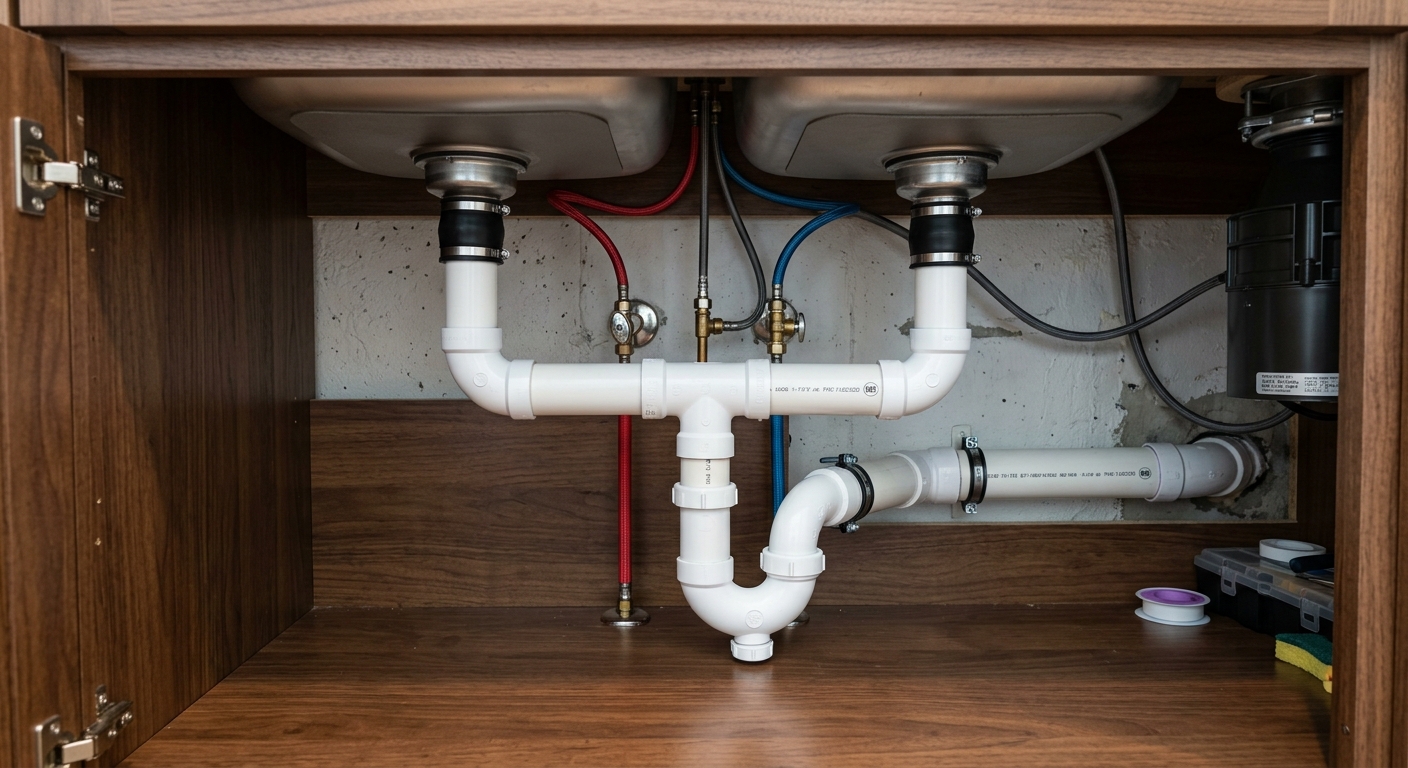
Plumbing services and costs in Burlington
Burlington homeowners rely on dependable plumbing every day—and when something fails, the repair costs can add up fast. With 47.4% of homes built before 1981 (Statistics Canada, 2021 Census), Burlington has a large share of older plumbing systems where galvanized supply lines, dated fixtures, and legacy drain materials are more likely to show wear. At the same time, Burlington and nearby Hamilton–Niagara Peninsula neighbourhoods sit in a freeze–thaw zone, so plumbing problems spike when cold snaps hit: poorly insulated water lines to garages, crawlspaces, and exterior hose bibs are frequent culprits. Harder water conditions across the broader region can also accelerate scale buildup in tank-style water heaters, often shortening service life and increasing descaling needs.
In Burlington, demand is especially high in established areas such as Appleby and older pockets around Downtown Burlington, where many homes are older and service calls come in waves during winter. Contractor availability also shifts with weather—emergency repairs can cost more when dispatchers are juggling multiple burst-pipe calls across the Hamilton–Niagara Peninsula.
Below is a practical pricing snapshot so you can compare common jobs before calling for an on-site assessment.
| Service |
What's Included |
Typical Duration |
Price Range |
| Emergency repair (burst pipe, active leak) |
Shutoff, leak location, pipe repair/temporary stabilization, minor cleanup |
2–6 hours |
$200–$850 |
| Water heater replacement (tank, 40–60 gallon) |
Remove old unit, install new tank, new connections as needed, basic vent/temperature safety checks |
3–6 hours |
$1,500–$3,200 |
| Tankless water heater installation |
Install unit, new gas/water connections as required, venting adjustments, commissioning/testing |
1–2 days |
$2,200–$4,500 |
| Full-home repipe (supply lines, PEX) |
Remove/replace main supply lines, tie-ins to fixtures, pressure testing, flushing and start-up checks |
2–5 days |
$2,500–$12,000 |
| Drain snaking / hydro-jetting (blocked drain) |
Inspection, auger or jetting, clearing stoppage, basic camera check if needed |
1–4 hours |
$200–$1,250 |
| Backwater valve installation |
Locate discharge line, install backwater valve, connect and seal, pressure/fitment verification |
4–8 hours |
$700–$2,500 |
Prices are estimates only and vary by project scope, site access and material selection.
What affects the price of plumbing in Burlington
Even when you’re comparing the “same” plumbing job across Burlington and the broader Hamilton–Niagara Peninsula, bids can swing by 30% to 50%. The main reasons are how freeze protection requirements are handled, how much pipe access is available, and whether the work is a repair, a replacement, or a larger reconfiguration. Ontario also has varying site conditions—basements, crawlspaces, exterior runbacks, and older drain layouts—so the labour time and materials used can change quickly.
In this region, the freeze–thaw zone matters. Frost depth dictates how deep supply lines must be buried; that affects whether outdoor/garage lines need deeper placement, insulation-rated protection, or heat trace. When cold snaps hit, those lines are where we see bursts. Then there’s water quality: Hamilton–Burlington–Niagara areas commonly experience moderately hard to hard water, which increases scaling in tank heaters. That’s a real driver of cost—descaling, component wear, and shortened tank life can push replacement earlier, often saving or costing you hundreds depending on the unit choice and maintenance history.
Housing age also changes what’s involved. Burlington has a large older stock (Statistics Canada, 2021 Census), so we frequently encounter galvanized steel and legacy fittings that restrict flow as corrosion builds up. In homes built from the late 1980s through the mid-1990s, poly-B can appear too, and failed fittings can turn a “minor” repair into a partial or full repipe.
Concrete examples: If a garage supply line was routed shallow, the repair may cost close to the $200–$850 repair band for a quick section swap—but if it requires rewiring, re-routing below frost, and additional insulation, it can move toward replacement-level pricing. Similarly, a tank water heater swap might stay in the $1,500–$3,200 range, while a tankless install with venting upgrades and electrical/gas rework can land above it.
| Price Factor |
Why It Matters |
Cost Impact |
| Type of work — repair vs. replacement vs. new install |
Replacement involves removal, new fittings, testing, and sometimes new code-compliant layouts |
Repairs typically fall near the lower band; replacements run higher |
| Water heater size and fuel type (gas vs. electric vs. tankless) |
Vent/combustion requirements and connection complexity change labour and parts |
Tank upgrades often increase cost; tankless can add major installation scope |
| Pipe material — PEX vs. copper vs. CPVC for repiping |
Material pricing and fit-up time vary; certain systems suit different runs |
Material choice can shift total by hundreds to over a thousand |
| Access — pipes in walls or slab require drywall or concrete cutting |
Hidden piping means more demolition and restoration work |
Access issues commonly push jobs into the upper portion of the repipe range |
| Permit requirement — adds cost and inspection scheduling time |
Permits require paperwork and inspection windows |
Typically adds direct permit/admin time and can delay scheduling |
| Emergency vs. scheduled — after-hours calls carry a premium |
Emergency dispatch, priority scheduling, and overtime labour apply |
After-hours can raise repair costs noticeably within the same scope |
| Water hardness — affects water heater sizing and descaling needs |
Hard water drives scaling and wear |
May increase heater replacement frequency and maintenance labour |
| Number of fixtures or drain lines involved |
Multiple tie-ins increase plumbing hours and testing |
More points of work increases both labour and material totals |
Permits & regulations in Ontario
In Ontario, most plumbing work beyond simple fixture swap-in must be done by a licensed plumber. That includes work that connects to the municipal water supply or sanitary/storm sewer, new drain connections, and most changes that affect how water flows or how waste is vented. In practice for Burlington homeowners, this typically means that the following usually require a permit and inspection: full repiping, new or modified drain connections, and work involving water heater changeouts in many municipalities depending on the exact configuration (especially where venting or connections are altered). Backwater valve installation is commonly recommended in flood-prone areas of the Hamilton–Niagara Peninsula and typically involves a permit and inspection due to the code requirements around backflow protection and discharge connections.
Step-by-step, here’s how to verify a contractor before you sign:
- Ask for their Ontario licence number and confirm it matches a valid journeyman/master plumber listing (where applicable).
- Request a current certificate of liability insurance showing coverage and effective dates.
- Confirm WSIB/WCB coverage (or the appropriate exemption documentation) in writing.
- Have them state in writing whether the work needs a permit pull, and whether they will schedule inspections.
- Get a written scope that clearly lists what’s included (materials, disposal, testing) and what isn’t.
These checks protect you—especially in older Burlington houses where hidden issues can turn a straightforward change into code-required upgrades.
Common plumbing problems in Burlington homes and how to fix them
Burlington’s housing stock and weather combine to create repeat service calls. First up is (1) burst or frozen pipes. In the freeze–thaw zone, thin insulation and shallow exterior runs—like those serving garage taps—freeze and burst when temperatures swing. Prevention means insulating exposed lines, sealing exterior penetrations, and using heat trace where needed; when a burst happens, the immediate priority is shutting off water and isolating the leak while a licensed plumber locates the affected section.
Next is (2) aging pipe materials. Galvanized steel corrodes inside the wall, gradually restricting flow and sometimes discolouring hot water. Poly-B can fail at fittings or joints; when that occurs, repairs may be temporary unless the underlying section is replaced. Proactive repiping often costs more upfront than a single repair, but it can prevent a cascade of failures—especially in homes with multiple bathrooms stacked where access is easiest.
(3) Water heater end-of-life is accelerated by hard water scale buildup. A tank in a hard-water area can scale up faster, making routine maintenance or earlier replacement more likely. (4) Low water pressure can come from clogged aerators, municipal pressure changes, or corroded galvanized lines. A proper diagnosis includes checking pressure at the supply, testing hot vs. cold, and inspecting shutoffs and strainers.
(5) Drain issues often start as blockages, but older Burlington drains may also involve root intrusion or deteriorating cast-iron/clay sections. Snaking can clear some stoppages, but recurring clogs typically call for camera inspection and targeted repairs.
Dollar example: If you’re dealing with a minor clogged kitchen drain, hydro-jetting might sit near the lower repair band, but if the blockage is coming from a failing section of older cast-iron line, the cost can shift toward higher drain replacement scope—where the “quick fix” isn’t justified long-term.
| Issue |
Common Cause in Burlington |
Typical Fix |
Price Band |
| Burst or frozen pipe |
Shallow exterior/garage supply lines, insufficient insulation in freeze–thaw conditions |
Shutoff, isolate burst section, repair/replace pipe, re-insulate and test |
$200–$850 |
| Low water pressure throughout home |
Corroded galvanized supply lines, clogged aerators/filters, or municipal pressure fluctuations |
Clean/replace aerators and strainers; flush lines; check pressure regulator and supply |
$180–$900 |
| Slow or blocked drain |
Grease/soap buildup, hair clogs, root intrusion, or failing older drain sections |
Snake or hydro-jet; camera inspection; repair/replace failed section if needed |
$200–$1,250 |
| Leaking or failed water heater |
Hard-water scaling, anode rod depletion, tank corrosion, aging vent/controls |
Replace heater; connect/disconnect; pressure and safety checks |
$1,500–$3,200 |
| Poly-B pipe failure (fitting or pipe crack) |
Joint/fitting failure in older installations (often from 1980s–1990s era) |
Partial repipe or targeted replacement after leak isolation; pressure test and flush |
$2,500–$12,000 |
| Galvanized pipe corrosion (restricted flow, discolouration) |
Internal scaling and corrosion narrowing flow over time in older Burlington homes |
Pipe replacement/repiping; fixture valve replacement if deposits are heavy |
$2,500–$12,000 |
How to choose a plumbing contractor in Burlington
Choosing the right contractor in Burlington comes down to verifying credentials and reading the scope carefully. Start by confirming Ontario licensing: ask for the Ontario journeyman or master plumber licence number and confirm it matches their registration. Next, request a certificate of liability insurance (current dates and coverage limits) and verify WSIB/WCB coverage or appropriate documentation. These items matter more in older homes because access can expand—wall openings, concrete cuts, and permit inspections can change the workload quickly.
Then, get 2–3 itemised written quotes. You want labour and materials listed separately (not one lump sum). Specifically ask whether they will: pull the permit, include inspection scheduling time, test systems (pressure/flow), and do disposal/haul-away if demolition is required. Also confirm warranty terms: workmanship warranty length (how long they stand behind the install), the manufacturer warranty coverage for the specific unit, and whether that product warranty is transferable to you as the homeowner.
Payment schedule is another safety check. Don’t pay more than about 10% to 15% upfront; keep a holdback until the job is complete and cleaned up. Finally, ask for a written timeline with a start date and a completion estimate—especially in winter when freeze–thaw emergencies can pull crews into urgent service work.
- Ask for their Ontario licence number and confirm it before work begins.
- Request liability insurance documentation and verify active dates.
- Confirm WSIB/WCB coverage (or documented exemption) in writing.
- Get 2–3 quotes with labour and materials broken out separately.
- Require a written scope: what’s included and what’s excluded (e.g., camera inspection).
- Ask who pulls the permit and whether inspection fees/scheduling are included.
- Confirm disposal/hauling is included if demolition occurs.
- Request testing steps: pressure test, purge/flush, leak check, vent/combustion verification.
- Clarify restoration: drywall patching, flooring protection, or concrete restoration limitations.
- Review warranty: workmanship duration and manufacturer warranty for the exact model.
- Confirm whether parts are sourced locally or special-ordered (lead times).
- Use a payment schedule that holds back most of the balance until completion.
Red flags I see with problematic plumbing contractors in Burlington include: vague estimates without itemized parts/labour, refusal to provide licence/insurance/WSIB proof, no clear permit/inspection plan, “low-ball” pricing that excludes disposal or drywall restoration but adds it later, and insisting on large upfront payments or starting work before agreeing on scope in writing.
Frequently asked questions — plumbing in Burlington
How do I know if I have a slab leak in Burlington?
In Burlington, a suspected slab leak often shows up as slowly rising utility costs, damp spots, or a consistent drop in water pressure even when you’re not using fixtures. Because the Hamilton–Niagara Peninsula is a freeze–thaw zone, leaks can worsen after temperature swings—especially if supply lines were routed through shallow areas or poorly protected sections. A plumber typically starts with usage-based diagnostics (leak detection/pressure testing), then uses non-invasive methods like acoustic/thermal tools to pinpoint the approximate location. One important sign: you may hear running water without any taps running, or notice periodic floor moisture. A quick repair estimate might start in the repair band (around $200–$850), but slab leak pinpointing and access can make the actual work costlier depending on where the leak is and what has to be opened.
What is a sump pump and do I need one in Burlington?
A sump pump is a device that removes water that collects in a sump pit, typically in basements that see seepage. In Burlington, whether you “need” one depends on your basement conditions—signs include recurring water on floors after heavy rain, damp walls, or a history of water infiltration during spring thaws. Many homeowners also add a backwater valve for sewer backup protection when basements are at risk, but that’s a different (and separate) safety measure. Sump pumps can be a wise investment if you’ve had water intrusion issues; they can also reduce damage costs when the ground saturates. The best approach is to have a plumber assess your current drainage setup and, if needed, coordinate with a contractor for sealing and discharge routing. Pricing varies widely by installation scope, but minor adjustments or checks are usually far less than full basement water-management retrofits.
How much does a plumber cost in Burlington?
In Burlington, the typical plumber cost depends on whether it’s a quick repair, a replacement, or a project with access and permits. For smaller, straightforward jobs like shutting off and repairing an active leak, you’ll often see charges that align with the repair band of $200–$850. For bigger work like drain clearing with inspection and jetting, or fixture installs, costs move upward based on time and parts. Labour rates across the region commonly fall in a mid-range where licensed work is valued—so bids can differ by 30% to 50% if one contractor includes testing/diagnostics while another only “clears and leaves.” Always ask for an itemised quote (labour + materials) and get clarity on after-hours premiums so you can compare apples-to-apples.
How much does water heater installation cost in Burlington?
For Burlington homeowners, tank water heater installation is commonly priced in the $1,500–$3,200 range, assuming a typical swap with standard venting/connection setup. This range reflects removal of the old unit, installation of the new tank (40–60 gallon typical), connection updates as needed, and safety checks/commissioning. In harder-water areas, scaling can shorten tank life, so it’s not unusual to replace sooner than you might in softer-water regions—meaning the “maintenance delay” doesn’t always reduce long-term cost. If you’re moving from a tank to tankless, or the installation requires more extensive venting or electrical/gas upgrades, expect pricing to increase beyond the tank swap band. A written scope is key so you know whether vent modifications, shutoffs, and disposal are included.
Tank vs tankless water heater — which is better?
Tank and tankless both work well in Ontario, but “better” depends on your household habits and the realities of Burlington homes. Tank heaters are often less expensive to install initially, and in many cases they fit well when you just want reliable hot water with predictable maintenance. Tankless units can be more efficient for households with stable, consistent demand, and they often reduce the energy wasted heating a storage volume. However, tankless installs can be more involved: venting, gas supply considerations, and sometimes electrical upgrades can make the project cost higher than a tank replacement. In Burlington’s hard-water conditions, tank-style heaters may scale faster; descaling and earlier component wear can matter. A plumber can help you model recovery needs and assess your venting and water quality. If your priority is lowest upfront cost, a tank often wins; if your priority is long-term efficiency and steady usage, tankless may be worth the premium.
How do I prevent frozen pipes in Burlington?
To prevent frozen pipes in Burlington, focus on insulation, protection, and keeping water moving during the coldest snaps. Start with exposed lines in unheated spaces—especially around exterior hose bibs, garages, crawlspaces, and any pipes running along exterior walls. Seal drafts, insulate with weather-appropriate insulation sleeves, and ensure outdoor spigots and backflow devices are protected. In the Hamilton–Niagara Peninsula freeze–thaw zone, insulating “good enough” isn’t always enough if lines are too shallow; a plumber may recommend deeper routing and heat trace for higher-risk runs. When temps drop, leaving a small trickle can relieve pressure in vulnerable sections. If you’ve had past bursts, prioritize a targeted inspection during the shoulder season. For active issues, emergency repair pricing may begin near the $200–$850 repair band, but preventing repeat damage is usually cheaper than emergency fixes and restoration.