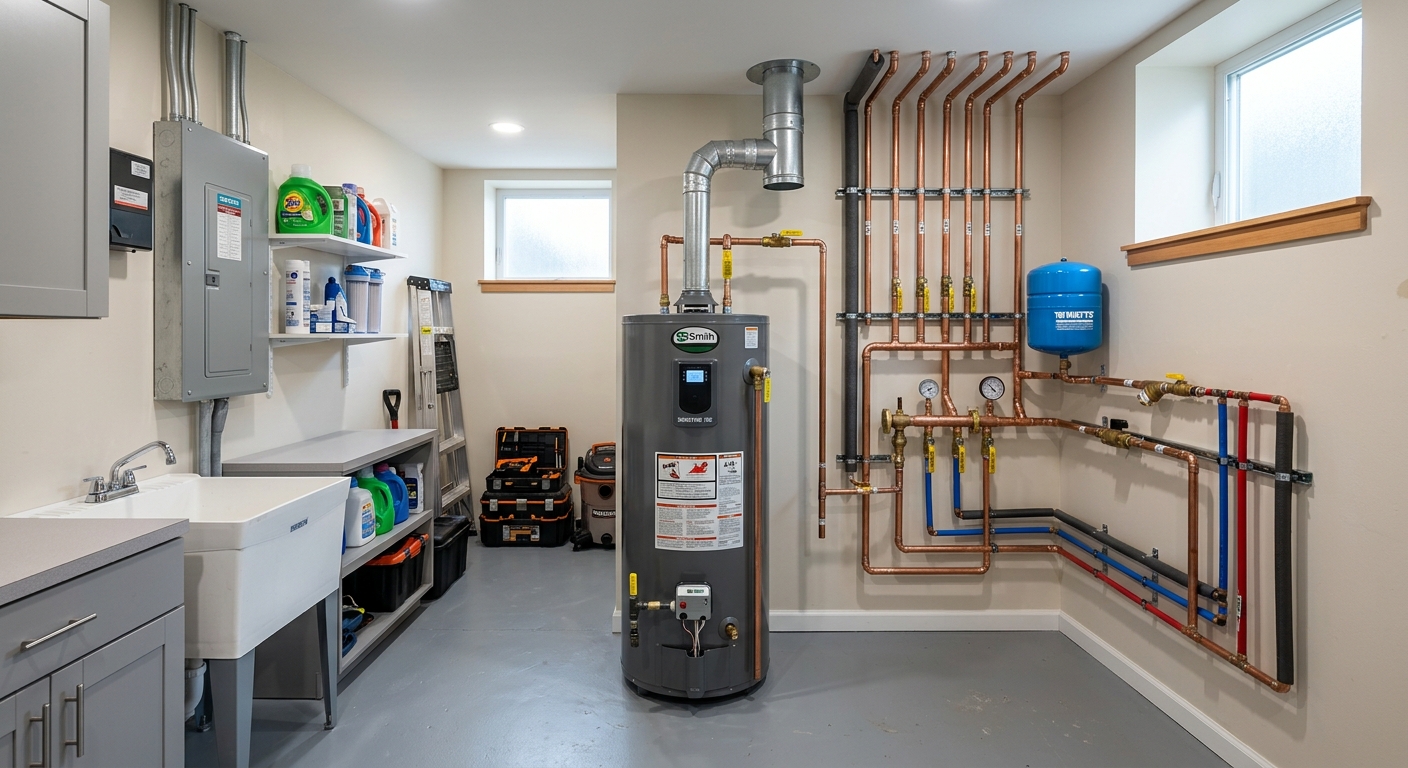
Plumbing services and costs in Gravenhurst
Gravenhurst plumbing costs vary more than many homeowners expect, especially because the Muskoka–Kawarthas climate pushes contractors to design for freeze protection and the local housing stock includes a lot of older plumbing. With 54.9% of homes in the area built before 1981 (Statistics Canada, 2021 Census), it’s common to see legacy pipe materials, dated drain layouts, and water-heater systems that are due for replacement rather than repairs. In fact, older homes in Gravenhurst are prime candidates for projects like repiping and water heater changeouts—particularly when scale and corrosion show up on fixtures and cartridge filters.
Seasonality also matters: when cold snaps hit, many emergency calls are frozen or burst pipes in crawlspaces, uninsulated wall cavities, and cottage systems that are shut down for stretches. That freeze risk adds labour time for safe thawing, insulation upgrades, and targeted pipe access. Meanwhile, water hardness trends across southern and Muskoka–Kawarthas sources can shorten water heater life, driving more descaling and tank replacements over time. Availability of licensed plumbers can also tighten during peak winter weeks, so booking early for scheduled work helps manage both timeline and total cost.
For context, Gravenhurst’s population is 13,157 (Statistics Canada, 2021 Census), which supports a steady local contractor base, but travel time still counts—especially if you’re dealing with waterfront properties, lake access, or multi-level layouts in areas like downtown along Muskoka Road corridor and nearby neighbourhoods where older homes are concentrated. Use the table below as a quick comparison of typical service durations and budget ranges, then we’ll break down what moves the price up or down.
| Service |
What's Included |
Typical Duration |
Price Range |
| Emergency repair (burst pipe, active leak) |
Locate leak, shutoff/isolate as needed, thaw/repair or replace damaged section, pressure test, cleanup |
2–6 hours (often same day) |
$180–$900 |
| Water heater replacement (tank, 40–60 gallon) |
Remove/haul-away old unit, install new tank, connect hot/cold, venting checks, start-up & leak test |
4–8 hours |
$1,200–$2,200 |
| Tankless water heater installation |
Supply/venting planning, install unit, gas/electrical connections (as applicable), flush/start-up, performance check |
1–2 days |
$1,900–$3,800 |
| Full-home repipe (supply lines, PEX) |
Remove old materials, run new PEX/copper lines, pressure test, shutoffs at fixtures, reconnect existing trims |
2–5 days |
$2,800–$6,000 |
| Drain snaking / hydro-jetting (blocked drain) |
Camera inspection (if needed), snake/jet main line or affected branch, clear stoppage, verify drainage |
1–4 hours |
$250–$1,200 |
| Backwater valve installation |
Assess sewer line routing, install valve & check components, minor pipe modifications, test for proper operation |
1–2 days |
$800–$2,400 |
Prices are estimates only and vary by project scope, site access and material selection.
What affects the price of plumbing in Gravenhurst
In Gravenhurst and across Muskoka–Kawarthas, you can see quote differences of roughly 30–50% for “the same” plumbing problem because winter freeze risk, access, and water conditions change what the plumber must do to get a permanent fix. In other parts of Ontario with milder frost exposure, contractors may not need the same level of insulation upgrades, heat tracing, or deep burial planning for supply lines. In Gravenhurst, the frost depth typical to this region means exterior and garage supply lines often need to be below grade with proper insulation—raising excavation time and material costs versus more temperate regions.
Water hardness also plays a bigger role than people think. When water is medium-to-hard, mineral scale builds faster in tanks and on shower/tap components, which can shorten water-heater lifespan by about 20–30% and increase descaling and cartridge replacement frequency. Home age matters too: with many houses built before 1981, it’s not unusual to find galvanized steel supply lines that restrict flow over time, and in some homes from the 1980s to mid-1990s, poly-B pipe that may develop failures at fittings. Those conditions push projects from “repair” into “replacement,” even when the initial symptom looks small—like a short-lived fix for discoloured water or intermittent pressure.
Two practical Gravenhurst examples: first, a drain blockage in a cottaging season can cost more if access is tight or if the plumber needs camera inspection before hydro-jetting (commonly within the repair bands for snaking/jetting). Second, switching from a tank to a tankless unit can be justified when you’re dealing with hard water and you want longer service life—yet it’s still a higher-ticket install than a standard $1,200–$2,200 tank replacement, depending on venting and electrical/gas constraints. These same factors help explain why emergency thaw-and-repair work typically sits around the $180–$900 repair band, while full repipe can jump into multi-day scope.
| Price Factor |
Why It Matters |
Cost Impact |
| Type of work — repair vs. replacement vs. new install |
Replacement/new requires removal, new fittings, testing, and more labour time |
Repairs stay lowest; replacements often move into higher bands |
| Water heater size and fuel type (gas vs. electric vs. tankless) |
Vent, gas routing, electrical upgrades and capacity affect cost and scheduling |
Tankless installs usually cost more than standard tank changeouts |
| Pipe material — PEX vs. copper vs. CPVC for repiping |
Material price, joining method, and long-term performance differ |
PEX often provides the most cost-effective balance for repipes |
| Access — pipes in walls or slab require drywall or concrete cutting |
Access changes labour hours and may require finishing/patching coordination |
Poor access can add hundreds to the total |
| Permit requirement — adds cost and inspection scheduling time |
Inspections require documentation and may affect start/completion dates |
Can increase admin time and delay work |
| Emergency vs. scheduled — after-hours calls carry a premium |
Overtime, priority dispatch, and after-hours labour rates raise pricing |
Same repair can cost noticeably more if it’s urgent |
| Water hardness — affects water heater sizing and descaling needs |
Scale buildup impacts efficiency and service interval |
More frequent maintenance or earlier replacement pushes cost up |
| Number of fixtures or drain lines involved |
Multiple branches increase diagnosis time and piping connections |
Single-point issues cost less than whole-line problems |
Permits & regulations in Ontario
In Ontario, most plumbing work beyond simple fixture replacement must be performed by a licensed plumber, and many project types require permits. As a homeowner in Gravenhurst, treat permits as part of the “done right” process: they ensure the work is inspected and connected safely to existing systems. In general, permits are commonly required for new drain connections, water-heater changeouts in some municipalities, full repiping, and any work that connects to the municipal water or sewer system. Backwater valve installation is also typically a permit/inspection item because it involves modifications to sewer flow paths—particularly important in Muskoka–Kawarthas where basement flooding risk is a real homeowner concern after heavy rain or snowmelt cycles.
Step-by-step, you can verify a contractor before they start:
- Check the plumber’s Ontario licence status using the provincial online licence directory (search by business/individual name).
- Request a Certificate of Insurance and confirm liability coverage amount and effective dates.
- Ask for proof of WSIB/WCB coverage (or an exemption letter where applicable) and verify it matches the company doing the work.
- Confirm who will pull the permit (and that permit number/inspection plan is provided in writing).
- Get everything in an itemised quote: labour, materials, permits (if any), and disposal.
For reference, if your project touches sewer connections or involves a backwater valve, don’t rely on “we’ll handle it” — ask for permit details up front so you can match the scheduled inspection to your project timeline.
Common plumbing problems in Gravenhurst homes and how to fix them
Gravenhurst homes tend to surface the same plumbing problems year after year, mainly due to freeze exposure, older plumbing materials, and the realities of seasonal use (especially in cottages). Here are five common issues and how to address each with solutions that hold up in Muskoka–Kawarthas conditions.
(1) Burst or frozen pipes: When supply lines aren’t sufficiently insulated or heat-traced, cold snaps can freeze valves, exposed sections, and shallow runs. Prevention is usually insulation plus correct placement, and in problem locations, a heat trace cable or improved shutoff strategy. If it happens, the response is to shut off water immediately (if safe), then call for thawing and repair—avoid “patching” a compromised pipe that’s still under stress.
(2) Aging pipe materials: Galvanized steel can corrode internally, restricting flow and discoloring water, while poly-B can fail at fittings or crack with temperature cycling. Both often warrant proactive repiping rather than repeated repairs. A full-home repipe commonly sits around $2,800–$6,000 depending on scope and access—costly, but it can prevent recurring emergency calls during winter.
(3) Water heater end-of-life: With hard water, scale builds faster on tanks, reducing efficiency and increasing wear. A tank replacement in the $1,200–$2,200 range can be the right move when the location and venting are straightforward; tankless can be a better long-term investment in some homes, but only after checking electrical/gas and venting capacity.
(4) Low water pressure throughout the home: Common causes include clogged aerators, corrosion in galvanized lines, or pressure fluctuations. A plumber will diagnose at shutoff points and check for systemic vs fixture-level restrictions.
(5) Drain issues: Blockages can be tree-root intrusion, grease/soap buildup, or failed older cast-iron lines. Hydro-jetting and camera inspection often make sense when snaking alone doesn’t hold.
Concrete example: if a drain backs up and repeatedly clogs, choosing a camera inspection first may add diagnostic cost, but it can save you from multiple “cheap” snaking visits that never address the actual cause.
| Issue |
Common Cause in Gravenhurst |
Typical Fix |
Price Band |
| Burst or frozen pipe |
Cold snaps in exterior/garage runs, shallow burial, inadequate insulation |
Thaw safely, replace damaged section, add insulation/heat trace where needed |
$180–$900 |
| Low water pressure throughout home |
Corroded galvanized supply lines, partially closed valves, sediment buildup |
Test pressure at main, service/replace valves, flush lines, recommend repipe if needed |
$250–$1,500 |
| Slow or blocked drain |
Grease/soap buildup, debris, root intrusion, older line deterioration |
Snake or hydro-jetting; camera inspection if recurring or suspected roots |
$250–$1,200 |
| Leaking or failed water heater |
Tank wear accelerated by hard water scaling and age |
Replace tank, check venting and connections, flush as recommended |
$1,200–$2,200 |
| Poly-B pipe failure (fitting or pipe crack) |
Age-related failures at fittings and temperature cycling |
Isolate and replace failed sections or repipe larger affected runs |
$800–$6,000 |
| Galvanized pipe corrosion (restricted flow, discolouration) |
Internal corrosion, mineral sediment, reduced water volume |
Service/flush if possible; repipe if restriction/corrosion is advanced |
$800–$6,000 |
How to choose a plumbing contractor in Gravenhurst
Choosing the right plumber in Gravenhurst is mostly about proof and clarity. First, verify Ontario licensing: ask for the individual or business’s Ontario journeyman/master plumber licence number and confirm it matches the person/company doing the work in the provincial online licence directory. Next, request liability insurance and confirm the certificate is current. Finally, ask for WSIB/WCB coverage documentation (or an applicable clearance/exemption letter) so you’re not exposed if a worker is injured on your property.
Then, get 2–3 itemised written quotes. Aim for breakdowns that separate labour time, materials (pipe, valves, fittings, heater components), permits (if applicable), and disposal/removal. Avoid quotes that only provide one lump sum without explaining what’s included. Read the scope carefully: is permit pulling included? Is drywall/concrete cutting and patching included, or only the plumbing portion? For winter work, clarify what thawing access or insulation upgrades are included, so you don’t get surprise charges after the fact.
Warranty matters too. Confirm the workmanship warranty length (for example, how long they’ll cover leaks due to installation), whether there’s a manufacturer warranty on parts, and whether that warranty is transferable to you as the homeowner. For payment, never pay more than 10–15% upfront—use milestone payments tied to inspection-ready stages, and hold back until the job is complete and cleaned up. Finally, get the start date and completion estimate in writing, including weather-related contingencies for outdoor supply line work.
- Licence number confirmed in Ontario’s public licence directory
- Certificate of insurance provided and matches the legal business name
- WSIB/WCB coverage (or exemption/clearance letter) shown before work begins
- Itemised quote: labour, materials, disposal, permits clearly listed
- Written scope: what’s included vs excluded (valves, shutoffs, minor patching)
- Permit responsibility stated (who pulls it and how you’ll receive details)
- Warranty terms in writing (workmanship vs manufacturer parts)
- Payment schedule with small upfront deposit (10–15% max)
- Start date and completion timeframe provided in writing
- Planned approach for freeze-risk areas (insulation/heat trace if relevant)
- Cleanup and haul-away of old equipment/materials specified
- Clear communication for after-hours or emergency dispatch fees
Red flags in Gravenhurst include: refusing to provide licence/insurance/WSIB documentation; offering only a verbal estimate or vague scope; insisting on a large upfront payment (more than 10–15%); charging “extra” for disposal/permits without listing it in the quote; and giving no written warranty for workmanship or downplaying backwater valve/permit inspection requirements when sewer-related work is involved.
Frequently asked questions — plumbing in Gravenhurst
Do I need a permit for plumbing work in Ontario?
In Ontario, many plumbing tasks require a licensed plumber and permits depending on how the work ties into drains, water supply, and inspections. Common examples that often require permits include new drain connections, full repiping, and work that connects to municipal water or sewer systems. Water-heater changeouts may require permits in some municipal areas, so your best move in Gravenhurst is to ask the plumber what permit is required before ordering parts. Backwater valve installation typically requires a permit and inspection as well because it changes sewer flow protection. To stay safe, request the permit plan in your itemised quote and confirm the permit number/timeline before the first cut—especially important in winter when schedules are tighter.
How do I know if I need to repipe my home?
You may need repiping when symptoms suggest widespread internal corrosion or aging pipe failures, not a single localized issue. In Gravenhurst homes built before 1981 (Statistics Canada, 2021 Census), galvanized steel is a common culprit for restricted flow and discoloured water over time; you may notice pressure drop at multiple fixtures, recurring sediment, or frequent “fixes” that don’t last. Poly-B issues in some homes from the 1980s to mid-1990s often show up as repeated leaks around fittings or sudden pressure changes. A plumber can diagnose using pressure tests, inspection (where accessible), and water quality clues. If the repairs would become a patchwork, a full repipe (often $2,800–$6,000) can be the better value compared with repeated emergency leak calls.
What causes hard water and how do I treat it?
Hard water usually comes from dissolved minerals—most often calcium and magnesium—picked up as water moves through natural geology before it reaches homes via wells or municipal sources. In the Muskoka–Kawarthas region, many households experience medium-to-hard conditions that cause scale buildup on fixtures, showerheads, and especially water heaters. Over time that scale can reduce efficiency and shorten tank life. Treatment options include point-of-use filters for fixtures and whole-home water softeners or conditioners, depending on your plumbing configuration and how aggressive the scaling is. If you’re dealing with a water heater nearing end-of-life, replacing the unit (commonly $1,200–$2,200 for a tank) plus addressing hardness can reduce repeat maintenance. A plumber can recommend sizing after checking your water quality and your current plumbing layout.
How long does a water heater last in Gravenhurst?
There isn’t one exact lifespan for every Gravenhurst home, but hard water and age are the two most common factors that shorten service life. In homes with medium-to-hard water, scale buildup can increase wear and reduce heating efficiency, which typically means earlier replacement than you’d see in softer-water areas. If you notice rumbling noises, slow hot-water recovery, frequent temperature fluctuations, leaks around the tank seam or fittings, or heavy scaling on aerators, your heater may be near end-of-life. Many homeowners get the longest results by planning replacement before a mid-winter failure—because a burst tank or leaking connection during a cold snap can turn a straightforward job into an emergency response. For budgeting, a standard tank replacement often falls within $1,200–$2,200, depending on size, fuel type, and venting/location constraints.
What should I do about a burst pipe?
If a pipe bursts in your Gravenhurst home, act fast and prioritize safety. First, shut off the main water supply if you can do so without getting near leaking water or electrical hazards. Then open taps to relieve pressure downstream only if it’s safe. Start protecting finishes from damage (towels, buckets, moving valuables) while you arrange emergency service. Avoid repeated “temporary” repairs—especially after freeze events—because the pipe may have hidden cracks or weak joints. A licensed plumber will typically thaw and repair/replace the damaged section, then recommend freeze-proofing upgrades like insulation improvements or heat trace for the affected run. Emergency repairs commonly land in the $180–$900 range for the plumbing portion, but the real goal is stopping recurrence, not just patching the leak.
Poly-B or galvanized pipes — should I replace them?
Often, yes—depending on condition and how much of the system is affected. Poly-B can fail at fittings or develop cracks over time, especially with temperature cycling common to Ontario homes and seasonal properties. Galvanized steel can corrode internally, restricting flow and causing discolouration and recurring pressure complaints. In Gravenhurst’s older housing stock (54.9% built before 1981, Statistics Canada, 2021 Census), repiping is a common “best next step” when multiple fixtures are affected or repairs keep coming back. The key is not replacing everything blindly, but getting a proper diagnosis: pressure testing, inspection of accessible sections, and checking how widespread the symptoms are. If replacement is needed, full-home repipe scope often falls within $2,800–$6,000, while isolated repairs may be less—yet if failures are systemic, replacement usually provides the longer-term value and fewer winter emergencies.