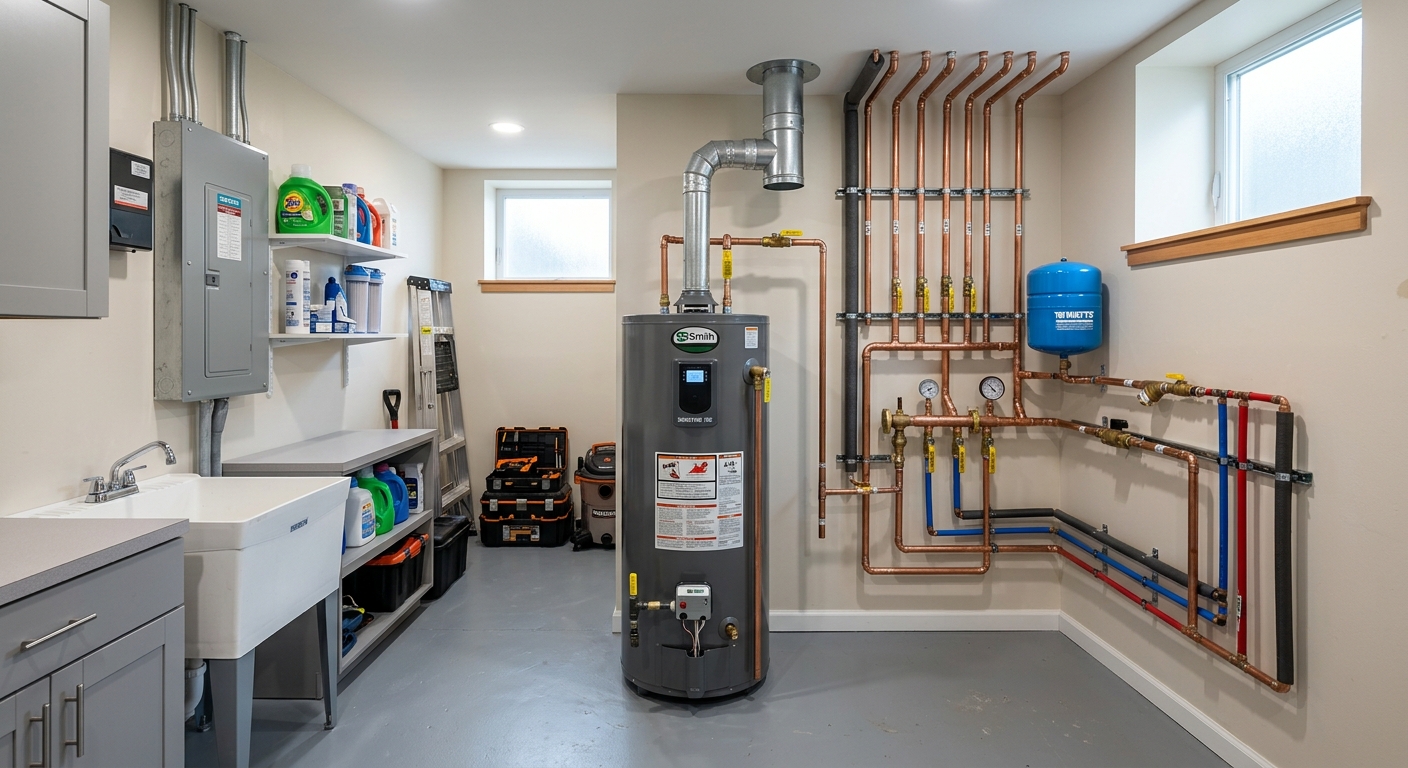
Plumbing services and costs in Malvern
Plumbing in Malvern, Ontario is shaped by both housing age and winter freeze exposure, which is why service calls can jump quickly during cold snaps. Malvern’s population was 43,794 in 2021 (Statistics Canada, 2021 Census), and that steady growth keeps demand high for licensed tradespeople—especially in fast-moving neighbourhood pockets like Agincourt North and nearby Scarborough-area connectors where older service lines and exterior wall piping are common. In Toronto’s market, it’s not unusual to see a wider range of basement and service access challenges than in newer suburbs, and that directly affects labour time and costs.
Home plumbing costs also track closely with the era a house was built. Older Toronto-region housing stock frequently includes galvanized supply lines and, in many 1980s to mid-1990s homes, legacy poly-B that can fail at fittings. When corrosion restricts flow or a leak appears, homeowners often end up comparing a repair versus a full repipe—especially if water pressure problems and discoloration show up together. Meanwhile, water hardness varies across southern Ontario sources, and harder water can shorten water-heater life and accelerate scaling on fixtures and aerators.
In Malvern specifically, the Toronto-region climate means plumbers plan for the “worst-case” of exposed supply lines, often along exterior walls, garages, or mechanical rooms with less insulation. A burst or frozen-pipe emergency may require thawing, pressure testing, and same-day materials. With that context, the table below compares typical Malvern pricing across common residential scenarios.
| Service |
What's Included |
Typical Duration |
Price Range |
| Emergency repair (burst pipe, active leak) |
Shutoff, leak isolation, pipe repair/replace section, pressure check, cleanup of minor water damage impacts |
2–6 hours (often same-day) |
$200–$1,200 |
| Water heater replacement (tank, 40–60 gallon) |
Remove/haul-away, install new tank, new T&P/relief setup as required, connect gas or electric, venting check, startup/testing |
4–8 hours |
$1,400–$3,200 |
| Tankless water heater installation |
Remove existing if needed, install tankless unit, manage venting/condensate where applicable, hot water balancing and testing |
1 day (sometimes 2) |
$2,800–$5,800 |
| Full-home repipe (supply lines, PEX) |
Plan and isolate water, remove old piping, install PEX manifold or line runs, pressure test, flush, restore access as approved |
2–5 days |
$5,500–$14,500 |
| Drain snaking / hydro-jetting (blocked drain) |
Locate obstruction, snake or jet, camera/inspection if needed, verify proper flow and drainage |
1–4 hours |
$180–$950 |
| Backwater valve installation |
Locate sewer line, install backwater valve and test flow, confirm sealant/support, basic inspection and function check |
4–7 hours |
$900–$2,400 |
Prices are estimates only and vary by project scope, site access and material selection.
What affects the price of plumbing in Malvern
In Toronto-region homes, quotes for the “same” plumbing job can vary by 30–50% because access, pipe material, and how much work is required to make the system safe and code-compliant differs between houses. Two homeowners may both ask for “a new water heater,” but one home may have easy venting access, clean gas shutoffs, and short pipe runs—while another has corroded fittings, undersized gas lines, or older venting that needs additional correction before the unit can be safely commissioned.
Freeze risk also drives pricing. In this region, frost depth influences how deeply supply lines must be buried and whether exterior or garage lines require insulation upgrades or heat trace cable. When supply lines are marginal, plumbers may recommend preventative insulation and air sealing before winter, especially after a long cold snap.
Water hardness varies sharply across southern Ontario depending on source and local conditions. Harder water tends to shorten water-heater life by roughly 20–30% and leaves scale on fixtures, valves, and aerators—so you see more frequent servicing and faster replacement cycles. If your home has older galvanized supply lines, corrosion can restrict flow over time. In homes built or plumbed in the 1980s to mid-1990s, legacy poly-B may also be present, and repair can be short-term if repeated joint failures occur. That’s why some homeowners move from a repair band of $150–$600 for a small leak to a larger scope when the underlying piping needs replacement.
Concrete Malvern examples: a leak along an exterior wall during January often costs more than a similar leak in an interior basement because freeze-thaw protection and access time are higher; and a blocked main drain discovered during routine snaking may require camera inspection before jetting, changing the final bill. The same issue can be cheaper if it’s addressed early—before corrosion or scale turns a minor service call into a full system overhaul.
| Price Factor |
Why It Matters |
Cost Impact |
| Type of work — repair vs. replacement vs. new install |
Replacement/new install needs added labour for removal, setup, and verification. |
Repairs often land near the lower bands; replacements commonly increase total labour and materials. |
| Water heater size and fuel type (gas vs. electric vs. tankless) |
Fuel type affects venting/electrical work; tankless needs venting/condensate management. |
Tankless can move the project from the $1,200–$3,500 tank range into higher installation scopes. |
| Pipe material — PEX vs. copper vs. CPVC for repiping |
Material selection affects labour time, fittings, and long-term reliability. |
Some materials cost more up front but can reduce callbacks for access or compatibility issues. |
| Access — pipes in walls or slab require drywall or concrete cutting |
Hidden piping increases labour and restoration work. |
Access challenges can push you toward repipe or drain work at the higher end of the range. |
| Permit requirement — adds cost and inspection scheduling time |
Permits/inspection scheduling can affect start dates and labour allocation. |
Typical adds are mainly administrative/time costs, but they can delay installation day(s). |
| Emergency vs. scheduled — after-hours calls carry a premium |
Thawing, isolation, and expedited scheduling increase overhead. |
Emergency work commonly exceeds repair-only expectations. |
| Water hardness — affects water heater sizing and descaling needs |
Hard water increases scale buildup, reducing efficiency and service intervals. |
May justify earlier replacement or add-ons like descaling/maintenance plans. |
| Number of fixtures or drain lines involved |
More connections mean more disconnections, testing, and restoration. |
Small “one fixture” jobs stay lower; multi-line issues quickly increase labour. |
Permits & regulations in Ontario
In Ontario, most plumbing work beyond simple fixture replacement must be performed by a licensed plumber, and certain jobs require permits and inspections before you can close up the work. In Malvern (Toronto area), the practical rule of thumb is: if you’re changing how the home connects to drainage or the municipal water/sewer system, expect permit requirements and formal sign-offs. Permits are typically required for new drain connections, full repiping of water supply lines, and many water-heater changeouts where venting, vent termination, or connection type changes must be reviewed by the municipality or inspector.
Backwater valve installation is another common Toronto-region recommendation due to stormwater surcharge and basement flood risk. In many cases, it also requires a permit and inspection because it involves the sanitary/sewer connection and must be installed and tested correctly.
What usually does not require a permit: straightforward replacement of an existing fixture with like-for-like (for example, swapping a bathroom sink or toilet using the existing rough-in, assuming no rerouting of supply/drain lines). Even then, the licensed-plumber rule still applies for work covered under Ontario plumbing licensing.
To verify a contractor for Malvern homeowners, check three items before scheduling: (1) Ontario licence—ask for their licence number and verify it through Ontario’s public licensing/registry resources; (2) certificate of insurance—confirm liability coverage for plumbing work; and (3) WSIB/WCB coverage—request proof and ensure it matches the business name on the quote. If the company can’t provide documentation promptly, treat it as a red flag and consider another contractor.
Common plumbing problems in Malvern homes and how to fix them
Malvern homes tend to show the same plumbing patterns each winter and each summer maintenance season, because Toronto-area housing mixes older pipe materials with modern water use. Here are five issues I see often, what usually causes them, and how to fix them in a way that holds up to Ontario winters.
(1) Burst or frozen pipes: cold snaps can freeze exposed supply lines, especially along exterior walls, uninsulated garage runs, or piping near foundation edges. Prevent with insulation and sealing drafts, and for vulnerable runs consider heat trace cable where appropriate. If a pipe bursts, the priority is shutting off water, locating the leak, and thawing safely before replacing damaged sections—emergencies often require same-day labour.
(2) Aging pipe materials: galvanized steel can corrode and restrict flow, leading to discolouration and persistent low pressure. Poly-B (often found in 1980s to mid-1990s builds) can fail at fittings from brittleness and stress. When these show up together—low pressure plus discoloration or repeated leaks—proactive repiping may cost more than a one-off repair, but it can stop recurring failures that keep bills coming back. A repair may start around $150–$600, but repeated sections can quickly approach repipe-level work (often $4,000–$15,000 depending on access and scope).
(3) Water-heater end-of-life: tank units can fail from corrosion at the bottom or tank wear; tankless units can suffer from scale, especially with hard water. In many Malvern households, hard water makes tankless a strong choice only if you’re prepared for maintenance and proper sizing.
(4) Low water pressure: common causes include clogged aerators, corroded supply lines, or municipal pressure drops. A plumber should diagnose at the fixture and at accessible shutoffs to determine if it’s a local blockage or systemic supply restriction.
(5) Drain issues: slow drains can be from grease buildup, hair, root intrusion, or failed older cast-iron lines. Depending on symptoms, snaking may help, but camera inspection is often the smartest path when the blockage pattern repeats or multiple fixtures drain poorly.
| Issue |
Common Cause in Malvern |
Typical Fix |
Price Band |
| Burst or frozen pipe |
Exposed exterior/garage runs during cold snaps |
Thawing, shutoff, cut-and-replace section, insulation upgrade |
$200–$1,200 |
| Low water pressure throughout home |
Corroded galvanized lines or whole-home supply restriction |
Aerator cleaning (if localized) or supply diagnostics; consider repipe if restrictive |
$150–$600 |
| Slow or blocked drain |
Hair/grease buildup, partial blockage, or early root intrusion |
Snaking and/or hydro-jetting; camera check if recurring |
$180–$950 |
| Leaking or failed water heater |
Tank corrosion, valve failure, or scaled heat exchanger (tankless) |
Replace unit; test pressure relief and venting; flush/plan for hard-water maintenance |
$1,200–$3,500 |
| Poly-B pipe failure (fitting or pipe crack) |
Joint/fitting brittleness and stress-related leaks |
Targeted replacement if localized; otherwise repipe strategy for reliability |
$4,000–$15,000 |
| Galvanized pipe corrosion (restricted flow, discolouration) |
Internal corrosion narrowing water pathways |
Repiping to PEX/copper; flush and retest; address water heater sizing/scale impacts |
$4,000–$15,000 |
How to choose a plumbing contractor in Malvern
Choosing the right plumber in Malvern starts with verification. First, confirm Ontario licensing: ask for the journeyman or master plumber licence number and the name tied to the work. Next, check liability insurance—request a certificate of insurance that shows coverage appropriate for plumbing services—and verify WSIB/WCB/WCR coverage proof if applicable to the contractor’s operation in Ontario. A legitimate contractor should provide this quickly; if they delay, it’s usually because they can’t substantiate the paperwork.
Then request 2–3 itemised written quotes rather than a single lump-sum number. The best quotes break labour and materials into lines (parts, fittings, labour hours, disposal/haul-away, testing, and any inspection/camera time). Pay close attention to what’s excluded: is the permit pull included (where needed), is drywall restoration included if walls are opened, and is debris/disposal included? If you’re doing a drain jetting or hydro-jet job, ask whether camera inspection is included and whether it’s billed separately if conditions look worse than expected.
Warranty matters too. Ask for the workmanship warranty length, separate from any manufacturer product warranty, and confirm if it’s transferable if you sell the home. For payment schedule, never pay the full amount upfront—aim for no more than 10–15% deposit, with the remainder due after key milestones and completion. Finally, insist on a written timeline with a start date and a realistic completion estimate, especially during winter when frozen-pipe calls can compress scheduling.
- Ask for Ontario licence number and verify it matches the quoted business name.
- Request a current certificate of liability insurance before work starts.
- Confirm WSIB/WCB/WCR coverage documentation (proof, not just verbal claims).
- Get an itemised quote separating labour, parts, disposal, and testing.
- Clarify permit responsibility: who pulls the permit and what costs are included.
- Confirm whether camera inspection is included for recurring drain issues.
- Ask what materials will be used (brand/type of heater, pipe system, fittings).
- Verify warranty: workmanship duration and whether manufacturer warranties apply to you.
- Set a payment schedule: keep upfront at 10–15% and hold back until completion.
- Request a written start date and completion estimate, including contingencies for parts delays.
- Ensure they include cleanup and disposal of removed components.
- Ask how they protect floors/walls during access work and what restoration is covered.
Red flags I’ve seen in Malvern: contractors who won’t show licence/insurance/coverage paperwork, quotes that are vague on labour and materials, refusal to discuss permits when repiping or sewer-related work is involved, pressure to pay most of the bill upfront, and no clear written warranty terms for workmanship or parts.
Frequently asked questions — plumbing in Malvern
How do I prevent frozen pipes in Malvern?
In Malvern and the broader Toronto area, frozen-pipe prevention is mostly about protecting the runs that lose heat fastest: exterior wall piping, garage supply lines, and any water lines near poorly insulated foundation edges. Start by insulating exposed pipes (including elbows and valves), sealing drafts around where pipes penetrate walls, and keeping cabinet doors open on vanities if the plumbing sits inside an exterior wall. During extreme cold snaps, let taps drip slightly and keep thermostats steady rather than cycling. If you’ve had repeat freeze problems, talk to a licensed plumber about heat trace cable for the vulnerable sections—especially where burial depth isn’t enough to protect the exterior run.
Why is my water pressure low?
Low water pressure in Ontario can be simple or system-wide. First check whether it’s one fixture (often a clogged aerator or shower head) or throughout the home. If it’s throughout, the cause is frequently corroded supply piping—especially in homes with older galvanized lines—or an issue at an accessible shutoff/pressure-reducing valve. Toronto-area water chemistry and corrosion over decades can restrict flow, which sometimes turns a small problem into a bigger one if multiple runs are aging. If a repair is all that’s needed, typical service can fall in the repair range of $150–$600, but if the supply system is restrictive, you may be looking at a larger scope.
Do I need a permit for plumbing work in Ontario?
Often, yes—especially when plumbing work changes how the home connects to drainage or the municipal water/sewer system. In Ontario, many projects beyond simple fixture replacement can require a permit and inspection, including new drain connections, full repiping, and many water-heater changeouts depending on how venting and connections are handled. Backwater valve installations (common for Toronto-area flood risk) also typically require a permit and inspection. For Malvern homeowners, the best step is to ask your plumber what permit is required for your specific scope and confirm the responsibility for pulling it in writing. A licensed plumber should also carry the correct documentation and provide an inspection pathway when needed.
How do I know if I need to repipe my home?
Consider repiping when signs point to system-level pipe deterioration rather than a localized failure. Common triggers include recurring leaks in multiple locations, persistent discolouration/rust, repeated low-pressure complaints, and evidence that older materials are present (like galvanized supply lines or legacy poly-B). In practice, a single leak might be repairable and cheaper in the short term, but if the same material is corroding or repeatedly failing, you’re paying for the “symptoms” instead of fixing the cause. A plumber should inspect accessible sections, pressure performance, and—if appropriate—test and assess the remaining piping. Repiping is a larger investment, commonly within $4,000–$15,000, and it can be the most cost-effective option when repairs are stacking up.
What causes hard water and how do I treat it?
Hard water usually comes from the mineral content of the source water—common in parts of southern Ontario—and the impact shows up as scale on fixtures, reduced efficiency, and faster wear on water-heater components. In Malvern, you can often notice hard-water symptoms as mineral buildup on taps/aerators and the need for more frequent descaling. Treatment options range from whole-home water softeners to targeted approaches like maintaining your water heater and descaling schedules. A plumber can help you choose a solution based on your usage, unit type (tank vs. tankless), and the level of scaling you’re seeing. The right treatment can extend service life and help avoid earlier replacement cycles.
How long does a water heater last in Malvern?
Typical lifespan depends on tank type, fuel, maintenance habits, and local water hardness. In many Ontario homes, hard water contributes to scale buildup, which can shorten tank performance and reduce efficiency faster than expected. Tank units commonly last fewer years when scale and corrosion are accelerating, while properly maintained systems can reach longer lifespans. When you see signs like leaks near the bottom, rumbling noises, inconsistent hot water, or heavy scale on components, it’s usually time to plan replacement rather than repeated patch fixes. For replacement planning in Malvern, many tank heater replacements land around $1,200–$3,500, while tankless installations often fall higher depending on venting and connection complexity.