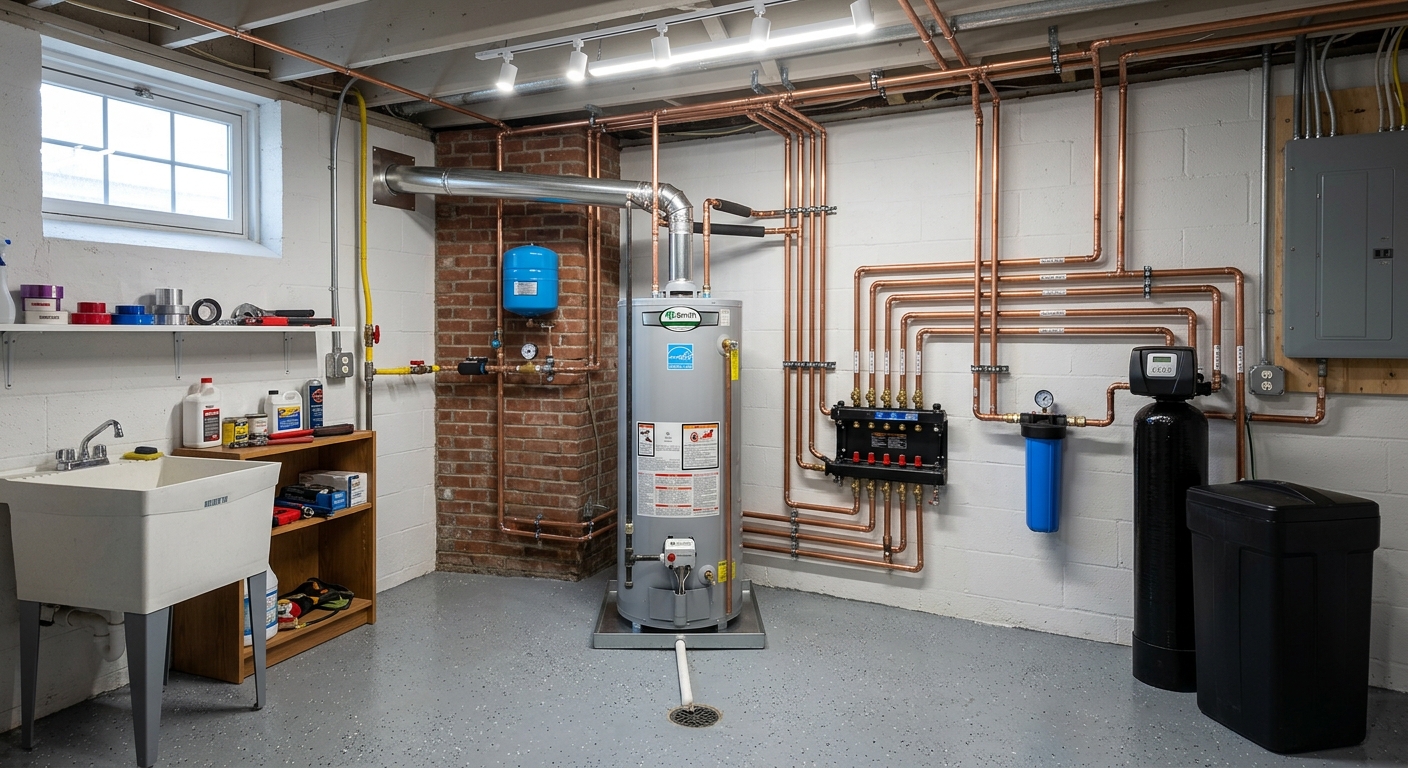
Plumbing services and costs in Niagara Falls
Plumbing in Niagara Falls is shaped by a tough combination of older housing stock and winter freeze–thaw swings. In Niagara Falls, 60.8% of homes were built before 1981, which means it’s common to see aging supply and drain materials during routine repairs—often before homeowners notice symptoms like discoloured water, reduced flow, or recurring leaks. Just as important, homeowner households make up 70.4% of households (Statistics Canada, 2021 Census), so there’s strong year-round demand for upgrades that protect basements, garages, and main-floor plumbing.
Across the Hamilton–Niagara Peninsula, the climate adds cost pressure: freeze–thaw conditions increase the risk of bursts when supply lines in garages, crawlspaces, and exterior runs aren’t buried deep enough or properly insulated. We also see more plumbing work tied to moderately hard to hard water, which accelerates scale buildup in tank-style water heaters and speeds up maintenance needs like descaling or earlier-than-expected tank replacement. Labour availability is generally steady in busier pockets such as the Niagara Falls Parkway and near the Fallsview corridor, but the busy season can tighten scheduling when multiple homes in the same neighbourhood are affected by cold snaps.
Because of those factors, the same service can land in different price bands depending on access (basement vs. slab), pipe material, and whether the work is emergency or planned. Use the comparison table below as a baseline for what homeowners typically budget in Niagara Falls.
| Service |
What's Included |
Typical Duration |
Price Range |
| Emergency repair (burst pipe, active leak) |
Shutoff, locating the break, repair/section replacement, pressure test, cleanup, basic restoration |
2–6 hours (plus follow-up) |
$200–$850 |
| Water heater replacement (tank, 40–60 gallon) |
Remove/haul old unit, install new tank, connect gas/electric, venting check, pressure relief discharge piping, startup and testing |
4–8 hours |
$1,500–$3,200 |
| Tankless water heater installation |
New unit install, venting and gas sizing check, condensate/vent termination (as applicable), flushing/commissioning, testing |
1–2 working days |
$2,000–$4,200 |
| Full-home repipe (supply lines, PEX) |
Confirm existing pipe type, plan routing, replace supply throughout, shutoffs, pressure test, fixture reconnection, wall/floor protection/restoration allowances |
2–5 working days |
$2,500–$12,000 |
| Drain snaking / hydro-jetting (blocked drain) |
Inspection camera (often included), cable/jet service, clearing stoppage, minor clean-out service, post-clear verification |
1–4 hours |
$200–$850 |
| Backwater valve installation |
Locate existing sewer connection, install backwater check valve, confirm drainage operation, seal/secure discharge path, basic testing |
1 day (sometimes 1–2) |
$700–$2,300 |
Prices are estimates only and vary by project scope, site access and material selection.
What affects the price of plumbing in Niagara Falls
In Niagara Falls and the wider Hamilton–Niagara Peninsula, it’s not unusual to see quotes for the “same” plumbing problem vary by 30–50% depending on what the plumber discovers after opening up walls or testing lines. Part of that spread is labour and scheduling—licensed plumbers may need to mobilize quickly for freeze-affected calls—while another part is the risk of hidden damage in older homes. In Ontario, municipal inspection requirements and the need for permit paperwork can also affect timeline, which flows into total cost.
Freeze risk is a major driver here. Niagara Falls sits in a freeze–thaw zone, so supply lines that run outdoors, along exterior walls, or into garages often must be insulated and installed below typical frost depth; if a line is borderline, plumbers may recommend heat trace cable or rerouting. That’s a scope change, not just a price difference. Water hardness is another local constant: moderately hard to hard water commonly accelerates scale buildup in tank heaters, which can shorten tank life and increase the chance you’ll pay for descaling or replacement sooner than you would in softer-water regions. Over time, that scale can also contribute to mineral deposits on fixtures and inside valves, increasing service frequency.
Older housing stock also changes the material conversation. Homes built before 1981 are more likely to have legacy galvanized steel, and some neighbourhoods from the 1980s–mid-1990s include poly-B in specific retrofit pockets—either can fail at fittings, restrictions can mimic “low pressure,” and drains may show age-related slowdowns. If a job stays in the $200–$850 repair band, it’s usually a localized issue. If it turns into repiping, that can move toward the $2,500–$12,000 range when multiple branch lines need replacement due to corrosion or repeated leak points.
Concrete examples I see often: (1) a garage or exterior hose bib line that freezes may require more extensive excavation and re-insulation than the homeowner expects; (2) a “simple” low-pressure complaint sometimes ends up being corroded galvanized branches, not aerators; (3) a water heater that’s only 8–10 years old in soft-water areas may still be near end-of-life sooner in harder-water areas, making replacement a better value than repeated parts.
| Price Factor |
Why It Matters |
Cost Impact |
| Type of work — repair vs. replacement vs. new install |
Replacement/new installs include design checks and more labour for disconnect/reconnect |
Can shift from typical repair bands into heater/tankless pricing |
| Water heater size and fuel type (gas vs. electric vs. tankless) |
Gas vs. electric changes venting/electrical scope; tankless requires sizing and often venting work |
Tankless and larger tanks typically cost more |
| Pipe material — PEX vs. copper vs. CPVC for repiping |
Material choice affects compatibility, routing time, and availability |
PEX often reduces labour and wall impact versus more rigid options |
| Access — pipes in walls or slab require drywall or concrete cutting |
Access affects labour, patching, and restoration scope |
Hidden access can add major cost even if the pipe length is short |
| Permit requirement — adds cost and inspection scheduling time |
Permits/inspections add administrative time and may delay work start |
Usually increases total project cost and timeline |
| Emergency vs. scheduled — after-hours calls carry a premium |
Emergency dispatch costs and priority routing raise labour rates |
Often increases repair pricing compared to weekday scheduling |
| Water hardness — affects water heater sizing and descaling needs |
Scale buildup shortens tank life and increases service frequency |
May push sooner replacement versus repeated maintenance |
| Number of fixtures or drain lines involved |
More lines/fixtures means more isolation, testing, and restoration |
Multiline issues can move a repair into repipe/drain service territory |
Permits & regulations in Ontario
In Ontario, most plumbing work beyond simple fixture replacement must be performed by a licensed plumber. In practice, that means when you’re dealing with changes to how water or wastewater connects to your home’s plumbing system, you should assume licensing and potentially permits are involved. Permits are commonly required for work that connects to the municipal water supply or municipal sewer, for new drain connections, for full repiping, and for many water-heater changeouts depending on the municipality’s rules and how the installation is configured (venting, vent connections, and related infrastructure). Backwater valve installation is typically permit-regulated and inspected, especially in the Hamilton–Niagara Peninsula area where basement backups can be a real risk after heavy rain and melt cycles.
What typically does not require a permit: swapping out a faucet/fixture or doing limited toilet work when it doesn’t involve new drain connections or major changes to supply/sewer connections. What typically does require a permit: new or altered drain connections, repiping, any job that changes the way the home ties into the water/sewer system, and many water-heater installations where venting or connections change.
To verify an Ontario contractor, ask for three items in writing: (1) their Ontario journeyman or master plumber licence information (often verifiable through the provincial registry); (2) certificate of insurance showing liability coverage; and (3) proof they have WSIB/WCB coverage (or an equivalent clearance letter/coverage confirmation, depending on the business setup). A legitimate contractor will provide documents readily before work starts and will align the permit/inspection steps with the scope you’re paying for.
Common plumbing problems in Niagara Falls homes and how to fix them
Niagara Falls homes tend to show the same plumbing issues because of the local freeze–thaw cycle, the mix of older neighbourhoods, and moderately hard to hard water. Here are five common problems and how to address each.
(1) Burst or frozen pipes: Most calls start when a cold snap hits unprotected runs—think exterior hose bibs, garage lines, or pipes in poorly insulated basements. Prevention is insulation plus correct routing below frost depth; for higher-risk runs, plumbers may install heat trace cable and add a more reliable freeze-protection approach. If a burst is already active, shut off water immediately, then call for emergency repair—what matters is stopping the flow fast to prevent water damage.
(2) Aging pipe materials: Galvanized steel can corrode internally and restrict flow, while poly-B (seen in some 1980s–mid-1990s homes) can fail due to brittle fittings or cracks. When repairs keep recurring, proactive repiping is often the better value than repeated stop-and-start fixes, especially when you’re seeing discolouration or persistent leaks.
(3) Water heater end-of-life: In hard-water conditions, tank-style heaters accumulate scale faster, which can shorten service life and lead to performance drops. Tankless can be a strong investment when hot water demand is consistent and maintenance planning is a priority, but it has a different install scope and cost. For budgeting, many tank replacements land in the $1,500–$3,200 band, while a full drain/repiping escalation can move into much higher territory.
(4) Low water pressure: A short list of culprits includes clogged aerators, corroded galvanized branches, and pressure fluctuations. Plumbers typically confirm with pressure testing at fixtures and upstream shutoffs before concluding it’s “just a tap issue.”
(5) Drain issues: Slow drains can be root intrusion, partial blockage, or failing older cast-iron/clay lines. Camera inspection is key—snaking alone may clear the immediate clog, but it won’t fix a structural issue.
Dollar reality example: If a slow shower drain is cleared with hydro-jetting and camera verification, it might fit the $200–$850 repair band. But if inspection shows an older failed section pulling debris, “cheap clearing” becomes recurring—then budgeting toward drain replacement or targeted repairs is the cost-justified move rather than repeating the same service each season.
| Issue |
Common Cause in Niagara Falls |
Typical Fix |
Price Band |
| Burst or frozen pipe |
Frozen exterior/garage runs, insufficient insulation, lines near exterior walls during freeze–thaw swings |
Shutoff and repair/section replacement, insulation upgrade, pressure test, restoration as required |
$200–$850 |
| Low water pressure throughout home |
Corroded galvanized supply lines, partially closed shutoff, fixture aerators, pressure drop effects |
Diagnostic testing, replace aerators/screens, clear restrictions, address supply piping if needed |
$200–$850 |
| Slow or blocked drain |
Grease/soap build-up, root intrusion, partial blockage in older drain runs |
Cable and/or hydro-jetting, camera inspection, recommend targeted repair if structural issues found |
$200–$850 |
| Leaking or failed water heater |
Tank wear-out, hard-water scale buildup, anode depletion, aged venting components |
Tank replacement and safety checks, confirm gas/electric and pressure relief discharge setup |
$1,500–$3,200 |
| Poly-B pipe failure (fitting or pipe crack) |
Fitting failures and cracking in legacy poly-B sections during temperature cycling |
Section replacement with proper connections or full repipe if multiple segments show risk |
$2,500–$12,000 |
| Galvanized pipe corrosion (restricted flow, discolouration) |
Internal corrosion and scale buildup, flow restriction, rust-coloured water from aging supply lines |
Reconnection/section replacement or full-home repipe to PEX (depending on extent) |
$2,500–$12,000 |
How to choose a plumbing contractor in Niagara Falls
Choosing the right plumbing contractor in Niagara Falls starts with verification. First, confirm the plumber’s Ontario licence status (journeyman or master) and that the company name matches the work you’re hiring. Next, ask for proof of liability insurance and WSIB/WCB coverage; a legitimate contractor should share a certificate of insurance and a coverage confirmation (often via a clearance letter or documentation) before the first invoice. Don’t proceed on a “we’ll send it later” promise—paperwork should be ready when you request a quote.
Then request 2–3 itemised written quotes. You want a breakdown that shows labour hours, line-item materials (tank/model, venting components, shutoffs, pipe type), and any disposal fees. Avoid lump-sum-only quotes unless the scope is very clear. Read the scope carefully for exclusions: drywall patching, concrete cutting, permit pulling, camera inspection, disposal of old equipment, and restoration allowances can swing the final bill.
Warranty matters too. Look for a workmanship warranty in writing (length and what it covers), plus the product/manufacturer warranty details. Ask whether warranties are transferable to future owners.
For payment, keep it controlled: never pay more than 10–15% upfront, and hold back the remainder until the job is complete and tested. Get the start date and completion estimate in writing; emergency work is different, but the timeline should still be documented.
- Request Ontario licence number (or licence details) before scheduling.
- Verify liability insurance certificate is current and matches the contractor.
- Confirm WSIB/WCB coverage or acceptable clearance documentation.
- Get 2–3 itemised quotes (labour + materials + disposal + taxes where applicable).
- Ask if permit pulling is included or billed separately.
- Confirm disposal of old parts/units is included in the quoted scope.
- Ask for camera inspection details for drain issues (not just snaking).
- Check what restoration covers after drywall access or basement work.
- Request workmanship warranty terms in writing.
- Ask about manufacturer warranty and whether you’ll receive model/serial records.
- Agree on a payment schedule: max 10–15% deposit, holdback until testing passes.
- Require start date and a completion timeframe in writing.
Red flags I commonly see in Niagara Falls: contractors who won’t provide their Ontario licence details, vague scopes that don’t mention permits or disposal, refusing to itemise pricing, asking for large upfront payments (well beyond 10–15%), or offering no written warranty/workmanship terms—especially on water heater installs and repiping work.
Frequently asked questions — plumbing in Niagara Falls
How long does a water heater last in Niagara Falls?
In Niagara Falls, water heater life depends heavily on hard-water scale and how often the heater is taxed. With moderately hard to hard water common in the Hamilton–Niagara Peninsula, tank-style units often accumulate mineral scale faster, which can reduce efficiency and shorten service life. A well-installed tank with proper maintenance can last longer, but when scale buildup accelerates, you may see end-of-life sooner and experience noises, temperature recovery issues, or leaks. Typical budgeting is often aligned with the $1,500–$3,200 water heater replacement band when a tank is near failure. If you’re in a pre-1981 home (60.8% of Niagara housing stock built before 1981, Statistics Canada, 2021 Census), it’s also worth having venting and supply connections checked during replacement.
What should I do about a burst pipe?
If a pipe bursts in Niagara Falls, your priority is stopping water damage, not aesthetics. Shut off the main water supply immediately if you can do it safely, then open cold-water taps to relieve pressure and reduce further strain. If water is actively spraying, protect floors and remove valuables from the area. Once the flow is stopped, call a licensed plumber for emergency repair—freeze–thaw events often leave hidden moisture in drywall insulation and subflooring. After repair, a proper pressure test and monitoring matters so you don’t get a second failure days later. Emergency work often falls into the $200–$850 repair band when the issue is localized, but restoration costs can increase if water spread affected finishes.
Poly-B or galvanized pipes — should I replace them?
In Niagara Falls, whether to replace poly-B or galvanized depends on extent, age, and symptoms. Poly-B (seen in some homes from the 1980s to mid-1990s in this region) is known for fitting-related failures and cracking, so when leaks recur or you see damp areas, proactive replacement is often smarter than repeated patch repairs. Galvanized steel is still common in older neighbourhood housing; it can corrode internally, restrict flow, and cause discoloured water. If pressure tests and inspection show restricted flow or multiple problem sections, a repipe can prevent repeated emergencies. That’s why costs can move from the $200–$850 repair territory into the $2,500–$12,000 repipe band. A camera/pressure diagnostic first is the best way to avoid replacing more than you need.
How do I compare plumbing quotes?
To compare plumbing quotes in Ontario (including Niagara Falls), insist on itemised written estimates rather than lump sums. Make sure each quote lists labour hours, materials (specific water heater model or pipe type), disposal fees for old equipment, and whether permit pulling and inspection scheduling are included. Compare exclusions too: drywall patching, concrete cutting, restoration scope, and whether the plumber will perform pressure tests or post-work leak checks. For drain issues, ask whether camera inspection is included, because clearing a clog without diagnosing structural causes can lead to repeat calls. If two quotes are wildly different, ask what’s driving the difference—access complexity, pipe material, or whether they’re planning a repair versus a replacement.
How long does a water heater replacement take in Niagara Falls?
Most tank water heater replacements in Niagara Falls take about 4–8 hours once the site is ready, assuming typical basement access and no major venting surprises. After that, the plumber should complete a safe startup, verify connections (gas/electric as applicable), confirm the pressure relief discharge setup, and run basic tests for leaks and operation. Homes built before 1981 (60.8% of Niagara stock, Statistics Canada, 2021 Census) sometimes have older venting layouts or supply details that take a bit more time to adapt safely, which can stretch the day. The $1,500–$3,200 replacement band typically aligns with labour and standard replacement scope; unusual venting or component corrections can add time and materials.
What is a backwater valve and do I need one in Niagara Falls?
A backwater valve is a device installed in your sewer line to prevent sewage from flowing back into your home during heavy rain, melting cycles, or system surcharging. In many areas of the Hamilton–Niagara Peninsula, basement backups are the concern during extreme weather, so a backwater valve is often recommended for homes with basement drains or lower plumbing fixtures. In terms of regulations, this kind of installation typically requires a permit and inspection in Ontario, so plan for that scheduling. If you’re in an older home or you’ve experienced slow drainage after storms, the risk is worth discussing. Pricing commonly falls around a mid-range budget—one estimate band for Niagara Falls backwater valve work is $700–$2,300 depending on access and the connection layout.