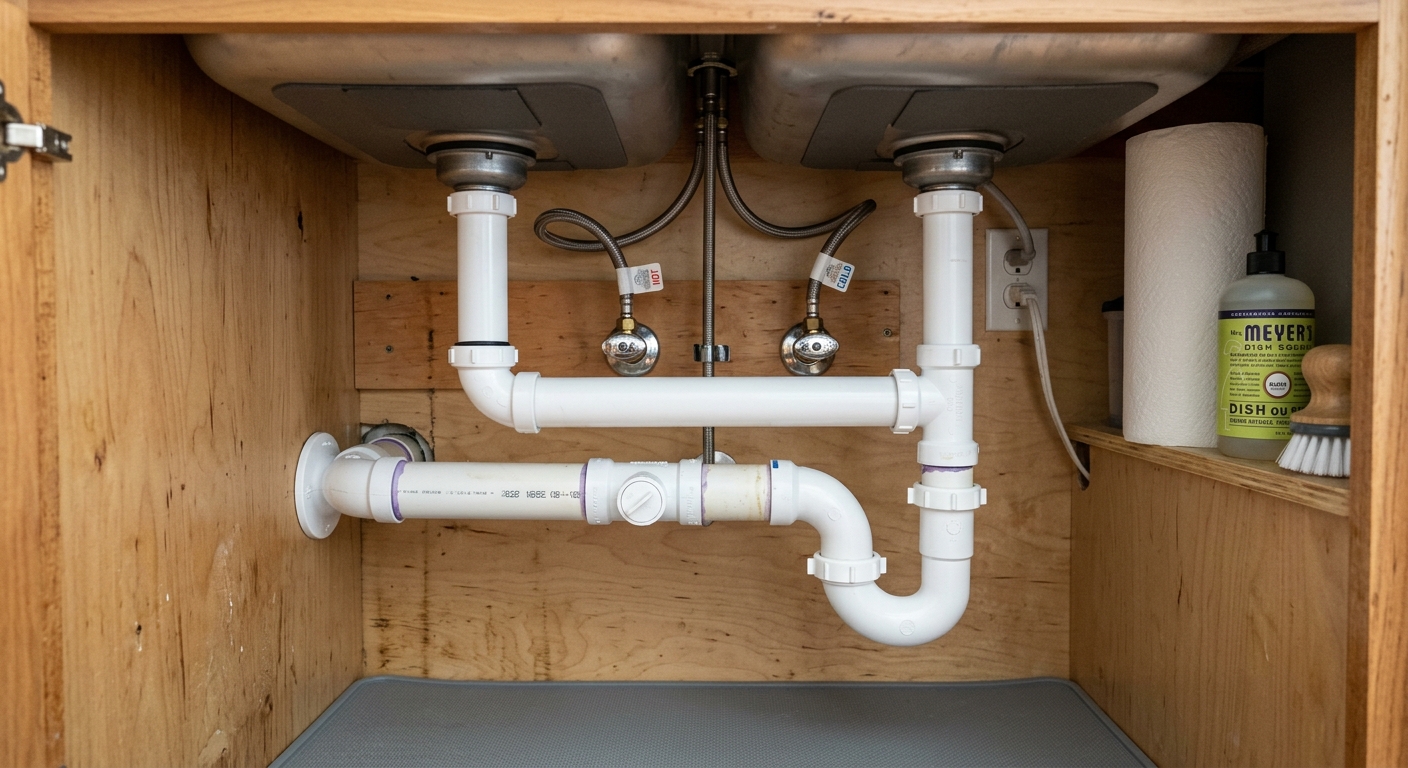
Plumbing services and costs in Penetanguishene
Plumbing in Penetanguishene tends to be seasonal and event-driven—when cold snaps hit, homeowners often need fast help with frozen supply lines or active leaks. That matters here because Penetanguishene has a substantial older housing base: 51.7% of homes were built before 1981 (Statistics Canada, 2021 Census). Older homes are more likely to have galvanized steel supply lines or aging drains, which can push repair calls into larger replacement work. With tank-style water heaters, hard-water scaling is also a big driver of end-of-life replacements over time, and the Kitchener–Waterloo–Barrie corridor’s freeze risk means exterior services and uninsulated runs are frequently where problems start.
In the Kitchener–Waterloo–Barrie market, costs often rise during after-hours emergencies because local labour availability tightens and truck/diagnostic time increases. Frost depth here typically means supply lines are buried deeper (commonly around 1.2 m below grade), so when insulation is missing or crawlspace plumbing is poorly protected, contractors may need more labour to access, trace, and repair lines than similar work in milder areas. You’ll see especially strong demand around the downtown and waterfront-adjacent areas where older homes and service lines are closer to freeze-vulnerable zones.
Below is a practical comparison of common services and what you can realistically expect for typical duration and pricing before we talk about what changes your quote.
| Service |
What's Included |
Typical Duration |
Price Range |
| Emergency repair (burst pipe, active leak) |
Leak isolation, line repair/patch, pressure check, basic cleanup; diagnosis time varies by location |
2–6 hours (sometimes longer if access is difficult) |
$180–$800 |
| Water heater replacement (tank, 40–60 gallon) |
Remove/install new tank, flush/prepare connections, test for leaks, relight/commission (as applicable) |
3–7 hours |
$1,200–$4,500 |
| Tankless water heater installation |
Wall mounting, plumbing/electrical/gas hookup, venting/condensate provisions (as applicable), commissioning and testing |
1 day (often 6–10 hours) |
$2,500–$5,800 |
| Full-home repipe (supply lines, PEX) |
Plan and pipe replacement, shutoffs/valves, pressure testing, restores accessible finishes; excludes major re-framing |
2–5 days (varies with access) |
$4,000–$15,000 |
| Drain snaking / hydro-jetting (blocked drain) |
Camera inspection (if needed), mechanical clearing or hydro-jetting, verification run to confirm flow |
1–4 hours |
$250–$1,600 |
| Backwater valve installation |
Site assessment, valve selection and install near foundation drain, test for seal and flow direction, basic cleanup |
4–8 hours |
$900–$2,900 |
Prices are estimates only and vary by project scope, site access and material selection.
What affects the price of plumbing in Penetanguishene
In Penetanguishene and across the Kitchener–Waterloo–Barrie corridor, the same “headline” plumbing job can land 30–50% apart depending on access, parts, and urgency. The Ontario-wide rate spread matters too: typical plumber hourly pricing for regular work often runs about 110–145, while emergency response can climb into the 200–350 range. That after-hours premium can dwarf small material differences—especially when a burst line happens overnight and the crew must respond, protect the area, and restore service immediately.
Freeze risk is the biggest local pricing driver. Here, frost depth typically pushes exterior water services and supply lines down (commonly around 1.2 m), so if an existing run is shallow, poorly insulated, or located in a crawlspace that gets colder than the rest of the home, plumbers may need additional excavation, insulation retrofits, or heat trace cable—changing the job from a simple repair into a rebuild. Water hardness also affects both tank-style heaters and service intervals. In many areas of southern Ontario, hard water can reduce tank life and increase scaling. If your home’s older heater is already furred up, descaling labour and parts costs can shift you upward into the water-heater replacement band (often where tank replacements land between $1,200 – $4,500).
A second example is repiping scope. If galvanized steel is restricting flow, replacing only a visible section may look cheaper today, but a full-home repipe using PEX can be justified once multiple branches show corrosion or frequent valve/fixture failures—often falling within $4,000 – $15,000 depending on access. Finally, Penetanguishene’s older housing stock (with 51.7% built before 1981) means you may encounter galvanized steel or older drainage materials, which can raise disposal and labour for demo.
| Price Factor |
Why It Matters |
Cost Impact |
| Type of work — repair vs. replacement vs. new install |
Replacements and installs require more labour planning, testing, and parts |
Replacement can cost 2–8x a simple repair |
| Water heater size and fuel type (gas vs. electric vs. tankless) |
Fuel and input ratings determine venting/electrical/gaswork requirements |
Tankless typically adds major labour and system upgrades |
| Pipe material — PEX vs. copper vs. CPVC for repiping |
Material cost and labour complexity vary; some materials need different fittings |
PEX is commonly cost-effective; copper increases material spend |
| Access — pipes in walls or slab require drywall or concrete cutting |
Access controls how much demolition/restore work is needed |
Poor access can add thousands to a repipe |
| Permit requirement — adds cost and inspection scheduling time |
Permits may require drawings, inspection bookings, and additional admin time |
Usually adds incremental cost and delays |
| Emergency vs. scheduled — after-hours calls carry a premium |
After-hours rates and mobilization increase labour cost |
Emergency service often shifts you into the high end of repair bands |
| Water hardness — affects water heater sizing and descaling needs |
Mineral scale reduces efficiency and shortens service life |
Hard water can move you from “maintenance” into earlier replacement decisions |
| Number of fixtures or drain lines involved |
More points increase diagnostic time and parts |
Partial fixes scale quickly with the number of affected branches |
Permits & regulations in Ontario
In Ontario, most plumbing work beyond simple fixture swap-outs must be completed by a licensed plumber, and many jobs require permits depending on what’s being connected or changed. Generally, permits are required for work that involves new or altered connections to the municipal water supply or sanitary/sewer lines, full repiping, new drain connections, and any water-heater changeout in municipalities where a permit is required. Because requirements can vary by local jurisdiction within Ontario, the safest approach in Penetanguishene is to ask the contractor to confirm permit necessity before quoting scheduling.
Backwater valve installation—commonly recommended in flood-prone pockets across the Kitchener–Waterloo–Barrie region—typically requires a permit and inspection since it involves drainage routing and foundation penetrations. Simple, homeowner-performed shutoff work and non-plumbing cosmetic changes don’t require licensing, but once a plumber is modifying pipe connections, valves, venting, or drain routing, you should expect licensing and likely a permit trail.
To verify a contractor, you can follow this order: (1) confirm the Ontario journeyman or master plumber licence number is valid on the relevant provincial online registry (your contractor should provide the licence number); (2) request a certificate of insurance showing liability coverage limits and ensure it’s current; (3) ask for proof of WSIB/WCB coverage for their workers; and (4) if they’re pulling a permit, they should be able to provide permit/inspection details for your project.
Common plumbing problems in Penetanguishene homes and how to fix them
In Penetanguishene, the five most common plumbing issues track closely with winter freeze risk, older pipe materials, and how hard local water tends to be on heaters and fixtures. First is burst or frozen pipes. Often the culprit is an exterior run, an insulated-missing section in an unheated area, or a crawlspace line near an exterior wall. Prevention is insulation plus, where appropriate, heat trace and proper air sealing; if it happens, act fast—call an emergency plumber, shut off the main supply, and protect drywall and flooring.
Second, aging pipe materials show up as recurring failures. Galvanized steel can corrode from the inside, restricting flow and causing discolouration at fixtures. Poly-B (polybutylene) systems—more common in homes built in parts of the 1980s to mid-1990s—can suffer from brittle fittings and cracking. When you see repeated leaks, pressure drops, or failing joints, proactive repiping is often the most cost-effective long-term fix rather than repeated “patch and pray” repairs.
Third, water heater end-of-life is frequent. Tank-style heaters are affected by mineral scale; tankless units are more sensitive to missed descaling intervals. If your unit is already heavily scaled, a replacement may land in the water-heater band of $1,200 – $4,500. Fourth is low water pressure throughout the home; plumbers typically diagnose from aerators and pressure regulators back to supply line restrictions.
Fifth, drain issues range from simple blockages to root intrusion and failed older drain lines (including cast-iron or clay in older properties). As a dollar example: a basic drain snake might be worthwhile first if the problem is localized, but if camera inspection shows repeated line failures, the “cheaper now” option can lead to repeat call-outs instead of resolving the underlying section.
| Issue |
Common Cause in Penetanguishene |
Typical Fix |
Price Band |
| Burst or frozen pipe |
Uninsulated exterior service lines; crawlspace plumbing near cold air leaks |
Locate and repair/replace section; restore insulation; pressure test |
$180–$800 |
| Low water pressure throughout home |
Corroded galvanized supply; partially closed valve; pressure regulator issues |
Diagnose at PRV and inlet; flush lines; repair/replace restricted sections |
$250–$1,800 |
| Slow or blocked drain |
Grease buildup; hair/soap accumulation; early root intrusion; settling in older lines |
Snaking or hydro-jetting; camera check if recurring; repairs if damaged |
$250–$1,600 |
| Leaking or failed water heater |
Tank corrosion; overheating; sediment/scale reducing lifespan |
Replace heater; flush connections; test for leaks and proper operation |
$1,200–$4,500 |
| Poly-B pipe failure (fitting or pipe crack) |
Brittle joints; previous minor leaks leading to hidden failures |
Cut out failed section or repipe supply lines as needed; pressure test |
$1,800–$12,000 |
| Galvanized pipe corrosion (restricted flow, discolouration) |
Interior scale buildup; corrosion narrowing pipe diameter; sediment at fixtures |
Partial replacement or full repipe to PEX; fixture flushing and verification |
$4,000–$15,000 |
How to choose a plumbing contractor in Penetanguishene
Start by verifying Ontario licensing. A legitimate contractor should provide their Ontario journeyman/master plumber licence number, and the work should be performed under that licensed plumber’s oversight. Next, confirm liability insurance: ask for a certificate of insurance showing they carry general liability with current effective dates and acceptable limits for residential work. Then check WSIB/WCB coverage by requesting proof that their workers are covered—this is especially important in Ontario where jobsite injuries can create payment and compliance issues.
For pricing, request 2–3 itemised written quotes rather than a single lump sum. The quote should separate labour from materials (heater model, pipe type, valves/fittings, disposal fees) and specify what’s included in the scope. Pay attention to what is excluded: drywall restoration, access from finished spaces, camera inspection, permit pulling, and disposal can make “cheap” quotes end up expensive.
Warranty matters. Ask for a clear workmanship warranty period (commonly at least 1 year for repairs, longer for some replacements), plus the manufacturer warranty for the equipment. Also ask if the warranty is transferable when you sell your home—this can matter for older buyers and appraisals.
Payment schedule: never pay more than 10–15% upfront for typical residential projects. Hold back a portion until the job is complete, tested, and cleaned up. Get the start date and completion estimate in writing, and ensure the work order lists test/commission steps (pressure tests, leak checks, and drain verification where applicable).
- Licence number and proof work is performed under an Ontario-licensed plumber
- Current certificate of insurance (liability) and clear company name on it
- WSIB/WCB coverage proof for contractor staff
- Itemised quote: labour, parts, disposal, diagnostics, and any inspections
- Written scope: what’s repaired/replaced and where the boundary ends
- Permit pull listed clearly (included vs. extra) if required
- Warranty details for workmanship and manufacturer equipment
- Clear timeline and number of workdays, not just “we’ll book you in”
- Site protection plan (covers, drop sheets) for bursts/leaks
- Expected test steps (pressure test, leak check, drain run/verification)
- Payment terms that keep upfront payments within 10–15%
- Bring-back plan if symptoms return (e.g., follow-up within a defined period)
Red flags in Penetanguishene: a contractor who can’t provide their Ontario licence number, refuses to show WSIB/WCB proof, offers only a vague lump-sum quote with no scope details, won’t stand behind workmanship warranty terms in writing, or pressures you to pay a large deposit (over 10–15%) before any testing is done.
Frequently asked questions — plumbing in Penetanguishene
How long does a water heater replacement take in Penetanguishene?
In Penetanguishene, most tank water heater replacements take about 3–7 hours once the plumber is on site with the correct parts and access is straightforward. If the new unit requires additional electrical/gas adjustments, venting work, or replacing corroded supply connections, the timeline can stretch longer. If your home is older (many in the area were built before 1981), plan for extra time locating shutoffs and dealing with scaling or brittle fittings. Costs usually depend on fuel type and system complexity; many standard tank replacements fall within the typical $1,200 – $4,500 band. Your plumber should also allow time for leak checks and commissioning before declaring the job complete.
What is a backwater valve and do I need one in Penetanguishene?
A backwater valve is a one-way device installed in your home’s drain line routing to help prevent sewer/wastewater from backing up into your basement during surcharges or heavy rain events. In Ontario’s Kitchener–Waterloo–Barrie corridor, this is often recommended where properties are more exposed to drainage surges or where basements are at risk of backup—your Penetanguishene plumber can assess risk based on your setup and local drainage patterns. Whether you “need” one depends on your existing drainage design, basement floor drain presence, and the configuration of your main line. Installation is commonly handled as a permitted job, and many installs land around $900 – $2,900. If you’ve had odours, recurring gurgling, or previous backup events, it’s worth getting assessed sooner.
How do I shut off the water supply in my Penetanguishene home?
Most Penetanguishene homes have a main shutoff where you can stop water to the entire house—commonly near the water meter, basement ceiling/bulkhead, or just inside the foundation wall. If you can, find the shutoff handle and try moving it gently before an emergency happens; some older valves seize due to corrosion. If you have a hot-water tank, there’s also typically a cold supply line shutoff for that unit, which can limit leakage if only the heater is failing. For burst or frozen pipes, shutting off quickly reduces damage to drywall and flooring. After you shut off, call a licensed plumber—emergencies sometimes involve verifying pressure, draining lines safely, and confirming the repair. Always avoid turning valves aggressively if they feel stuck; a snapped shutoff can become a bigger repair.
Can I claim a plumbing repair on home insurance in Ontario?
Sometimes—depending on what caused the damage and what your Penetanguishene policy covers. Many homeowners can claim for sudden, accidental events like burst pipes resulting in water damage, especially when the burst is unexpected and not due to long-term neglect. Repairs that are considered routine maintenance (for example, descaling a heater on schedule, fixing small drips that were known for months) may not be covered. Keep in mind that insurance claims often require documentation: photos, plumber invoices, and evidence of the failure. If you’re facing a budget decision between an immediate repair and a longer-term fix (like a repipe after recurring leaks), ask your insurer whether they require a mitigation/repair first. Your plumber can provide itemised receipts that clearly describe the work, which helps if you later submit a claim.
How do I prevent drain clogs in my Penetanguishene home?
To prevent clogs in Penetanguishene, focus on what commonly causes blockages: grease, hair/soap buildup, and debris entering the lines. Use a strainer in sinks and showers, avoid flushing wipes or “flushable” products, and keep grease out of drains—wipe pans and dispose of grease in the trash/compost where appropriate. Every few months, run hot water and consider a plumber-recommended maintenance approach for your specific plumbing (some homeowners benefit from periodic inspections rather than aggressive chemicals). If you have older drains, pay attention to early signs like slow drainage, gurgling, or recurring backups. Catching issues early can prevent you from moving from a simple snake into a larger scope. When clogs do happen, hydro-jetting or camera inspection may be needed; typical clearing work can range up to the $250 – $1,600 band depending on access and complexity.
What is the difference between ABS and PVC pipe?
ABS and PVC are both plastic drain/vent pipe materials, but they differ in composition, installation characteristics, and how they’re joined. PVC (polyvinyl chloride) is typically rigid and commonly used for many drain/vent runs; ABS (acrylonitrile butadiene styrene) is also rigid but uses different solvent cements and fittings. The biggest practical difference for homeowners is that they are not always “interchangeable” without the correct adapters and joining method—mixing without proper transition fittings can lead to leaks. A licensed plumber in Ontario will verify what’s already installed and use the correct connector type. If you’re replacing a section, the quote may change based on whether you need a clean transition to existing ABS/PVC, the accessibility of the run, and whether you also need to address failing nearby fittings—especially in older homes.