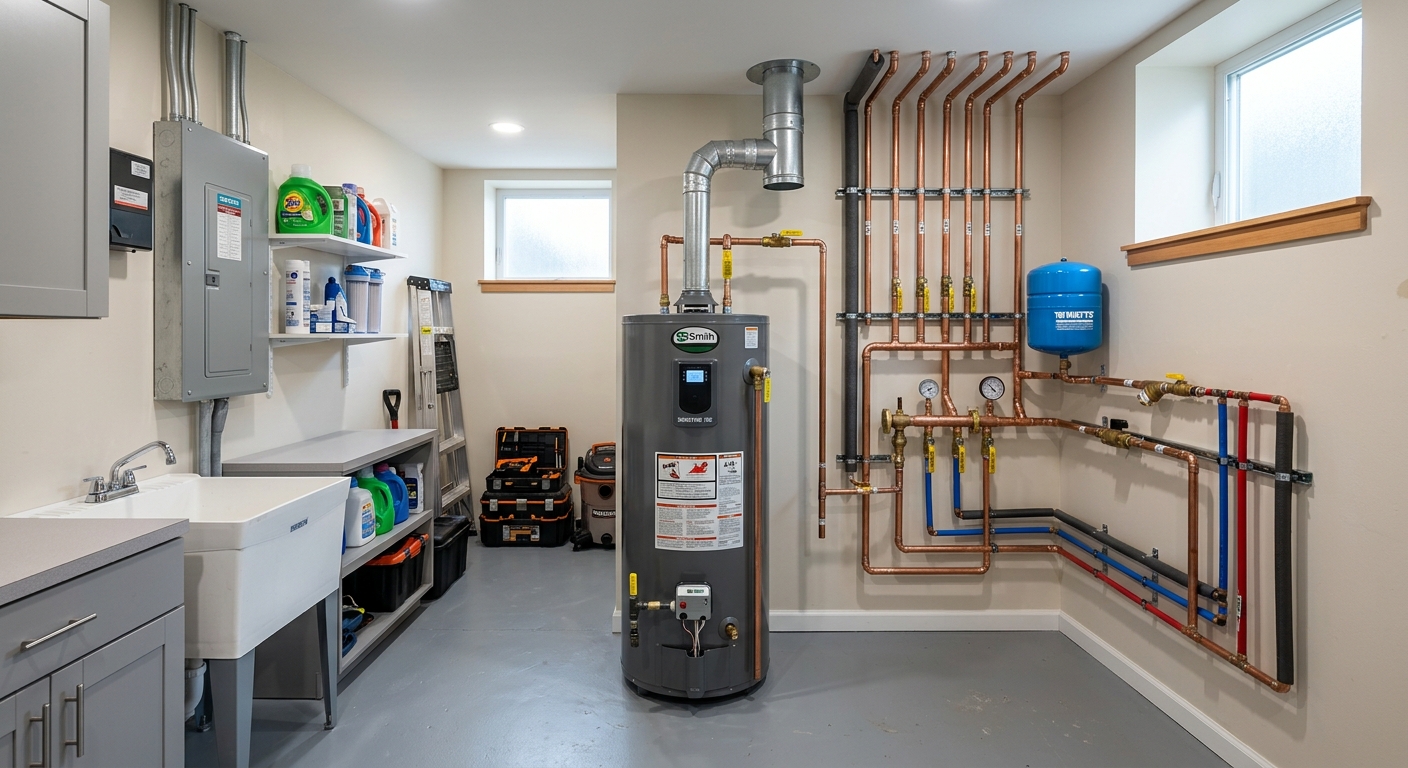
Plumbing services and costs in Carstairs
Carstairs homeowners usually feel plumbing costs most during the winter snap—when a small freeze becomes a burst-pipe call and the damage spreads through drywall, insulation, and sometimes basement ceilings. With 25.8% of local homes built before 1981, a meaningful portion of the housing stock is older and more likely to include galvanized supply lines or legacy service components that can corrode and restrict flow. That age profile also increases the odds you’ll see water-heater changeouts sooner rather than later, especially when scale builds up faster in harder-water conditions. (Statistics Canada, 2021 Census)
In the Calgary region, plumbing pricing is shaped by three practical things: freeze risk, access, and restoration. Cold snaps drive a steady need for emergency work, and contractors often prioritize jobs with uncovered pipe runs in unheated areas (garages, crawlspaces, exterior-wall closets). The second driver is market availability—on busy weeks, scheduling shifts can affect labour rates and how quickly a crew can open walls or floors. Lastly, water hardness and variable scaling can shorten service intervals, adding cost to descaling, valve maintenance, and tank servicing.
In Carstairs, trades activity is particularly noticeable around the newer residential growth areas near main collector roads and the edges of the community where many homes have attached garages and exterior risers. That’s exactly where insulation gaps and drafty service entries show up. If you’re comparing options for an emergency repair versus a planned replacement, the typical ranges below are a good starting point—then the exact scope determines where the final quote lands.
| Service |
What's Included |
Typical Duration |
Price Range |
| Emergency repair (burst pipe, active leak) |
Locate leak, shutoff, replace failed section, pressure test, basic wall/floor make-safe |
3–8 hours |
$180–$900 |
| Water heater replacement (tank, 40–60 gallon) |
Disconnect/reconnect, install new tank, venting checks, new temperature/pressure relief valve (as needed), start-up testing |
6–10 hours |
$1,800–$5,200 |
| Tankless water heater installation |
Site assessment, venting plan, plumbing and gas/electrical tie-in (as required), new valves/flush setup, commissioning |
1–2 days |
$3,000–$7,500 |
| Full-home repipe (supply lines, PEX) |
Remove/replace aging lines, rework shutoffs/rough-in valves, pressure testing, flush, selective drywall restoration |
2–5 days |
$3,500–$18,000 |
| Drain snaking / hydro-jetting (blocked drain) |
Camera inspection (often), clean-out access, snake/jetting, test run, basic blockage cause check |
1–4 hours |
$250–$1,900 |
| Backwater valve installation |
Inspection, valve sizing, install at main discharge (as appropriate), test and seal, restore access opening |
4–8 hours |
$900–$3,600 |
Prices are estimates only and vary by project scope, site access and material selection.
What affects the price of plumbing in Carstairs
Even when two homeowners request the same “leaky tap” or “replace the same water heater,” quotes in the Calgary and broader Alberta market can swing by 30–50%. The reason is rarely the labour alone—it’s what the plumber has to open, how long access takes, and how much restoration is required once the system is exposed. Freeze conditions in particular can turn a straightforward repair into a multi-area make-safe job if water has migrated behind insulation. Calgary-region emergency call volumes in winter also affect scheduling, and that can show up as premium after-hours labour.
Freeze risk determines how deep supply lines must be buried and how well outdoor or garage service entries are protected. In practical terms, if insulation is missing around exterior-wall runs or heat tracing isn’t present, shallow or poorly insulated piping freezes faster and can fail with bigger bursts. That can push repairs toward the upper end of the $180–$900 emergency band, especially when drywall opening and cleanup are required.
Water hardness matters too. Harder water accelerates mineral scale in fixtures and in tank-type water heaters, which can shorten service life and increase descaling/valve maintenance needs. In older neighbourhood pockets and older homes—where $3,500–$18,000 repiping is more commonly considered—galvanized lines may restrict flow over time, and poly-B (seen in some 1980s to mid-1990s builds) can fail at fittings. When those issues are discovered during access, repipe scope can rise quickly.
Two concrete examples I see in Carstairs: (1) swapping a failing 40–60 gallon tank can land closer to the mid range when connections are reachable and venting is straightforward, but approach the higher end when gas/electrical routing or vent adjustments are needed; (2) a simple drain clean-out may be quick if there’s only a blockage, but becomes more expensive when camera checks reveal root intrusion, requiring additional work beyond snaking.
| Price Factor |
Why It Matters |
Cost Impact |
| Type of work — repair vs. replacement vs. new install |
Repairs are localized; replacements require disconnect/reconnect, testing, and sometimes vent or valve changes |
Repair can be a fraction of replacement; new installs often add design time |
| Water heater size and fuel type (gas vs. electric vs. tankless) |
Fuel affects venting, clearances, and controls; tankless also adds configuration and commissioning |
Tank replacements typically fall in the $1,800–$5,200 band; tankless usually exceeds it |
| Pipe material — PEX vs. copper vs. CPVC for repiping |
Material choice affects labour, fittings, and how restoration is handled along existing routes |
PEX often reduces labour time; copper/CPVC can increase material and install complexity |
| Access — pipes in walls or slab require drywall or concrete cutting |
Opening finished surfaces adds time and restoration costs |
Hard-to-reach lines can add major cost beyond basic plumbing labour |
| Permit requirement — adds cost and inspection scheduling time |
Some work requires permit pulls, inspections, and documentation |
Adds administrative time; can delay start and affect final labour window |
| Emergency vs. scheduled — after-hours calls carry a premium |
Urgent service reduces scheduling flexibility |
Often increases hourly rate and minimum call-out charges |
| Water hardness — affects water heater sizing and descaling needs |
Hard water increases scale buildup and reduces efficiency |
May shorten service intervals; can raise costs for maintenance and eventual replacement planning |
| Number of fixtures or drain lines involved |
More locations can mean more isolation, testing, and restoration |
Costs rise quickly with multi-line symptoms or repeat access points |
Permits & regulations in Alberta
In Alberta, most plumbing work beyond simple fixture replacement must be carried out by a licensed plumber. In Carstairs, that matters because “routine” work can cross into regulated territory once it touches the municipal water or sewer connections. Permits are typically required for new drain connections, alterations that connect to the municipal system, full repiping, and certain water-heater changeouts depending on the local requirement in effect for the municipality you’re in. Backwater valve installation is usually recommended for Calgary-area flood risk protection, and it commonly triggers a permit and inspection because it changes how sewer discharge is protected.
When you hire someone, don’t just take verbal confirmation—verify it step-by-step:
- Ask for their Alberta licence number and check it using the provincial licence lookup/online registry resources (or have the plumber provide proof directly).
- Request a clearance letter or proof of good standing where available, and ensure the licence is active for the scope of work.
- Ask for a current certificate of insurance that lists liability coverage; confirm the work location and dates align with your job window.
- Confirm WSIB/WCB coverage for workers assigned to your site—ask for the clearance letter for the company.
- If a permit is required, ask whether the plumber pulls it under their registration and who attends the inspection.
If you’re unsure whether your specific job needs a permit, ask the plumber to spell it out in writing as part of the proposal so there are no surprises during inspection or documentation.
Common plumbing problems in Carstairs homes and how to fix them
Carstairs homes tend to show the same repeating plumbing problems because the climate swings hard and the building stock includes a larger share of older dwellings. Here are five issues I see often, along with practical fixes and when to replace versus repair.
1) Burst or frozen pipes. In a cold snap, exposed runs in garages, exterior-wall cavities, or poorly insulated service entries can freeze first. Prevent it with foam pipe insulation, sealed drafts around penetrations, and—where needed—heat trace cable on vulnerable sections. If a pipe bursts, shut off the water immediately if safe to do so, call an emergency plumber, and don’t delay drywall removal if water has travelled behind walls.
2) Aging pipe materials. Galvanized steel can corrode and restrict flow; you may notice discolouration and reduced pressure over time. Poly-B can fail at fittings or develop cracks, often showing up as pinhole leaks or pressure drops. With either material, proactive repiping is usually justified when multiple leaks appear or pressure keeps degrading—especially in older homes.
3) Water heater end-of-life. Tanks fail gradually (corrosion, leaks, poor recovery), while tankless units require correct venting and scale management. In hard-water conditions, tanks can accumulate scale faster, but tankless still benefits from proper flushing and water treatment decisions. A tank replacement is commonly priced in the $1,800–$5,200 band; choosing a tankless often makes sense when you want long-term savings and the installation supports your venting and inlet requirements.
4) Low water pressure. It’s often aerator buildup, clogged cartridges, or corrosion in older galvanized lines. A plumber will isolate fixtures, check shutoffs, and test pressure at the supply point to identify whether the issue is local or whole-home.
5) Drain issues. Slow drains can be simple blockage, but older drain systems can have roots or failing sections. A plumber will use a camera to confirm the cause before deciding between snaking and more involved drain work.
As a cost example: if a blocked kitchen sink clears with snaking, repairs may stay in the lower end of the typical repair bands; but if camera inspection shows roots, switching to a more thorough approach can cost more upfront yet prevent repeat clean-outs and water infiltration into the pipe line.
| Issue |
Common Cause in Carstairs |
Typical Fix |
Price Band |
| Burst or frozen pipe |
Uninsulated exterior/garage runs during cold snaps; drafts around service entries |
Locate and repair/replace failed section, pressure test, insulate and seal vulnerable runs |
$180–$900 |
| Low water pressure throughout home |
Corroded galvanized supply lines; partially seized shutoffs; scale/valve restriction |
Isolate pressure loss, service/replace shutoff/filters, consider pipe replacement if systemic |
$250–$2,500 |
| Slow or blocked drain |
Grease build-up; occasional root intrusion in older drain lines |
Snake/jet with clean-out access; camera inspection if recurring; repair if failed section found |
$250–$1,900 |
| Leaking or failed water heater |
Tank corrosion and scale; T&P valve failure; age-related deterioration |
Replace tank (or convert/tune venting as required), test and verify safe operation |
$1,800–$5,200 |
| Poly-B pipe failure (fitting or pipe crack) |
Brittle fittings and age-related failure points typical in some 1980s–mid-1990s installs |
Replace localized sections if confirmed safe, or repipe supply lines if multiple weak points |
$3,500–$18,000 |
| Galvanized pipe corrosion (restricted flow, discolouration) |
Corrosion and mineral build-up reduce water flow over time; sediment restricts fixtures |
Valve/fixture service for minor cases; repipe to PEX/copper if whole-home symptoms |
$3,500–$18,000 |
How to choose a plumbing contractor in Carstairs
Choosing the right plumber in Carstairs starts with verification. First, confirm Alberta licensing: ask for their Alberta journeyman/master plumber licence number and ensure the person assigned to your job is covered by that licence for the work scope. Next, request a certificate of liability insurance showing current coverage and the job dates. Finally, verify WSIB/WCB coverage for any workers on site—ask for the company’s clearance letter so you’re not left exposed if something goes wrong.
Then get 2–3 itemised written quotes, not lump sums. A good quote breaks labour and materials separately (valves, fittings, pipe type, heater model, disposal/restoration allowances) and lists assumptions—like “access via existing clean-outs only” or “drywall opening included up to X square feet.” Be sure the scope states whether permits are included, whether disposal is included (old tank, piping debris), and what’s excluded (rodding beyond a certain depth, camera fees, or parts backordered).
Warranty should be clear. Ask about the workmanship warranty length for labour and whether the manufacturer’s warranty on parts (like a water heater) is included and transferable to you. For payment, use a schedule that keeps risk low—never pay more than 10–15% upfront, and hold back the remainder until the work is complete, tested, and cleaned up.
Finally, require a written timeline: a start date and a completion estimate, including any inspection or permit wait time if applicable.
- Licence number provided before work begins
- Proof of liability insurance and job-date alignment
- WSIB/WCB clearance letter for the company
- Itemised quote with labour, materials, and disposal/restoration notes
- Scope includes permit pull/inspection responsibility
- Clear access plan (what walls/floors will be opened, and restoration limits)
- Camera inspection included if drain cause is unclear or recurring
- Testing steps listed (pressure test, leak check, venting verification)
- Workmanship warranty stated in writing
- Manufacturer warranty details for water heater parts
- Payment schedule with 10–15% max upfront and holdback until completion
- Written start/completion timeline and contact for after-hours support
Red flags I look for in Carstairs: quotes that won’t itemise materials, refusal to provide licence/insurance/WSIB proof, vague scope (“we’ll deal with whatever we find”), no written warranty terms, and pushing for large upfront payments without a clear schedule.
Frequently asked questions — plumbing in Carstairs
What should I do about a burst pipe?
If a pipe bursts in your Carstairs home, your first job is limiting damage: shut off the water supply if you can do it safely, open faucets at the affected area only if instructed, and turn off nearby appliances if water reached electrical components. Then start documenting—photos and notes help the plumber assess what sections failed. In Calgary-region winters, burst lines can happen fast where pipes run along exterior walls, in unheated garages, or behind drafty service entries, so don’t wait for “it to stop.” Call an emergency plumber to locate the leak, replace the failed section, and pressure-test the system before closing walls. Emergency repairs are commonly estimated in the $180–$900 range for the plumbing portion, but restoration can add time and cost.
Poly-B or galvanized pipes — should I replace them?
In Alberta, both poly-B and galvanized piping can become problem systems, especially in older Carstairs homes where corrosion and age-related failures are more likely. Galvanized pipes often show restricted flow and discolouration as the inside of the pipe corrodes; poly-B can fail at fittings or develop cracks over time. Whether you replace depends on symptoms and confirmation: if you have recurring leaks, whole-home pressure decline, or multiple compromised sections, localized fixes can cost more long-term. If the job is more limited and the plumber can confirm the remaining pipe is sound, repairs may be reasonable—but if you’re already opening walls, many homeowners opt for a fuller repipe to PEX to reduce repeat access. Full-home repipe projects typically fall in the $3,500–$18,000 band.
How do I compare plumbing quotes?
To compare plumbing quotes in Carstairs, ask each contractor for an itemised written scope: labour hours, material quantities, and any allowance for restoration or disposal. Make sure the quotes specify exactly what’s included—especially whether permits are required and who pulls them, and whether camera inspection, pressure testing, and venting verification are included. Watch for differences in assumptions, like access method (through existing clean-outs versus cutting into a wall), pipe material choices, and whether the plumber accounts for older connections that may need rework. Also compare warranties: workmanship warranty length should be stated clearly. If one quote is much lower, it may be missing key steps—remember that emergency repairs during cold snaps can expand into multiple-area remediation, so scope clarity matters as much as the price.
How long does a water heater replacement take in Carstairs?
For most Carstairs tank replacements (a typical 40–60 gallon unit), plan for about 6–10 hours of work once the plumber arrives. The timeline stretches when there are complications like difficult venting access, older shutoffs that need replacement, gas line or electrical adjustments, or when the unit’s location limits removal and cleanup. If you’re upgrading to a tankless unit, the process is usually longer—often 1–2 days—because commissioning and venting/plumbing design require careful setup. Typical tank replacement pricing is commonly in the $1,800–$5,200 range depending on fuel type, complexity, and parts selection. A licensed plumber will also verify safe operation and temperature/pressure relief settings before turning the system back over.
What is a backwater valve and do I need one in Carstairs?
A backwater valve is a protective device installed on a home’s sewer drain line to prevent sewage from flowing backward into your house during backups or heavy inflow events. In the broader Calgary-area context, many basements are exposed to spring runoff and storm intensity, so backwater valves are often recommended where the plumbing layout makes reverse flow possible. Whether you “need” one depends on your home’s drainage routing, the presence and type of basement floor drains, and the condition of the main discharge. In practice, I recommend homeowners ask a plumber to evaluate the discharge point and existing check conditions, because the install location must be correct for it to work effectively. Backwater valve installations often require permitting and inspection, and the plumbing portion frequently lands in the $900–$3,600 range depending on access and fitment needs.
How do I shut off the water supply in my Carstairs home?
Most Carstairs homes have a main shutoff valve that controls water to the whole property. Start by finding it: commonly near the water meter, in a mechanical room, in the basement, or at a service entry close to where the supply line comes into the house. If you can’t locate it easily, check your breaker panel-area closet or any utility access hatch—then confirm by turning a fixture on briefly to see which taps lose flow. Also look for individual shutoffs under sinks and near toilets for quicker isolation while you wait for a plumber. During a freeze or suspected leak, shutting off the main reduces the chance of more water escaping behind walls. After shutoff, keep the system safe: don’t try to thaw actively spraying leaks, and contact a licensed plumber if damage has already occurred.