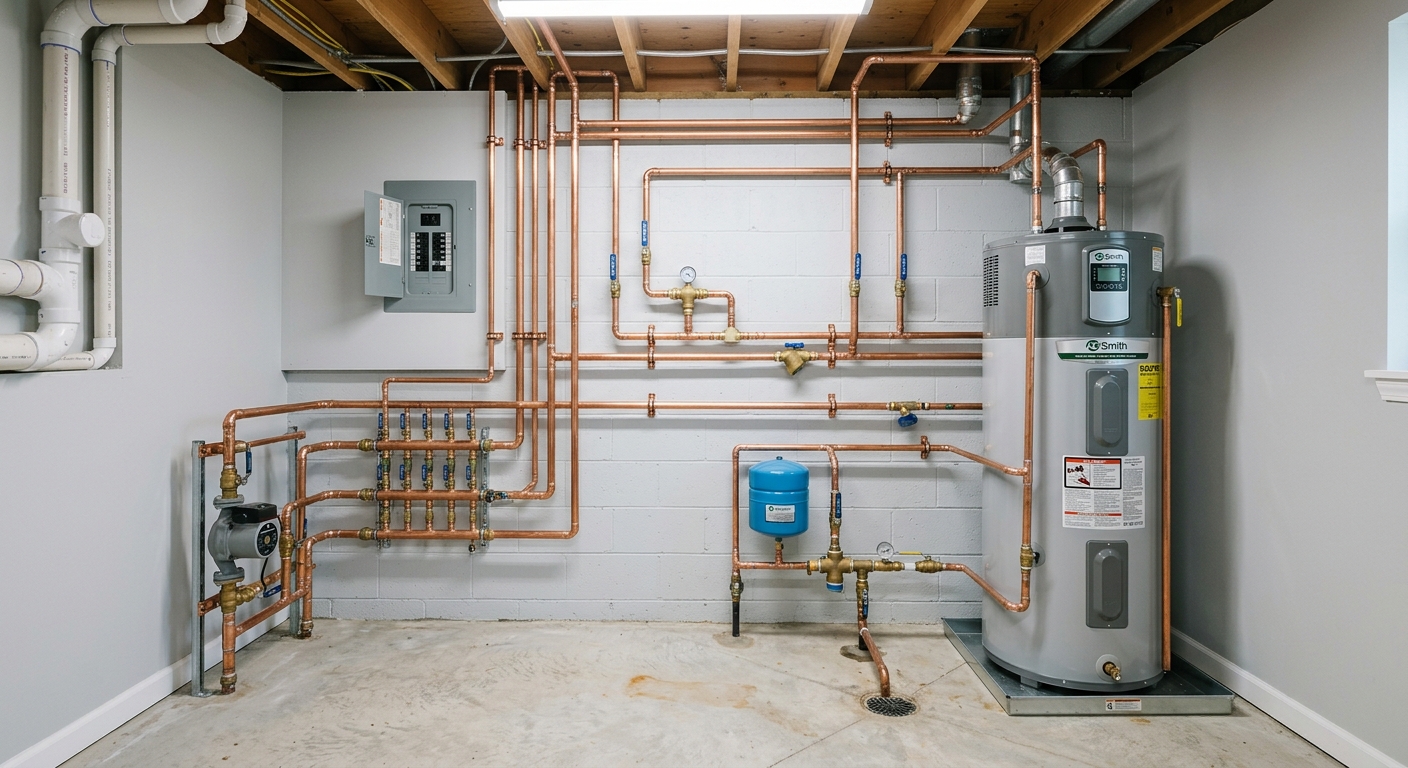
Plumbing services and costs in Brantford
Plumbing services in Brantford often come down to urgency, age of the home, and how well the existing systems were protected during freeze–thaw cycles. With 62.8% of housing stock built before 1981, many properties rely on older supply and drain materials that are more prone to corrosion and slowdowns, which is why repiping and proactive maintenance remain in demand. Also, because a large share of Brantford households are homeowner-occupied (66.0%), we frequently see planned projects like water heater swaps and fixture upgrades rather than only emergency callouts.
The Hamilton–Niagara Peninsula region experiences repeated cold snaps and spring thaws, so exterior supply lines to garage areas, crawlspaces, and hose bibs become the weak link when insulation is thin or lines are buried too shallow. That freeze risk increases labour intensity for locating shutoffs, isolating sections, and restoring service quickly. On top of that, moderately hard to hard water across much of the region accelerates scale buildup in tank-style water heaters and shortens anode life, so descaling and earlier-than-expected tank replacements are common.
In Brantford’s older neighbourhoods and established pockets—especially around areas with many pre-1981 homes—plumbers are often booked for diagnosis plus scope decisions (repair vs. replacement vs. partial repipe). Typical scheduling can also be tighter when multiple homes in the same blocks have similar issues after temperature swings. Below is a realistic cost range for the services homeowners ask for most often, so you can compare quotes apples-to-apples.
| Service |
What's Included |
Typical Duration |
Price Range |
| Emergency repair (burst pipe, active leak) |
Locate leak, shutoff, repair or replace damaged section, pressure test, cleanup |
1–6 hours (sometimes longer for access) |
$200–$850 |
| Water heater replacement (tank, 40–60 gallon) |
Remove & dispose old unit, install new tank, connect water/venting, leak test, startup |
4–8 hours |
$1,700–$3,000 |
| Tankless water heater installation |
Supply/venting setup, mounting, connect lines, commissioning and performance check |
1–2 days |
$2,200–$3,800 |
| Full-home repipe (supply lines, PEX) |
Plan route, shutoffs, replace supply piping, connect fixtures, pressure test, restoration |
3–7 days |
$2,500–$12,000 |
| Drain snaking / hydro-jetting (blocked drain) |
Camera or diagnostic as needed, clear stoppage, flush lines, verify proper drainage |
1–4 hours |
$250–$900 |
| Backwater valve installation |
Assess discharge route, install backwater valve and required connections, test operation |
4–8 hours |
$900–$2,500 |
Prices are estimates only and vary by project scope, site access and material selection.
What affects the price of plumbing in Brantford
Even when two homeowners request the same “fix,” Brantford pricing can swing by roughly 30–50% across the Hamilton–Niagara Peninsula—and by extension across Ontario—because plumbing work is rarely identical after we open walls, confirm pipe condition, and measure access. Labour rates plus the time spent diagnosing (and protecting against freeze damage) can be the difference between a quick repair and a larger replacement scope.
In this freeze–thaw zone, outdoor and garage supply lines must be managed for cold snaps. That means your contractor may need deeper burial, better insulation, or heat trace where lines run near exterior foundation edges. Poorly protected runs are where burst-pipe calls cluster during cold snaps, which raises emergency call costs. Water hardness is another major driver: in many parts of southern Ontario, moderately hard to hard water accelerates scale buildup. That can shorten tank life by about 20–30%, and it often increases the amount of descaling and valve cleaning we do during replacement.
Older regional housing can include galvanized steel and legacy lead service lines, plus poly-B in some homes from the 1980s through the mid-1990s. Those materials can restrict flow, fail fittings, and force longer, more invasive work. For example, a straightforward repair might land in a “repairs & leak fixing” band, but once we confirm widespread galvanized restriction, the project can move into a repipe range—where full-home supply replacement may reach several thousand dollars depending on how many walls or floor sections must be opened. Likewise, a tank water heater replacement may be in the lower-to-mid range, but adding complexity like venting changes or difficult access can push the job higher.
| Price Factor |
Why It Matters |
Cost Impact |
| Type of work — repair vs. replacement vs. new install |
Repairs are smaller scope; replacements and new installs include code checks, parts, and more labour |
Often shifts cost by 30–60% |
| Water heater size and fuel type (gas vs. electric vs. tankless) |
Higher BTU input, venting, wiring, and gas line coordination change labour and materials |
Can add $500–$1,500+ |
| Pipe material — PEX vs. copper vs. CPVC for repiping |
Different costs, joining methods, and compatibility with existing lines |
Material choice can swing total by hundreds to over $2,000 |
| Access — pipes in walls or slab require drywall or concrete cutting |
More access work increases labour and restoration costs |
Commonly adds $500–$4,000 |
| Permit requirement — adds cost and inspection scheduling time |
Permits require administrative steps and may affect start dates |
Typically adds $100–$600+ plus scheduling impact |
| Emergency vs. scheduled — after-hours calls carry a premium |
After-hours availability, priority response, and time constraints increase pricing |
Often adds 25–50% to labour |
| Water hardness — affects water heater sizing and descaling needs |
Hard water increases scale, which changes maintenance and sometimes sizing decisions |
May increase future maintenance or earlier replacement by 20–30% |
| Number of fixtures or drain lines involved |
More connections and more lines to diagnose/clear equals more labour time |
Can double or triple the job time |
Permits & regulations in Ontario
In Ontario, most plumbing work beyond simple fixture swaps must be completed by a licensed plumber. Permits are generally required for work that connects to, modifies, or adds to a home’s plumbing system in ways that affect drainage or water service—especially when it involves new drain connections, full repiping, and any work that ties into the municipal water or sewer system. Water heater changeouts may require a permit depending on the municipality and the type of unit and venting changes, so it’s important to confirm before work begins.
For Brantford homeowners, also verify your contractor is properly licensed (Ontario journeyman or master plumber), and that they carry liability insurance plus WSIB/WCB coverage for their workers. Backwater valve installation is commonly recommended in flood-prone parts of the Hamilton–Niagara Peninsula, and it typically requires a permit and inspection—because it modifies how waste water exits during surcharged conditions.
Here’s a simple step-by-step way to verify before you say “go ahead.” First, ask the plumber for their Ontario licence number and check it via the Ontario licensing registry used for trades. Second, request a current certificate of insurance (liability) and confirm the coverage dates. Third, ask for proof of WSIB/WCB clearance or registration details, then keep a copy for your records. Finally, request the permit plan in writing (who pulls the permit, expected inspection timing, and what code work is included) so there are no surprises.
Common plumbing problems in Brantford homes and how to fix them
Brantford homes—especially the older stock—tend to show the same set of plumbing issues over and over. First, burst or frozen pipes usually trace back to freeze risk at exterior runs: uninsulated lines to garages, crawlspaces, and hose bibs, or supply piping buried too shallow. Prevention is insulation plus good line depth, and when cold snaps are severe, adding heat trace on the riser or vulnerable sections can reduce the odds of emergency repairs. If a pipe bursts, the right move is fast shutoff, leak control, and pressure testing before turning everything back on.
Second, aging pipe materials matter. Galvanized steel can corrode and restrict flow, causing poor pressure or discolouration at taps. Poly-B can fail due to brittle fittings or cracks, often showing up as leaks or pressure inconsistencies. Both warrant evaluation early because waiting can turn a localized repair into a larger repipe.
Third, water heater end-of-life is common in harder-water areas. Tank systems may scale faster, shortening usable life, while tankless units can be a better long-term investment when sizing matches your household demand and gas/electrical and venting requirements are practical. Fourth, low water pressure is typically caused by clogged aerators, corroded galvanized lines, or whole-home flow restriction after pressure changes—plumbers diagnose by checking at the main shutoff, assessing pressure, and isolating fixtures. Fifth, drain issues often start as a blockage or root intrusion; older cast-iron drain lines in Brantford can also fail, so a camera inspection is frequently the turning point between snaking and a more involved repair.
To see how choices affect cost: a drain snaking job may sit in the “repairs & leak fixing” or smaller clearing band (often a few hundred dollars), but if a camera shows recurring root intrusion or failed sections in a main line, the justified next step can be a larger repair plan rather than repeat callouts.
| Issue |
Common Cause in Brantford |
Typical Fix |
Price Band |
| Burst or frozen pipe |
Exterior or garage lines unprotected during cold snaps; shallow burial |
Shutoff, repair/replace section, insulate, test for leaks, advise on heat trace |
$200–$850 |
| Low water pressure throughout home |
Aging supply lines (often galvanized restriction) or clogged regulators/aerators |
Test pressure, clean/replace aerators or regulators, flush lines; repipe if restriction is widespread |
$350–$2,500 |
| Slow or blocked drain |
Hair/grease buildup, partial blockage, or root intrusion on older lines |
Snaking or hydro-jetting; camera inspection; repair/replace failed sections if needed |
$250–$900 |
| Leaking or failed water heater |
Hard-water scale buildup, anode depletion, age-related tank failures |
Replace tank; flush/inspect as advised; confirm proper venting and expansion |
$1,500–$3,200 |
| Poly-B pipe failure (fitting or pipe crack) |
Legacy poly-B system deterioration in older renovations (1980s–mid-1990s) |
Local replacement for small sections or full/partial repipe based on extent |
$2,500–$12,000 |
| Galvanized pipe corrosion (restricted flow, discolouration) |
Corrosion reducing diameter; sediment and scale discharge at fixtures |
Flush/assess; replace sections or full-home repipe with PEX/copper as appropriate |
$2,500–$12,000 |
How to choose a plumbing contractor in Brantford
Choosing a plumber in Brantford is mostly about verifying the basics up front. Start by asking for their Ontario licence number and confirming it in the province’s trades licensing registry. Next, request a certificate of insurance for liability and ensure it’s current. Then check WSIB/WCB coverage so you’re not exposed if a worker is injured on-site. For cold-weather work, also ask whether they carry the right diagnostic tools (like pressure testing and cameras for drains), because the faster the diagnosis, the less chance the problem worsens during freeze conditions.
Get 2–3 itemised written quotes rather than a single lump sum. A solid quote breaks out labour time, parts/materials, and disposal or restoration (for example, drywall patching after access). Confirm what’s included: permit pull, inspection scheduling, and disposal of the old heater or removed piping materials. Pay attention to warranty details: workmanship warranty length, product/manufacturer warranty, and whether the warranty is transferable if you sell the home.
For payment schedule, never pay more than about 10–15% upfront. Hold a portion back until the job is complete, tested, and you’ve had a chance to verify flow and drainage. Finally, timeline matters in Ontario winters—ask for a start date and completion estimate in writing, including what happens if parts are delayed.
- Licence number provided up front (Ontario trades verification possible).
- Current liability insurance certificate (with dates and coverage amounts).
- WSIB/WCB coverage confirmation or clearance letter.
- Itemised quote: labour, parts/materials, disposal, and any restoration.
- Explicit scope: what’s included vs. excluded (camera, permits, testing, cleanup).
- Permit handling stated in writing (who pulls it and when).
- Warranty in writing: workmanship length and product warranty terms.
- Clear payment schedule; no large deposits beyond 10–15%.
- Job site protection plan (floor protection, masking, debris containment).
- Testing steps listed (pressure test, leak test, venting check, drain verification).
- Respect for freeze risk: insulation/heat trace recommendations documented.
- Honest time estimates and a plan if inspections are delayed.
Red flags I commonly see in Brantford include: vague quotes that don’t list materials or disposal, refusing to provide licence/insurance/WSIB details, offering only cash without paperwork, quoting a “repair” without diagnosing if the underlying pipe is corroded or failing, and starting work without clarifying permits when the scope involves drains, repiping, or backwater valve installations.
Frequently asked questions — plumbing in Brantford
How much does water heater installation cost in Brantford?
In Brantford, a typical tank water heater replacement (around 40–60 gallons) commonly lands in the $1,500–$3,200 band, depending on access, venting/equipment compatibility, and whether any pipe adjustments are needed. If you’re on moderately hard to hard water in the Hamilton–Niagara Peninsula, scale buildup can shorten tank life, which means replacement sometimes comes sooner than expected. For a standard installation where old removal, connections, and leak testing are straightforward, you may be closer to the middle of the band. If the venting route is awkward, the shutoffs are difficult, or you need extra parts for expansion/valves, quotes can move toward the top end. Always request an itemised quote so labour, removal/disposal, and parts are clearly separated.
Tank vs tankless water heater — which is better?
For many Brantford homeowners, the choice is about how long you plan to stay in the home and how your household uses hot water. A tank heater is usually less expensive upfront and is easier to service, and in the $1,500–$3,200 range for replacement, it can be a practical fit when the unit’s venting and gas/electrical setup is already aligned. Tankless units often make sense when you want consistent hot water and are ready for higher installation costs (often higher than a tank swap due to venting, plumbing connections, and commissioning). In hard-water conditions, scale management matters for tankless too, but proper descaling schedules can keep performance stable. If your home has complex vent routes or limited access, the “better” option might still be tank—especially when the difference in total cost isn’t justified by your usage.
How do I prevent frozen pipes in Brantford?
Preventing frozen pipes in Brantford is mostly about protecting the parts that see the most temperature swing: exterior runs, garage piping, crawlspaces, and near-foundation lines. Insulate supply lines where they travel through cold areas and ensure exterior hose bibs are winterised properly. If a line is at risk because it sits too shallow or near an exterior wall, a plumber may recommend heat trace on vulnerable sections and verify the shutoff location so you can respond quickly during a cold snap. Freeze–thaw cycling is real in the Hamilton–Niagara Peninsula, so insulation that only “sort of” covers the pipe often isn’t enough—coverage and thickness matter. If you’ve had a prior freeze issue, ask for a targeted assessment rather than waiting for another emergency repair call.
Why is my water pressure low?
Low water pressure in an Ontario home is usually one of three things: a local restriction at the fixture, a whole-home supply restriction, or an issue with how water is being regulated. Plumbers typically start with simple checks: aerators and showerheads (sediment and scale), then confirm pressure at the main shutoff and compare that to pressure at the bathroom/kitchen. In older Brantford homes, galvanized supply lines can corrode and restrict flow over time, and moderately hard water can contribute to mineral buildup at fixtures. If pressure drops only at one tap, it’s often aerator or a small line blockage; if it’s throughout the home, it points more toward supply-side restriction. If diagnosis suggests widespread restriction, repairs can only go so far and repiping may become the best long-term fix.
Do I need a permit for plumbing work in Ontario?
In Ontario, permits are commonly required for work that modifies or adds to drainage systems, connects to municipal water/sewer services, or involves more than a straightforward fixture swap. Examples where permits are typically needed include new drain connections, full repiping, and work that changes how waste water is routed. Water heater changeouts may require a permit depending on the installation details and municipal requirements, especially when venting is altered. Backwater valve installations generally require a permit and inspection because they change how water is controlled during surcharged conditions. The practical approach in Brantford is to ask your plumber to confirm whether a permit is required for your exact scope and to state in writing who will pull it. Always verify the plumber’s Ontario licence and coverage before work starts.
How do I know if I need to repipe my home?
You usually need repiping when testing shows the problem isn’t isolated to one valve or fixture—when supply lines are degraded across multiple runs. In Brantford, signs that can point toward repiping include recurring discolouration at taps, persistent low pressure that doesn’t improve with aerator cleaning, frequent leaks from older pipe materials, and repeated valve/stem issues. Homes with legacy piping like galvanized steel may develop internal corrosion that restricts flow over time. Poly-B systems seen in some renovations from the 1980s to the mid-1990s can also fail at fittings or at the pipe itself. Cost-wise, repiping projects commonly sit in the $2,500–$12,000 band depending on access and home size. The best way to decide is a plumber assessment with pressure testing and, where relevant, inspection of accessible sections—so you avoid paying for repairs that keep the underlying problem in place.