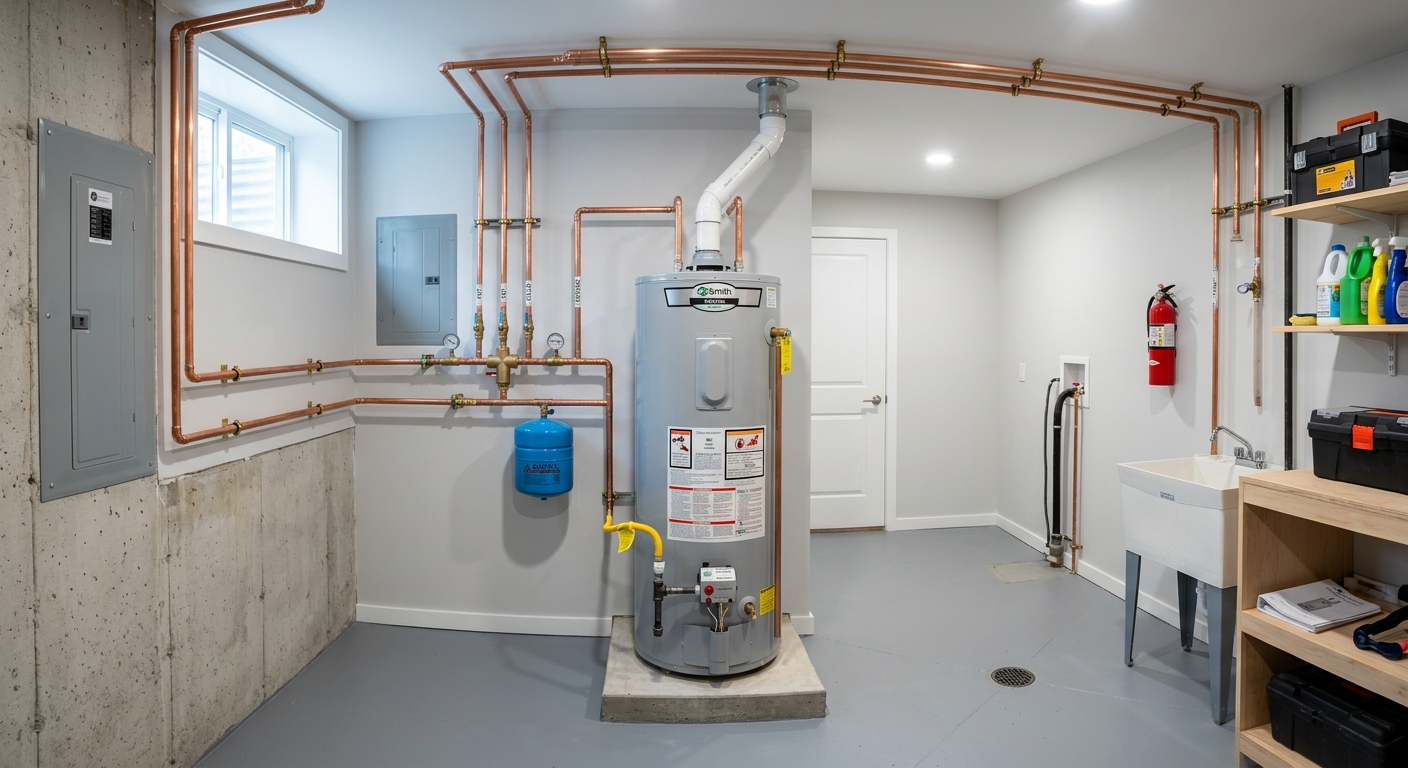
Plumbing services and costs in Oakville
Oakville homeowners rely on fast, skilled plumbing because our winters can be punishing on exposed water lines and older basement piping. With 27.0% of homes built before 1981 (Statistics Canada, 2021 Census), it’s common to see galvanized supply lines or aging drain stacks that are close to the end of their service life. That age profile also explains why water-heater replacements and “right-now” repipes come up more often than in newer builds. Add in Toronto-region market pressure—lots of single-detached homes (58.6% of dwellings)—and you get steady demand for both emergency fixes and planned upgrades.
In the Oakville and broader Toronto area, pricing is shaped by winter freeze exposure, variations in access, and the reality that some supply lines run along exterior walls or through uninsulated garage sections. When temperatures stay below freezing for hours, frozen-pipe calls rise; a licensed plumber will price for proper diagnostics, safe thawing, and whether the solution is a repair or a partial repipe. Water-quality and hardness differences across southern Ontario can also shorten water-heater life and increase scaling on valves and aerators, which affects both service frequency and replacement timing.
We also see high demand in established pockets like West Oak Trails, where many homes are older and lot layouts make pipe access and insulation work more labour-intensive. Next, here’s how the most requested plumbing services typically price out in Oakville so you can compare contractor quotes confidently.
| Service |
What's Included |
Typical Duration |
Price Range |
| Emergency repair (burst pipe, active leak) |
On-site troubleshooting, leak isolation, water shutoff, repair/replace damaged section, basic cleanup; may include temporary patching |
2–6 hours (sometimes longer if thawing is required) |
$250–$650 |
| Water heater replacement (tank, 40–60 gallon) |
Remove/haul-away old unit (where agreed), install new tank, connect gas/electric, set temperature, test for leaks, adjust shutoffs/venting as applicable |
4–8 hours |
$1,700–$3,200 |
| Tankless water heater installation |
Install new unit, plumbing and venting connections, flushing and commissioning, water pressure/flow checks, temperature setup, test for leaks |
1 day to 2 days |
$2,500–$4,800 |
| Full-home repipe (supply lines, PEX) |
Plan routing, replace supply piping throughout (typ. kitchens/bathrooms/upper floors as accessible), new shutoffs, pressure/fixture testing, patch-and-finish allowance for access points |
2–6 days depending on layout |
$7,500–$14,500 |
| Drain snaking / hydro-jetting (blocked drain) |
Camera inspection when needed, snake/jetting for clogs, dislodge debris, confirm flow, flush lines; minor follow-up cleaning if accessible |
1–4 hours |
$180–$700 |
| Backwater valve installation |
Assess sewer line route, install backwater valve and check fittings, ensure proper orientation, seal connections, test operation; restoration as needed |
4–10 hours |
$1,200–$3,800 |
Prices are estimates only and vary by project scope, site access and material selection.
What affects the price of plumbing in Oakville
In Oakville, it’s normal for quotes for the “same” job to differ by roughly 30–50% across the Toronto region. The difference usually isn’t the headline plumbing line—it’s the hidden complexity: how accessible the pipes are behind finished drywall, whether the problem requires testing and camera diagnostics, and whether a replacement is needed because corrosion or freeze damage has already progressed. Contractor availability after severe cold snaps can also push costs upward.
Freeze risk is a big cost driver. The frost conditions around the Toronto area influence whether supply lines in garages, crawl spaces, or exterior-wall chases must be re-insulated and protected with heat trace. If an uncovered run freezes repeatedly, repair often becomes a short-term fix, while an insulation-and-routing upgrade can prevent repeat emergency calls.
Water hardness also matters more than many homeowners expect. Harder water common across parts of southern Ontario can shorten water-heater service life by about 20–30% due to scaling, and it can mean more frequent descaling and shorter intervals between cartridge/valve service calls. When scaling is heavy, fixture flow issues can be mistaken for “low pressure,” so plumbers may quote both diagnostic work and, in some cases, aerator/valve replacement.
Housing age affects material mix and replacement urgency. With a meaningful share of older dwellings (including 27.0% built before 1981), galvanized supply lines can restrict flow over time, and older poly-B systems found in some 1980s-to-mid-1990s builds can fail at fittings. A small pressure complaint might start at a repair-style budget, but if a plumber finds severe corrosion, a full repipe—commonly in the $4,000–$15,000 band—can be the cost-effective long-term choice.
For drains, the difference between snaking and hydro-jetting can be decisive: a straightforward blockage may land in the repair band (often $150–$600), while recurring clogs that require camera work and jetting can push the job into higher labour and diagnostics territory.
| Price Factor |
Why It Matters |
Cost Impact |
| Type of work — repair vs. replacement vs. new install |
Replacement and new installs require more material labour, testing and commissioning |
Repair often stays lower; replacements/new installs typically add major labour and parts costs |
| Water heater size and fuel type (gas vs. electric vs. tankless) |
Venting, gas fittings, electrical capacity, and water/flow requirements vary |
Tankless and gas venting often cost more; electric tank swaps may be simpler |
| Pipe material — PEX vs. copper vs. CPVC for repiping |
Material pricing and labour complexity differ by system |
PEX is commonly cost-effective; copper can raise material costs; CPVC may be used for specific tie-ins |
| Access — pipes in walls or slab require drywall or concrete cutting |
Hidden access increases labour, restoration, and risk |
Bad access can add substantial hours and finish-work costs |
| Permit requirement — adds cost and inspection scheduling time |
Permits can require documentation and inspection windows |
Direct fee plus scheduling delays; typically increases total project time and cost |
| Emergency vs. scheduled — after-hours calls carry a premium |
After-hours labour and priority dispatch increase overhead |
Emergency calls commonly land at the high end of the repair range |
| Water hardness — affects water heater sizing and descaling needs |
Hard water increases scale formation on tanks, valves and heat exchangers |
May justify higher-capacity/heavier-duty options and more frequent service intervals |
| Number of fixtures or drain lines involved |
Multiple sources mean more shutoff, testing, and targeted troubleshooting |
More locations usually add diagnostic time and parts |
Permits & regulations in Ontario
In Ontario, most plumbing work beyond basic fixture swaps must be performed by a licensed plumber. That’s because plumbing connects to safety-critical systems (water supply, drainage, and gas venting where applicable). Permits are commonly required for work such as new drain connections, full repiping, and any plumbing that connects to the municipal water or sewer system. Water-heater changeouts can also trigger a permit requirement in some cases, depending on the scope and how the system is being altered.
For safety and compliance, a reputable Oakville plumber should hold a valid Ontario journeyman or master plumber licence and carry liability insurance plus WSIB/WCB coverage. Backwater valve installation—often recommended for basements in flood-prone Toronto-area conditions—typically requires a permit and inspection because it involves modifying or adding to the sewer connection. If a contractor can’t explain whether permits apply to your specific job, that’s a red flag.
Here’s how homeowners can verify a contractor, step-by-step. First, ask for the plumber’s licence number and check the Ontario licensing registry information (or have them provide it upfront). Second, request a certificate of insurance showing general liability, and confirm the company name matches the quote and invoice. Third, ask for WSIB/WCB clearance or coverage documentation—many contractors will provide a clearance letter on request. Finally, if a permit is needed, the contractor should tell you the permit number (after pull) and what inspection steps are scheduled.
Common plumbing problems in Oakville homes and how to fix them
Oakville’s mix of older homes and cold-weather exposure creates a predictable set of plumbing headaches. In the Greater Toronto area, frozen supply lines are among the most common issues during prolonged cold snaps. The fix is usually a two-part response: (1) safe thawing and repair of the damaged section, and (2) prevention with proper insulation around exterior-wall runs, garage lines, and any pipe chases that lack protection. For repeat freeze problems, plumbers may recommend heat trace and deeper insulation routing to stop the cycle.
Next, aging pipe materials. Galvanized steel can corrode internally, restricting flow and causing discolouration, while poly-B systems (where present in some builds) can experience brittle cracking and failed fittings. Both issues often justify proactive repiping before a catastrophic leak forces a more expensive, emergency-style response. If you’re deciding between patching versus upgrading, the decision usually comes down to access and how widespread the deterioration is.
Third, water-heater end-of-life. If your tank is near the end of its service life, scale buildup from harder water can make it less efficient. A tank replacement might fall into the typical heater band (often $1,200–$3,500), while a tankless installation is typically higher. In many Oakville homes, the higher upfront cost can be justified when you have consistent hot-water demand and want improved longevity, but it’s not always the best fit if gas venting constraints or flow issues require extra work.
Fourth, low water pressure throughout the home. Plumbers diagnose clogged aerators, valve issues, and corrosion in supply lines. Fifth, drain problems: slow drainage can be root intrusion, a partial blockage, or failed cast-iron sections in older areas. Toronto-market pricing reflects these diagnostic steps—camera checks can add cost, but they prevent repeat labour.
For example, if hydro-jetting and a camera inspection comes in near the higher end of the drain range, it may look expensive versus a simple snake. However, if repeated clogs are caused by debris build-up plus early root intrusion, jetting plus targeted repairs often saves money versus multiple short visits.
| Issue |
Common Cause in Oakville |
Typical Fix |
Price Band |
| Burst or frozen pipe |
Exposed supply runs in exterior walls, garages, or poorly insulated basements during prolonged sub-zero hours |
Shutoff, safe thawing, replace damaged section, and insulate/heat-trace as required |
$250–$650 |
| Low water pressure throughout home |
Corroded galvanized lines, scaled valves/aerators, or reduced flow due to internal buildup |
Pressure testing, aerator/valve servicing, localized repair or repipe assessment |
$150–$600 |
| Slow or blocked drain |
Hair/grease buildup, partial blockage, or early root intrusion in older drain runs |
Snaking or hydro-jetting; camera inspection if recurring; repair if pipe damage found |
$180–$700 |
| Leaking or failed water heater |
Tank corrosion at seams/valves or end-of-life performance accelerated by hard water scaling |
Replace tank or switch to tankless (if suitable), then flush and test |
$1,200–$3,500 |
| Poly-B pipe failure (fitting or pipe crack) |
Brittleness and joint/fitting failures seen in some homes from the 1980s to mid-1990s |
Leak repair may be possible short-term, but typically partial/full repipe for lasting fix |
$4,000–$15,000 |
| Galvanized pipe corrosion (restricted flow, discolouration) |
Internal corrosion reduces flow and causes rusty water; pressure drop becomes noticeable over time |
Replace affected sections or recommend repipe when widespread; clean/flush lines |
$4,000–$15,000 |
How to choose a plumbing contractor in Oakville
Choosing the right plumber in Oakville is mostly about verification and clarity. Start by confirming Ontario licensing: ask for the plumber’s licence number and verify it via the Ontario licensing information. Next, request proof of liability insurance—your quote should match the insured business name. For work on occupied homes, ask about WSIB/WCB coverage and obtain a clearance letter or confirmation. A contractor that won’t provide these documents typically costs homeowners later through delays or uninsured liability.
Then get 2–3 itemised written quotes. You want labour and materials broken out separately, not a single lump-sum number. Itemisation should show what fixtures/parts are included, whether shutoffs, valves, venting components, or removal/haul-away are part of the price, and what the plumber expects to do if the first diagnosis reveals more damage. Read the scope carefully: is the permit pull included, and is disposal included? If drywall cutting or restoration is required, find out what’s covered and what’s excluded so you don’t get surprise invoices.
Warranty matters too. Ask for the workmanship warranty length, the product/manufacturer warranty details, and whether the warranty is transferable to you as the homeowner. For payment, avoid large deposits: never pay more than 10–15% upfront, and hold back payment until the job is complete and tested. Finally, insist on a written timeline with a start date and completion estimate—especially during winter when scheduling can be tight.
- Ask for licence number, licence class, and matching company details
- Get liability insurance certificate before work begins
- Confirm WSIB/WCB clearance or coverage letter
- Require itemised quote: labour, materials, and disposal/shutoff costs
- Clarify whether permit pull and inspection scheduling are included
- Confirm what happens if hidden damage is found (change-order rules)
- Ask whether camera inspection is included for recurring drain issues
- Request a clear scope of work list (what’s in, what’s out)
- Verify warranty: workmanship term and product warranty term/transferability
- Use a payment schedule capped at 10–15% upfront, with holdback until completion
- Get start/completion timeline in writing, including cure times for repairs
- Confirm parts quality (brand/model) and whether they match the quote
Concrete red flags to watch for in Oakville: they won’t show licence/insurance documents; quotes lack itemised labour/materials and only give a vague “repair” description; they demand an unusually large upfront payment; they avoid questions about permits (especially for repipes and sewer connections); or they won’t explain their warranty and how testing/leak verification is done.
Frequently asked questions — plumbing in Oakville
Can I claim a plumbing repair on home insurance in Ontario?
Sometimes, but it depends on the cause and how your policy defines “sudden and accidental.” In Oakville, insurers may cover water damage from a burst pipe or sudden leak, particularly if there was no ongoing neglect (for example, a slow leak ignored for months). If the damage results from gradual wear—like corrosion from aged galvanized lines or repeated minor weeping that progressed—coverage can be limited or denied. Your best next step is to review your coverage details and contact your insurer quickly after the event. Keep documentation (photos, plumber invoice) and ask the plumber to describe the cause in plain terms. For budgeting, many repairs still fall in the repair range (often $150–$600 for small leak fixes, but emergencies can be higher), so you may also be weighing deductible and premium impacts.
How do I prevent drain clogs in my Oakville home?
Prevention is about reducing what enters the drain and catching trouble early. In Oakville homes—especially those with older drain runs—roots and debris build-up can create slow drains that later turn into full blockages. Use a hair trap in bathrooms, avoid pouring grease down kitchen sinks, and run hot water after cooking oils (without scalding). Periodically flush with a proper cleaner recommended for your plumbing type, and don’t rely on frequent aggressive chemicals if you’re getting repeated symptoms. If you notice gurgling, multiple fixtures draining slowly, or recurring clogs, schedule a plumber for a camera inspection rather than repeating snaking. Early intervention can keep you in the typical drain repair band (often near $180–$700) instead of stepping into larger repair territory when a drain section needs replacement.
What is the difference between ABS and PVC pipe?
ABS (acrylonitrile butadiene styrene) and PVC (polyvinyl chloride) are both plastic piping materials commonly used for drain/waste lines in North America, but they behave differently and are selected based on code practices and system needs. PVC is widely used for drains due to its chemical resistance and availability; ABS is another option that some installers use depending on local practices and system design. The bigger practical difference for homeowners is compatibility: transitions between materials must be done with the correct fittings and solvent/glue method, and a plumber should confirm whether your existing line is ABS or PVC before making changes. In Ontario homes, the key is also verifying that repairs are properly supported, sealed, and vented where required—mistakes can lead to odours or recurring backups. If you’re unsure what you have, ask for a photo and let the plumber confirm at an accessible cleanout or exposed section.
How do I know if I have a slab leak in Oakville?
Slab leaks are harder to spot in Oakville because the water damage may start under flooring before you see obvious plumbing drips. Common signs include unexplained rising water bills, damp spots or persistent odours near baseboards, slow pooling, or recurring foundation moisture. Another clue is turning off all water in your home and checking if the meter continues to run—if it does, you may have a leak somewhere in the supply line. If you suspect a slab leak, a licensed plumber will typically use diagnostic methods such as pressure testing and, when appropriate, additional leak detection tools to pinpoint the area. The important point: don’t just cap or patch without locating the source, because older homes with mixed piping can have multiple weak points. Repair cost can vary widely, and if repiping is needed, it can move into the larger project ranges (often $4,000–$15,000).
What is a sump pump and do I need one in Oakville?
A sump pump is a device installed in a sump pit (often in a basement) that collects groundwater and pumps it away from your foundation to reduce flooding risk. In Oakville and the broader Toronto area, basements can experience higher risk during heavy rainfall and spring melt, and many homes also get benefit from preventative measures—especially if you’ve had water issues before. Do you “need” one? If your basement is dry year-round and you’ve never had seepage, you may not. But if you’ve seen recurring dampness, water pooling during storms, or signs of high water table, a sump pump (and sometimes a backwater valve on the sewer line) can be an effective mitigation strategy. Backwater valve installation commonly requires a permit and inspection and is often priced in the $1,200–$3,800 range depending on complexity. A plumber can assess your drainage pattern before recommending equipment.
How much does a plumber cost in Oakville?
In Oakville, pricing depends on whether it’s an emergency call, a repair, or an installation/replacement. Small leak fixes or troubleshooting often land in the repair band, commonly around $150–$600. Water heater replacements typically fall higher—often $1,200–$3,500 depending on tank size, fuel type, and venting complexity. For larger supply line work (like repiping), budgets are commonly in the $4,000–$15,000 range because access, pipe material, and restoration hours vary. The contractor’s licence verification and permit requirements also affect the final number. If you want the most accurate cost estimate, ask for an itemised quote and ensure the scope includes diagnostics (camera inspection if drains are involved) and permit pull where required for your type of work.