Plumbing services and costs in Cochrane
Cochrane homeowners rely on local plumbing crews for everything from winter burst-pipe calls to full-system upgrades, and costs here track closely with what Calgary-region plumbers face every January and February: freeze exposure, older neighbourhood plumbing, and restoration work after walls or floors are opened. With 32,199 people in the area (Statistics Canada, 2021 Census) and roughly 83.7% of households owning their homes, many projects are planned upgrades rather than quick repairs, especially in older subdivisions. Notably, 9.9% of homes were built before 1981 (Statistics Canada, 2021 Census), which increases the chance of legacy pipe materials and higher likelihood of needing repiping or drain work when leaks or flow restrictions appear. In demand areas like the downtown/core and newer growth pockets near the Trans-Canada corridor, plumbers are especially busy because more homes sit with exterior-wall runs, garage supply entries, and partially insulated service lines.
In Calgary-region conditions, plumbing pricing is driven less by “just labour” and more by site risk: the longer cold snaps mean burst calls can escalate quickly if isolation valves fail or water has been shut off late. Contractors also factor in access (crawlspaces vs. slab), restoration (drywall, flooring, paint), and material choices like PEX for repiping. Water hardness can further affect fixtures and water heaters by increasing mineral scale, which may shorten service intervals in some communities. If you’re comparing quotes, the table below is a practical starting point for common tasks—then we can narrow scope to your exact freeze risk and pipe layout.
| Service |
What's Included |
Typical Duration |
Price Range |
| Emergency repair (burst pipe, active leak) |
Shutoff/isolation, locate leak, repair or replace damaged section, pressure test, basic cleanup and restoration allowance |
2–8 hours (plus follow-up restoration) |
$180–$900 |
| Water heater replacement (tank, 40–60 gallon) |
Drain & remove old tank, install new tank, connect plumbing/electrical or gas, vent checks, commissioning & leak test |
4–7 hours |
$1,800–$5,200 |
| Tankless water heater installation |
New tankless unit install, water/electrical/gas hookups as required, venting/alignment, startup & performance checks |
1–2 days |
$3,300–$8,500 |
| Full-home repipe (supply lines, PEX) |
Remove/replace supply piping, new shutoffs, pressure testing, flush & restore openings (scope-dependent) |
3–10 days |
$3,500–$18,000 |
| Drain snaking / hydro-jetting (blocked drain) |
Camera/assessment when needed, snake or jetting, clear blockage, confirm flow and clean-out operation |
1–4 hours |
$220–$1,250 |
| Backwater valve installation |
Locate main/sewer line, install backwater valve and check operation, test for proper seating and flow direction |
1–2 days |
$900–$2,400 |
Prices are estimates only and vary by project scope, site access and material selection.
What affects the price of plumbing in Cochrane
In Cochrane and the broader Calgary-area market, two plumbers can quote the “same” job and still be 30–50% apart because the price is really tied to risk factors: how difficult it is to access the plumbing, how much restoration is required, and whether hidden damage is likely. Emergency work also has a different cost structure—after-hours dispatch, urgency premiums, and the likelihood of needing follow-up repairs all push pricing upward.
Freeze risk is the big driver here. Calgary-region frost exposure influences how deep supply lines must be buried and whether outdoor or garage service entries need insulation upgrades or heat-trace. If a line runs through an unheated exterior-wall cavity or enters a garage with minimal insulation, crews typically anticipate more labour for protective work and verification. Water hardness also matters; harder water increases mineral scale in water heaters and on shower/tap fixtures, which can shorten service life and increase descaling or replacement frequency—so you may see water heater work closer to the upper end of the band in harder-water neighbourhoods. On top of that, older regional housing means galvanized supply lines are more common, and they can restrict flow over time; poly-B (polybutylene) pipe, recalled for failure risk, is also an issue in homes from the 1980s to mid-1990s across the region.
Concrete examples from Cochrane: a simple leak repair might land near the lower end of the repair band (around $180–$900) when the leak is accessible in a basement wall, but the same leak can jump into the mid-range when it requires slab cutting, drywall removal, and reassembly. Similarly, a tank replacement can fit the $1,800–$5,200 range if venting and connections are straightforward, but can approach the higher side when gas/electrical adjustments or vent work are needed due to older installs.
| Price Factor |
Why It Matters |
Cost Impact |
| Type of work — repair vs. replacement vs. new install |
Replacements often require removal, re-connection, commissioning and sometimes venting changes |
Typically shifts costs by hundreds to thousands; emergency installs cost more |
| Water heater size and fuel type (gas vs. electric vs. tankless) |
Fuel type affects venting, electrical load, and burner/controls work; tankless adds complexity |
Tankless can add thousands versus standard tank work |
| Pipe material — PEX vs. copper vs. CPVC for repiping |
Material choice changes labour time, system layout, and parts pricing |
Can move repiping by a few thousand depending on routing and fittings |
| Access — pipes in walls or slab require drywall or concrete cutting |
Opening and restoration is often the costliest part after materials |
Access issues can raise a repair or repipe quote by 25% to 60% |
| Permit requirement — adds cost and inspection scheduling time |
Permits require documentation and inspection windows |
Usually adds fees plus labour time for scheduling |
| Emergency vs. scheduled — after-hours calls carry a premium |
Dispatch, turnaround time, and priority labour increase |
After-hours can raise repair pricing even when the fix is small |
| Water hardness — affects water heater sizing and descaling needs |
Hard water increases scale buildup and reduces efficiency and lifespan |
May push replacement sooner and justify descaling/maintenance work |
| Number of fixtures or drain lines involved |
More tie-ins/lines increases troubleshooting, labour and testing |
Each additional fixture or line can add hours |
Permits & regulations in Alberta
In Alberta, most plumbing work beyond simple fixture replacement must be carried out by a licensed plumber. Permits are typically required for work that changes or connects to the building’s drain, venting, or water distribution—especially when new connections are made to the municipal water or sewer systems. In practice for Cochrane homeowners, the work most commonly requiring a permit includes full repiping, new drain connections, and many water-heater changeouts where the installation involves gas venting, electrical upgrades, or modifications that affect safety-related components. Backwater valve installations are also commonly treated as permit/inspection work because they connect to the main sewer line and must be installed and tested to code.
Step-by-step, here’s how a homeowner can verify a contractor in Cochrane before work starts:
- Ask for the plumber’s Alberta licence number and confirmation of whether they’re a journeyman or master plumber (as applicable to the job).
- Look up the licence status using the relevant provincial online registry for trades (search the plumber’s name or licence number).
- Request proof of liability insurance and confirm the policy is current and includes work at your address.
- Ask for documentation showing WSIB/WCB coverage (for the company doing the work).
- Request a clearance/coverage letter or certificate of insurance documents you can keep for your records.
If a contractor can’t provide licence and insurance documentation up front, pause and get another quote—this is where risk management starts, especially on projects involving freezing exposure, hidden piping, and sewer tie-ins.
Common plumbing problems in Cochrane homes and how to fix them
In Cochrane, the most common plumbing headaches tend to cluster around freeze exposure, aging pipe materials, and slower drain systems in older builds. Let’s walk through five issues I see often, and the practical fixes that actually hold up in our winter conditions.
(1) Burst or frozen pipes: prevention is about protecting the vulnerable sections—insulating exposed lines in unheated or exterior-wall areas, sealing drafts near service entries, and using heat trace where appropriate. If a pipe bursts, shut off the water if you can, then call promptly; hidden leaks can expand damage before you even spot the problem.
(2) Aging pipe materials: galvanized steel can corrode and restrict flow, while poly-B has failure modes involving brittle sections and failed fittings. When multiple fixtures are affected, water hammer is worsening, or you’re getting recurring leaks, proactive repiping often costs less than repeated “band-aids” that never resolve the underlying pipe condition. For full-home repipe work, homeowners typically budget in the $3,500–$18,000 range depending on access and scope.
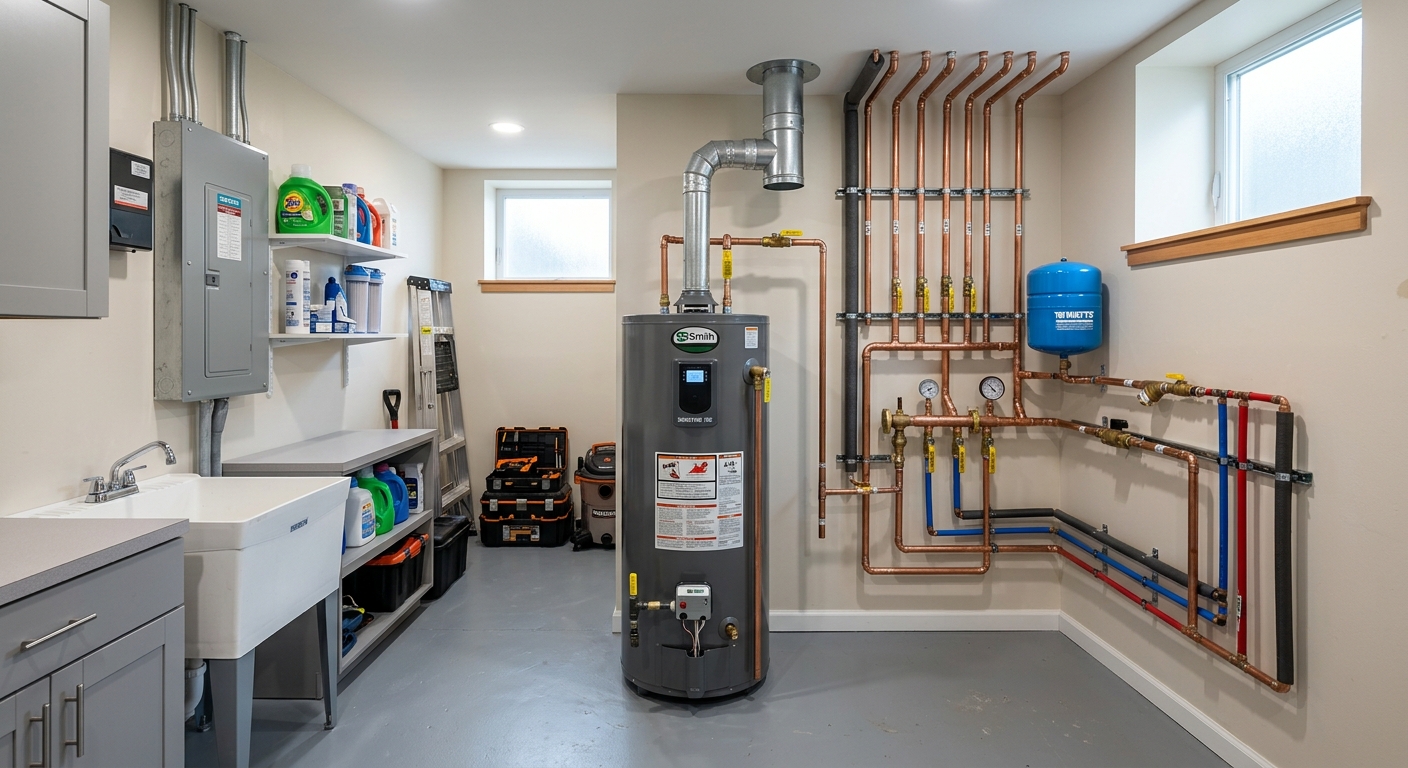
(3) Water heater end-of-life: with hard water creating more mineral scale, tanks may show shorter practical service lives in some homes, and flushing/descaling may only delay replacement. A tank replacement often fits the $1,800–$5,200 band, while tankless systems are more expensive up front but can be cost-effective for steady hot-water demand if venting and gas/electrical capacity are suitable.
(4) Low water pressure throughout the home: plumbers usually check aerators first (easy wins), then trace whether pressure drops at specific fixtures or all taps. If galvanized lines are involved, corrosion can narrow flow paths and create pressure loss, and diagnosis may require testing at shutoffs and inspecting pressure regulation.
(5) Drain issues: slow drainage can be a simple blockage, but in older Cochrane neighbourhoods it can also be root intrusion or failed sections of cast-iron drain lines. Hydro-jetting or targeted snaking clears clogs; persistent recurrence often justifies camera inspection to find the root cause.
For a dollar-justification example: if jetting a main line costs a few hundred within the drain repair range, it may be the right move once. But if you’re paying for repeated clean-outs and the same line fails again, spending toward camera inspection and eventual pipe correction can prevent recurring service calls.
| Issue |
Common Cause in Cochrane |
Typical Fix |
Price Band |
| Burst or frozen pipe |
Exposed exterior-wall runs, garage entry lines, and uninsulated service sections during long cold snaps |
Shutoff, locate leak, replace damaged section, pressure test, insulate/protect the at-risk run |
$180–$900 |
| Low water pressure throughout home |
Corroded galvanized supply lines or restrictions at shutoffs/aerators |
Diagnostics and cleaning/replacement of affected components; repipe if widespread restriction is confirmed |
$250–$2,500 |
| Slow or blocked drain |
Grease build-up, hair/soap accumulation, and in older systems root intrusion |
Snake or hydro-jetting; camera inspection if blockage returns; repairs if pipe damage is found |
$220–$1,250 |
| Leaking or failed water heater |
Tank wear plus mineral scale from hard water; failed valves or deteriorating internal components |
Drain, remove and replace tank; verify venting/electrical/gas connections; flush lines if needed |
$1,800–$5,200 |
| Poly-B pipe failure (fitting or pipe crack) |
Brittle sections and fitting failures in homes built/renovated during the poly-B era |
Localized replacement if limited; otherwise recommend repiping for full system integrity |
$3,500–$18,000 |
| Galvanized pipe corrosion (restricted flow, discolouration) |
Corrosion over time causing restricted flow and occasional leaks |
Flush/testing; replace affected runs or full repipe depending on system condition |
$3,500–$18,000 |
How to choose a plumbing contractor in Cochrane
Choosing a contractor in Cochrane is mostly about confirming three things: licensing, insurance, and clarity in the scope. In Alberta, ensure the plumber is properly licensed for the work being done—ask for the Alberta licence number and verify it using the provincial trade licence registry. Next, request a current certificate of liability insurance showing the company name and coverage limits. Finally, confirm WSIB/WCB coverage; ask for a clearance letter/certificate you can keep. If they hesitate or only send a verbal assurance, that’s a risk signal.
For pricing, don’t accept a lump sum without the breakdown. Get 2–3 itemised written quotes that separate labour, materials, permits/inspection scheduling (if applicable), and disposal/restoration allowances. Read the scope carefully for what’s excluded: drywall restoration, floor patching, vent modifications, permits, camera inspection, and whether the quoted price includes return visits if the first access reveals additional damage. Warranty terms matter too—ask for the workmanship warranty length and whether it’s transferable if you sell your home.
On payment schedule: never pay more than 10–15% upfront. A sensible holdback is due after the system is tested and the job is complete and cleaned up. Also request a start date and completion estimate in writing; winter plumbing work can expand if frost damage is discovered behind a wall, but a good contractor will communicate that risk upfront.
- Ask for Alberta licence number and verify it online before any work begins.
- Confirm liability insurance is current and matches the job address.
- Confirm WSIB/WCB coverage with a certificate/letter you can retain.
- Get quotes itemised by labour, materials, and expected testing/commissioning.
- Ask whether permits and inspections are included or quoted separately.
- Confirm disposal/cut-out hauling and restoration are included (or not).
- Request pipe-material notes (for repipe: PEX and fittings used) and warranty details.
- Ensure the quote states how leaks/pressure tests will be handled before close-in.
- Clarify timeline contingencies for freeze-related hidden damage.
- Require a written start date and completion estimate.
- Limit upfront payment to 10–15% and hold the remainder until passable testing.
- Get the workmanship warranty in writing, with coverage start date and terms.
Red flags I see with plumbing contractors in the Cochrane area include: they won’t share licence/insurance details, quotes that are “all-in” without scope exclusions, refusal to include pressure-test outcomes or product/warranty terms, demanding large upfront payments, and inconsistent communication about permits or restoration responsibilities.
Frequently asked questions — plumbing in Cochrane
How much does water heater installation cost in Cochrane?
In Cochrane, a standard tank water heater replacement typically falls in the $1,800–$5,200 range, assuming a typical 40–60 gallon unit and normal access. The spread is mainly affected by what your current setup looks like: gas venting condition, electrical readiness (if applicable), line routing, and how much restoration is needed after removing the old tank. Alberta’s hard-water conditions can also increase scale buildup, so plumbers may recommend a line flush or more thorough commissioning. If your home has older components from earlier builds (and many neighbourhoods do), the install can trend higher due to adjustments and safety checks.
Tank vs tankless water heater — which is better?
“Better” depends on your household hot-water habits and your home’s ability to support the install. Tank systems are usually the most cost-predictable option for Alberta homes and often fit the $1,800–$5,200 replacement band. Tankless can be a good investment when you need consistent hot water, but installation is more involved (sizing, venting requirements, and sometimes gas/electrical upgrades), so overall costs can be substantially higher. In Cochrane, hard water can mean more maintenance for any unit; tankless performance and scale buildup should be planned for with proper maintenance. If you have limited space or older service connections, a careful site assessment matters—ask the plumber to explain expected parts and labour before choosing.
How do I prevent frozen pipes in Cochrane?
To reduce frozen-pipe risk in Cochrane, focus on the sections most exposed to cold: exterior-wall runs, garage entries, and any plumbing that travels through unheated areas. Insulate exposed lines, seal drafts around service penetrations, and keep cabinet doors open during cold snaps when piping is in interior cabinets near exterior walls. If you have a history of freeze-ups, ask your plumber about heat-trace and whether your service entry is suitable for protection measures. When long cold snaps hit the Calgary region, burst calls often come from lines that weren’t insulated or were partially protected. Early action is cheaper than emergency work, because repairs after a burst can expand quickly into drywall and restoration.
Why is my water pressure low?
Low water pressure can be local (a fixture or aerator) or system-wide (supply restriction). In many Cochrane homes, the common causes include clogged aerators/fixtures, a failing shutoff, or restricted flow from older pipe materials such as galvanized steel. A plumber typically diagnoses by checking pressure at different taps, inspecting aerators, testing at shutoffs, and—if needed—assessing the supply line condition. If pressure drops throughout the home, it’s less likely to be just a fixture issue. If you also notice discoloured water or recurring leaks, it can point toward pipe corrosion. Once the restriction is widespread, the longer-term fix may be partial or full repiping, depending on what the testing shows.
Do I need a permit for plumbing work in Alberta?
In Alberta, permit requirements depend on the type of plumbing work. In general, most work that changes drain connections, affects municipal water/sewer tie-ins, involves full repiping, or requires safety-related modifications (such as many water-heater changeouts involving venting/electrical or gas adjustments) typically requires a permit and inspection. Simple fixture replacements can sometimes be handled without a permit, but you should confirm with your plumber before proceeding. Backwater valve installation is commonly treated as permit/inspection work because it connects to the main sewer line and must be installed to code. When you get a quote, ask whether they will pull the permit and schedule inspections, and request the permit number or documentation once it’s obtained.
How do I know if I need to repipe my home?
You may need to repipe when you’re seeing repeated leaks, persistent discolouration, chronic low pressure, or evidence that your pipe materials have degraded. In Cochrane, galvanized corrosion and older distribution layouts can restrict flow over time; poly-B failures (fittings or cracks) can also appear suddenly and then recur. A good first step is a plumber’s inspection and testing: pressure checks, water quality observations, and—if needed—probing supply sections to see how much restriction or corrosion exists. If the home’s plumbing is mostly in poor condition, partial fixes can become a recurring cost trap. Full-home repipe is often budgeted in the $3,500–$18,000 band, and it’s most justified when multiple symptoms align, not when the issue is only one small, accessible run.